Department of Pharmacology and Therapeutics, University of Melbourne, Parkville, Victoria, Australia.
Department of Cellular and Molecular Medicine, Faculty of Health and Medical Sciences, University of Copenhagen, Blegdamsvej 3, Copenhagen, Denmark.
J Physiol. 2018 Dec;596(23):5723-5756. doi: 10.1113/JP275376. Epub 2018 Jul 15.
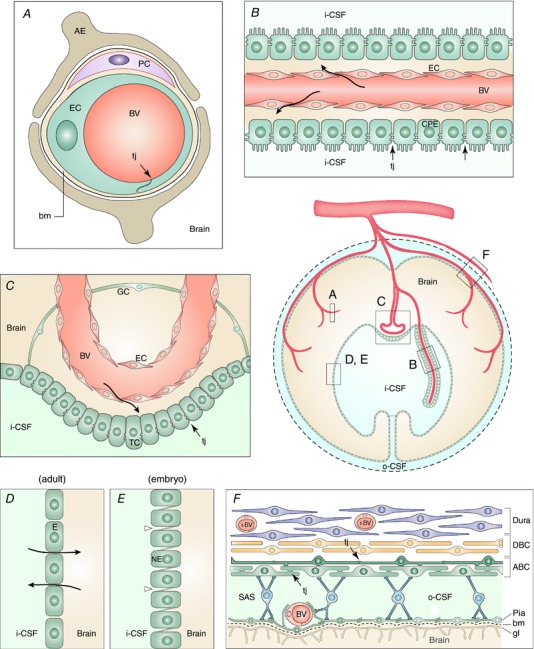
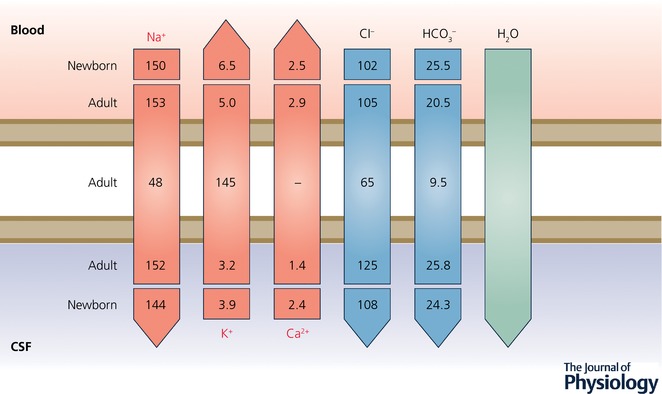
Properties of the local internal environment of the adult brain are tightly controlled providing a stable milieu essential for its normal function. The mechanisms involved in this complex control are structural, molecular and physiological (influx and efflux transporters) frequently referred to as the 'blood-brain barrier'. These mechanisms include regulation of ion levels in brain interstitial fluid essential for normal neuronal function, supply of nutrients, removal of metabolic products, and prevention of entry or elimination of toxic agents. A key feature is cerebrospinal fluid secretion and turnover. This is much less during development, allowing greater accumulation of permeating molecules. The overall effect of these mechanisms is to tightly control the exchange of molecules into and out of the brain. This review presents experimental evidence currently available on the status of these mechanisms in developing brain. It has been frequently stated for over nearly a century that the blood-brain barrier is not present or at least is functionally deficient in the embryo, fetus and newborn. We suggest the alternative hypothesis that the barrier mechanisms in developing brain are likely to be appropriately matched to each stage of its development. The contributions of different barrier mechanisms, such as changes in constituents of cerebrospinal fluid in relation to specific features of brain development, for example neurogenesis, are only beginning to be studied. The evidence on this previously neglected aspect of brain barrier function is outlined. We also suggest future directions this field could follow with special emphasis on potential applications in a clinical setting.
成人大脑局部内环境的特性受到严格控制,为其正常功能提供了稳定的环境。参与这种复杂控制的机制包括结构、分子和生理(流入和流出转运体)方面,通常被称为“血脑屏障”。这些机制包括调节脑间质液中的离子水平,这对正常神经元功能至关重要,还包括提供营养物质、清除代谢产物,以及防止有毒物质进入或排出。一个关键特征是脑脊液的分泌和周转。在发育过程中,这一过程要少得多,从而允许更多的渗透分子积累。这些机制的总体效果是严格控制分子进出大脑的交换。本综述介绍了目前关于发育中大脑这些机制状况的实验证据。近一个世纪以来,人们经常声称,血脑屏障在胚胎、胎儿和新生儿中不存在,或者至少在功能上有缺陷。我们提出了一个替代假设,即发育中大脑的屏障机制可能与大脑发育的每个阶段相匹配。不同屏障机制的贡献,例如脑脊液成分与大脑发育的特定特征(例如神经发生)的关系,才刚刚开始研究。概述了这个以前被忽视的大脑屏障功能方面的证据。我们还提出了该领域未来可以遵循的方向,特别强调在临床环境中的潜在应用。