Department of Entomology, University of California Riverside, Riverside, California, 92521, USA.
Present Address: Department of Biology, Indiana University, Bloomington, Indiana, 47405, USA.
BMC Biol. 2018 May 18;16(1):54. doi: 10.1186/s12915-018-0520-9.
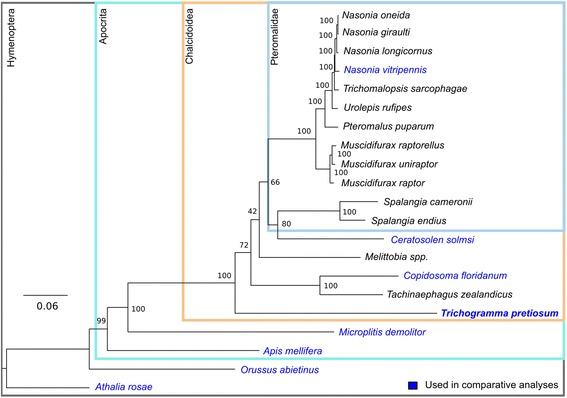
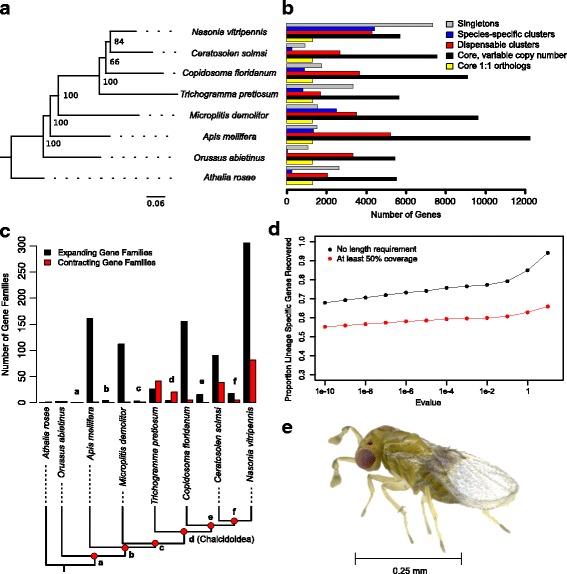
Trichogrammatids are minute parasitoid wasps that develop within other insect eggs. They are less than half a millimeter long, smaller than some protozoans. The Trichogrammatidae are one of the earliest branching families of Chalcidoidea: a diverse superfamily of approximately half a million species of parasitoid wasps, proposed to have evolved from a miniaturized ancestor. Trichogramma are frequently used in agriculture, released as biological control agents against major moth and butterfly pests. Additionally, Trichogramma are well known for their symbiotic bacteria that induce asexual reproduction in infected females. Knowledge of the genome sequence of Trichogramma is a major step towards further understanding its biology and potential applications in pest control.
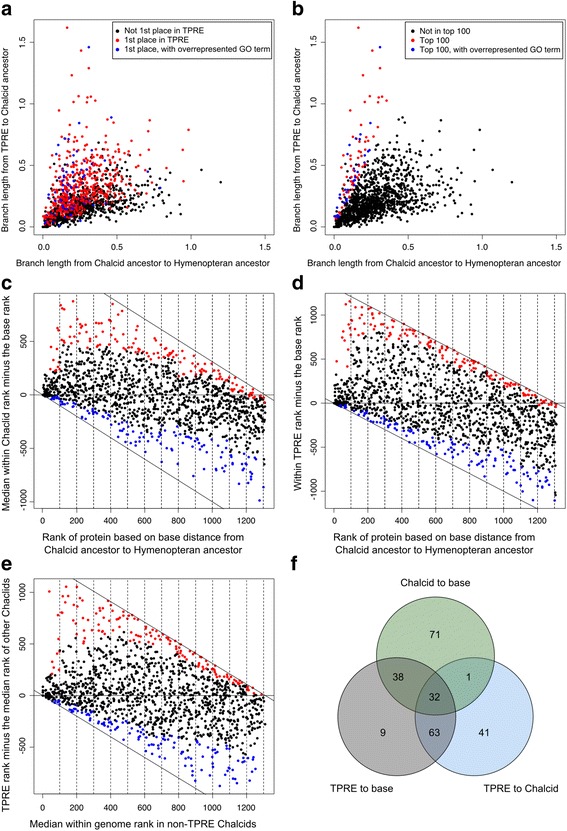
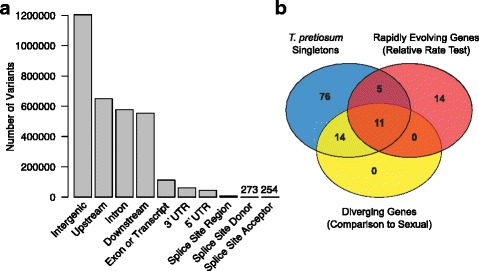
We report the 195-Mb genome sequence of Trichogramma pretiosum and uncover signatures of miniaturization and adaptation in Trichogramma and related parasitoids. Comparative analyses reveal relatively rapid evolution of proteins involved in ribosome biogenesis and function, transcriptional regulation, and ploidy regulation. Chalcids also show loss or especially rapid evolution of 285 gene clusters conserved in other Hymenoptera, including many that are involved in signal transduction and embryonic development. Comparisons between sexual and asexual lineages of Trichogramma pretiosum reveal that there is no strong evidence for genome degradation (e.g., gene loss) in the asexual lineage, although it does contain a lower repeat content than the sexual lineage. Trichogramma shows particularly rapid genome evolution compared to other hymenopterans. We speculate these changes reflect adaptations to miniaturization, and to life as a specialized egg parasitoid.
The genomes of Trichogramma and related parasitoids are a valuable resource for future studies of these diverse and economically important insects, including explorations of parasitoid biology, symbiosis, asexuality, biological control, and the evolution of miniaturization. Understanding the molecular determinants of parasitism can also inform mass rearing of Trichogramma and other parasitoids for biological control.
小蜂科是在其他昆虫卵内发育的微小寄生蜂。它们的长度不到半毫米,比一些原生动物还要小。小蜂科是 Chalcidoidea 最早分支的家族之一:这是一个多样化的超级科,大约有 50 万种寄生蜂,据推测是从一个微型化的祖先进化而来的。赤眼蜂在农业中经常被用作生物防治剂,用来防治主要的鳞翅目和蝶类害虫。此外,赤眼蜂还因其能诱导被感染的雌性进行无性繁殖的共生细菌而闻名。对赤眼蜂基因组序列的了解是进一步了解其生物学和在害虫防治中潜在应用的重要一步。
我们报告了小蜂属 Trichogramma pretiosum 的 195-Mb 基因组序列,并揭示了 Trichogramma 和相关寄生蜂的小型化和适应特征。比较分析显示,参与核糖体生物发生和功能、转录调控以及倍性调控的蛋白质进化相对较快。膜翅目昆虫也显示出 285 个基因簇的丢失或特别快速进化,这些基因簇在其他膜翅目昆虫中是保守的,包括许多参与信号转导和胚胎发育的基因簇。小蜂属 Trichogramma pretiosum 的有性和无性谱系之间的比较表明,无性谱系中没有强烈的基因组退化(例如基因丢失)的证据,尽管它的重复含量比有性谱系低。与其他膜翅目昆虫相比,赤眼蜂的基因组进化非常迅速。我们推测这些变化反映了对小型化和作为专门的卵寄生蜂的生活的适应。
赤眼蜂和相关寄生蜂的基因组是未来研究这些多样化和经济上重要的昆虫的宝贵资源,包括探索寄生生物学、共生关系、无性繁殖、生物防治以及小型化的进化。了解寄生的分子决定因素也可以为赤眼蜂和其他寄生蜂的大规模繁殖提供信息,以用于生物防治。