Neuroscience Research Institute, Peking University, Beijing, 100083, P. R. China.
Department of Neurobiology, School of Basic Medical Sciences, Peking University, Beijing, 100083, P. R. China.
Exp Mol Med. 2018 May 21;50(5):1-16. doi: 10.1038/s12276-018-0090-5.
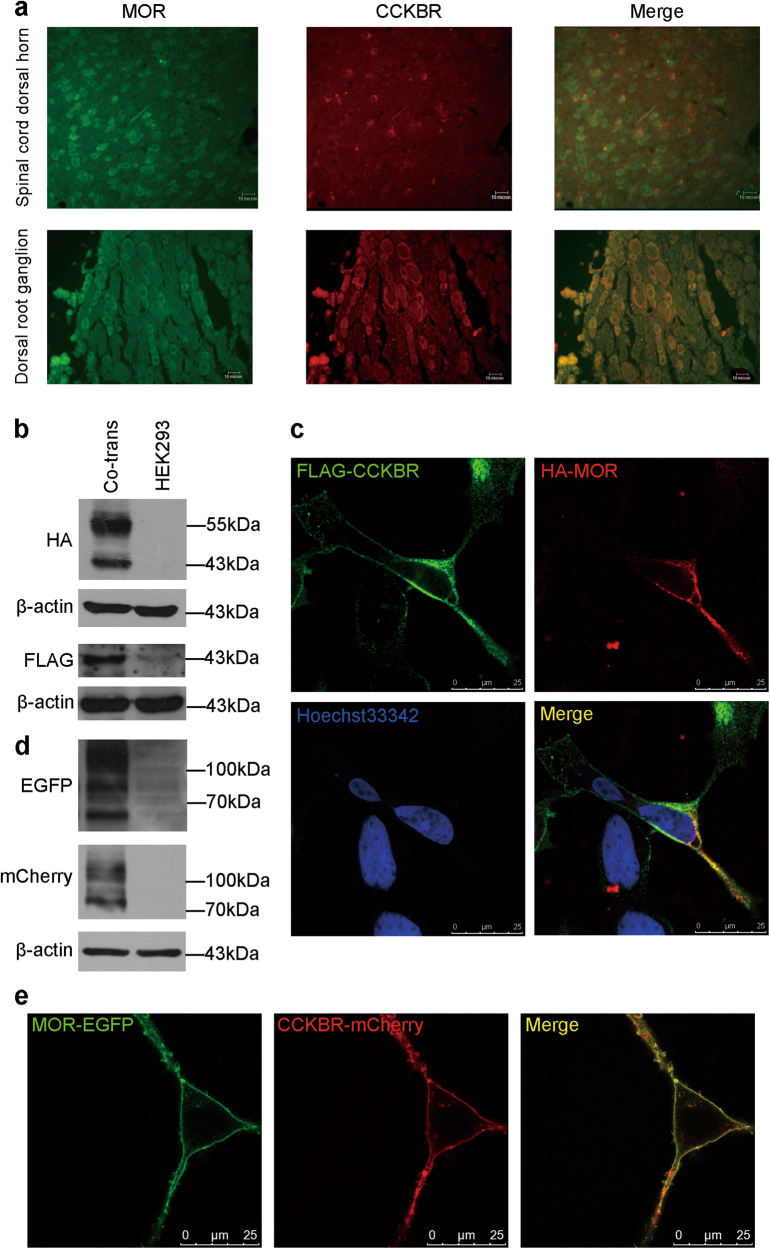
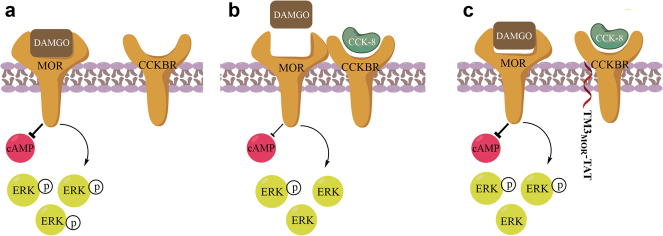
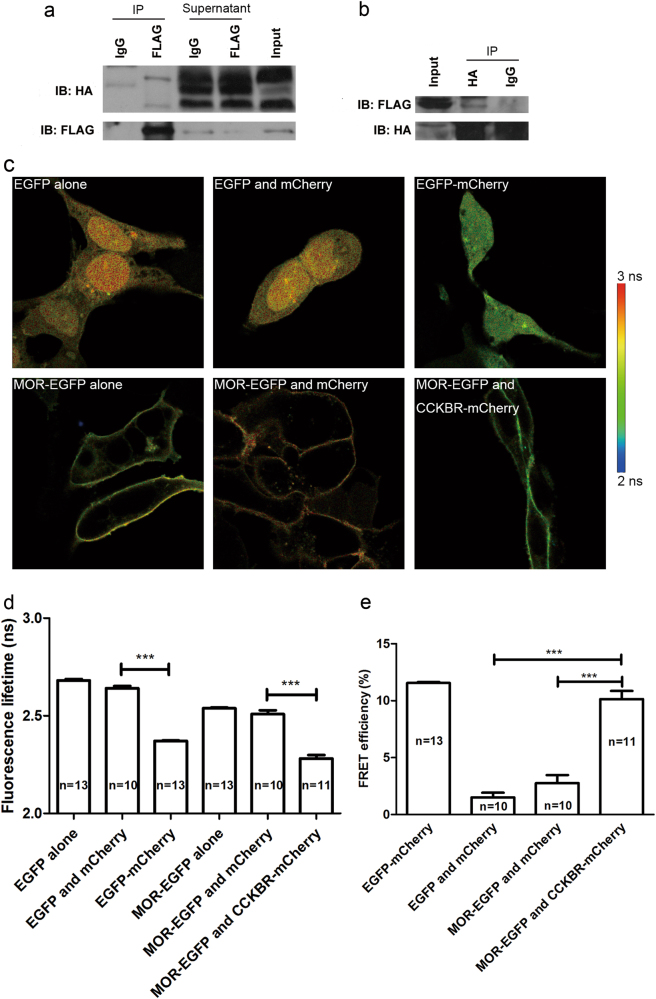
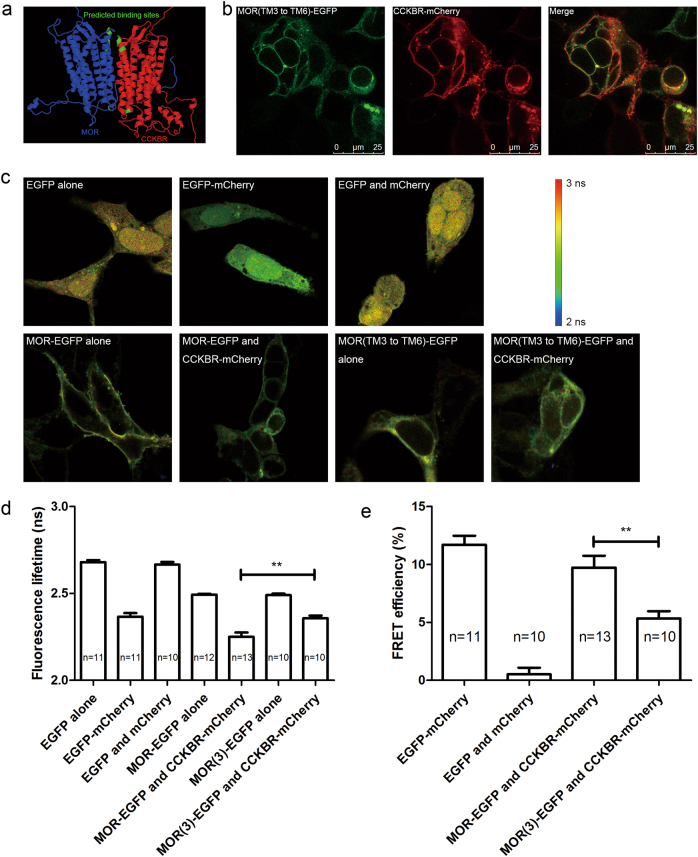
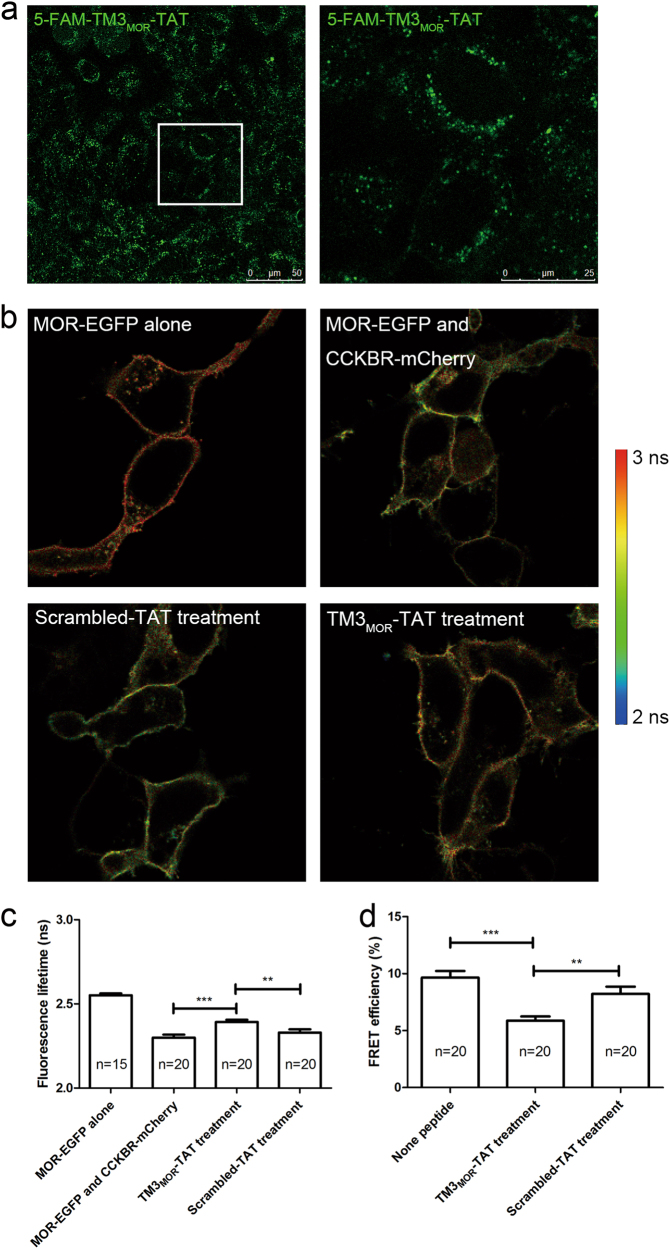
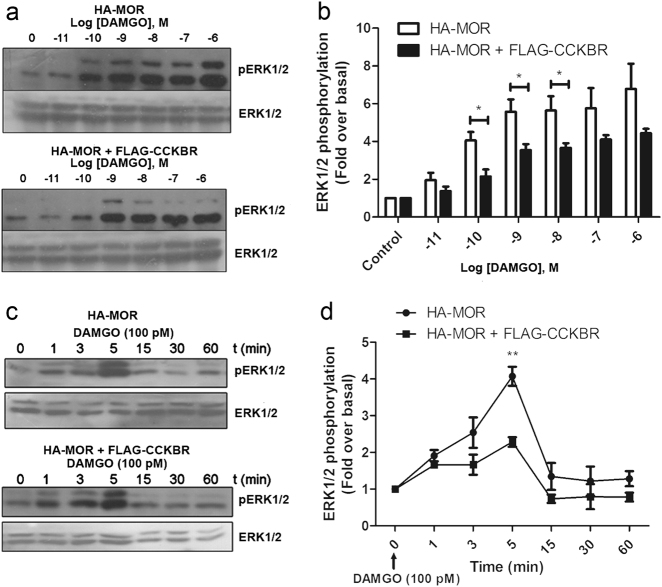
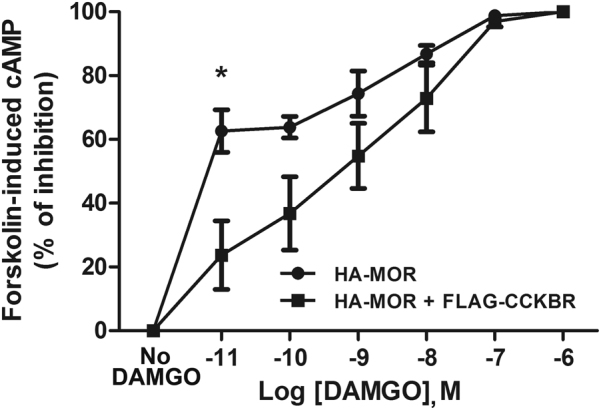
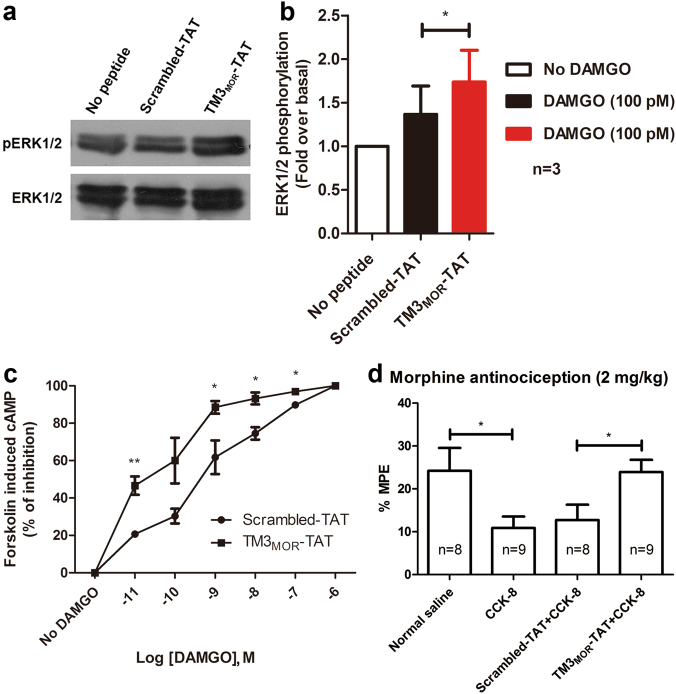
Activation of the cholecystokinin type B receptor (CCKBR) by cholecystokinin octapeptide (CCK-8) inhibits opioid analgesia. Chronic opiate treatment leads to an increase in the CCK-8 concentration and thus enhances the antagonism of CCK-8 against opioid analgesia; the underlying molecular mechanisms remain of great interest. In the present study, we validated the colocalization of the μ-opioid receptor (MOR) and CCKBR in pain signal transmission-related spinal cord dorsal horn and dorsal root ganglion neurons of rats. Co-immunoprecipitation (Co-IP) and fluorescence lifetime-imaging-microscopy-based fluorescence resonance energy transfer (FLIM-FRET) assays showed that MOR heteromerized with CCKBR directly in transfected HEK293 cells. Combined with MOR mutant construction, the third transmembrane domain of MOR (TM3) was demonstrated to participate in heteromerization with CCKBR. Receptor ligand binding, ERK phosphorylation and cAMP assays showed that MOR heteromerization with CCKBR weakened the activity of MOR. A cell-penetrating interfering peptide consisting of TM3 and TAT (a transactivator of HIV-1) sequences from the N terminal to the C terminal disrupted the MOR-CCKBR interaction and restored the activity of MOR in transfected HEK293 cells. Furthermore, intrathecal application of the TM3-TAT peptide alleviated CCK-8-injection-induced antagonism to morphine analgesia in rats. These results suggest a new molecular mechanism for CCK-8 antagonism to opioid analgesia in terms of G-protein-coupled receptor (GPCR) interaction through direct heteromerization. Our study may provide a potential strategy for pain management with opioid analgesics.
胆囊收缩素 B 型受体(CCKBR)被胆囊收缩素八肽(CCK-8)激活可抑制阿片类镇痛药的作用。慢性阿片类药物治疗会导致 CCK-8 浓度增加,从而增强 CCK-8 对阿片类镇痛药的拮抗作用;其潜在的分子机制仍然备受关注。在本研究中,我们验证了 μ-阿片受体(MOR)和 CCKBR 在大鼠疼痛信号转导相关脊髓背角和背根神经节神经元中的共定位。共免疫沉淀(Co-IP)和基于荧光寿命成像显微镜的荧光共振能量转移(FLIM-FRET)实验表明,MOR 与 CCKBR 在转染的 HEK293 细胞中直接异源二聚化。结合 MOR 突变体构建,MOR 的第三跨膜域(TM3)被证明参与与 CCKBR 的异源二聚化。受体配体结合、ERK 磷酸化和 cAMP 测定表明,MOR 与 CCKBR 的异源二聚化削弱了 MOR 的活性。由 TM3 和 TAT(HIV-1 的转录激活剂)序列从 N 端到 C 端组成的穿透细胞膜的干扰肽破坏了 MOR-CCKBR 相互作用,并恢复了转染的 HEK293 细胞中 MOR 的活性。此外,鞘内给予 TM3-TAT 肽可减轻 CCK-8 注射引起的吗啡镇痛拮抗作用。这些结果表明,CCK-8 通过直接异源二聚化拮抗阿片类镇痛药作用的一个新的分子机制是 G 蛋白偶联受体(GPCR)相互作用。我们的研究可能为阿片类镇痛药治疗疼痛提供一种潜在的策略。