Department of Horticultural Biotechnology, College of Life Sciences, Kyung Hee University, Yongin 17104, Korea.
Graduate School of East-West Medical Science, Kyung Hee University, Yongin 17104, Korea.
Int J Mol Sci. 2018 May 22;19(5):1536. doi: 10.3390/ijms19051536.
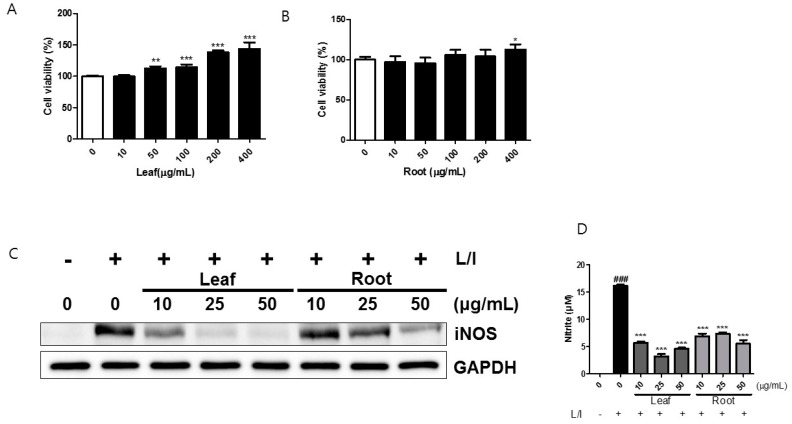
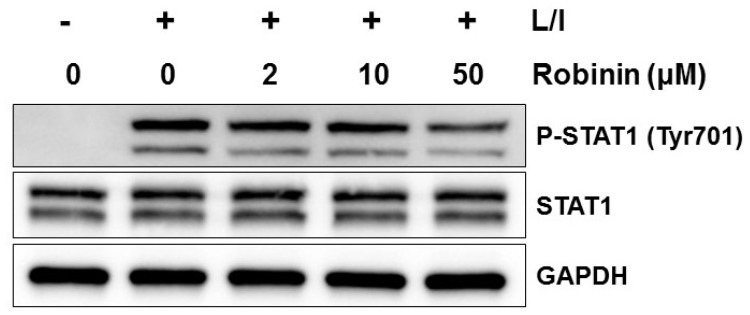
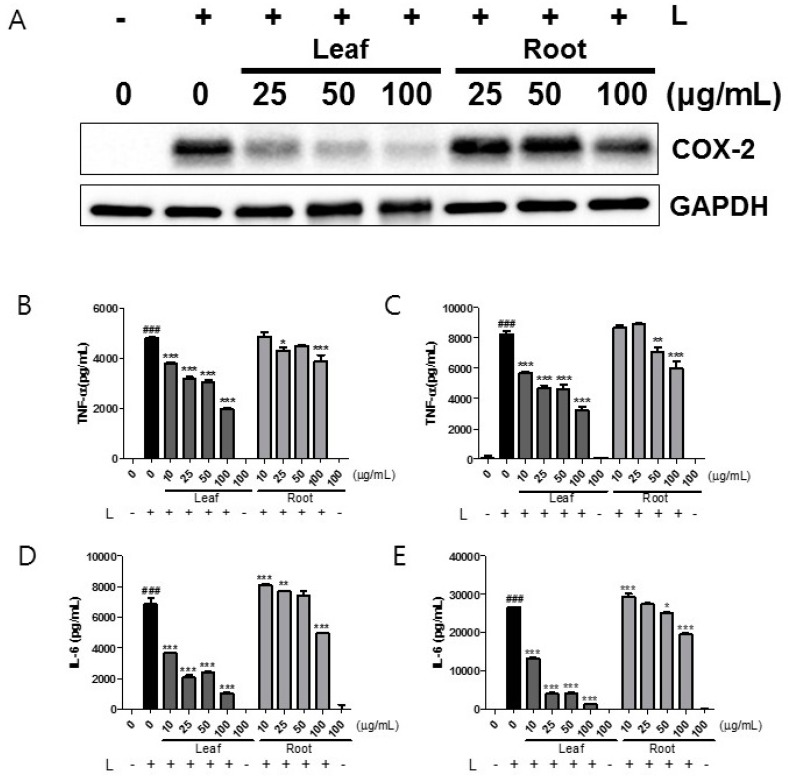
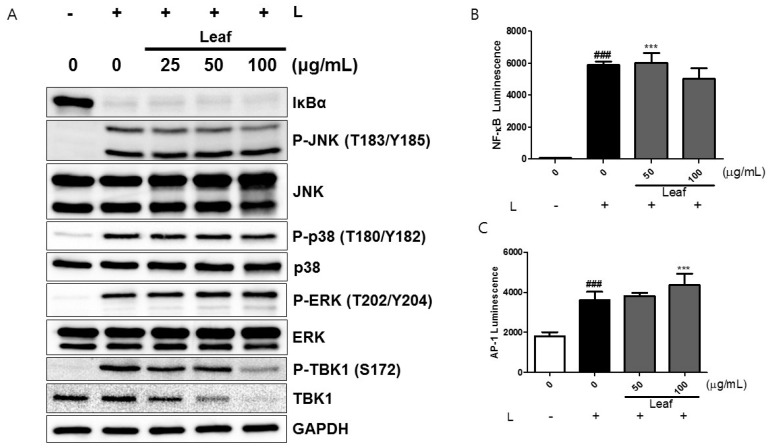
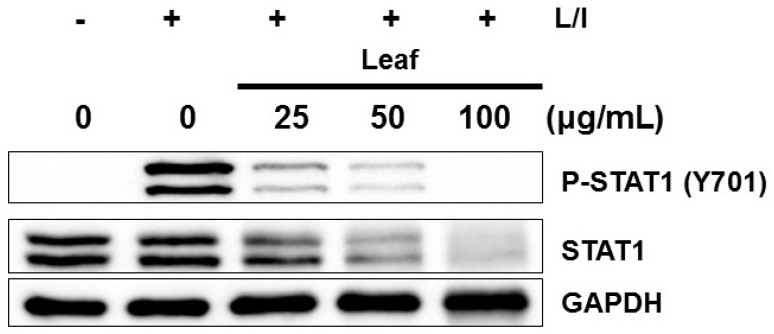
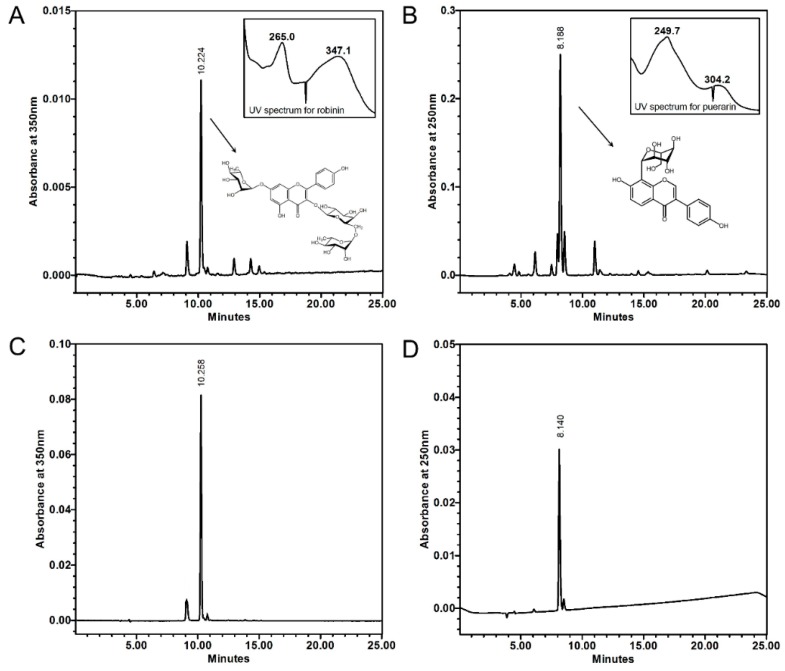
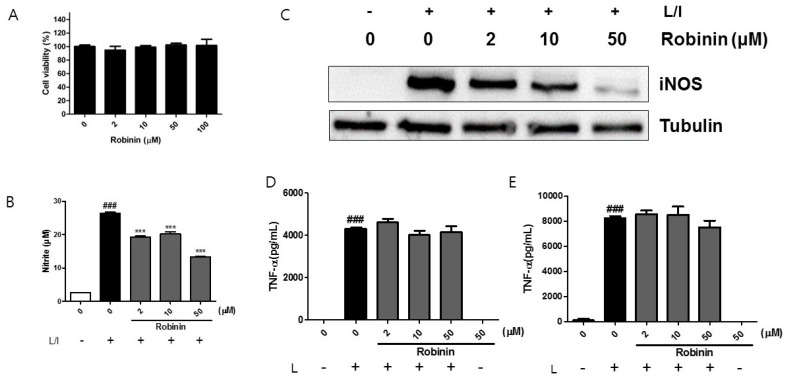
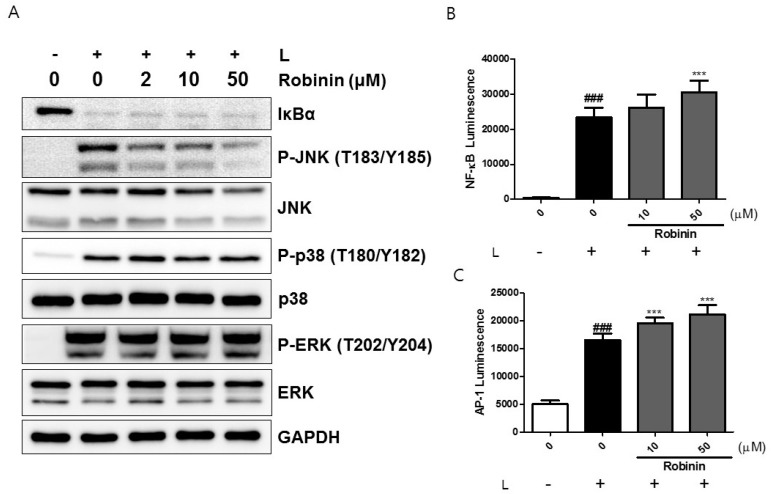
Kudzu ( var. (Willd.) Sanjappa & Pradeep) is a perennial leguminous vine, and its root and flower have been used for herbal medicine in Asia for a long time. Most dietary flavonoids are reported to be concentrated in its root, not in its aerial parts including leaves. In this study, we investigated whether kudzu leaf and its major constituent, robinin (kaempferol-3--robinoside-7--rhanmoside) possessed anti-inflammatory activity. To test this hypothesis, we used peritoneal macrophages isolated from BALB/c mice and stimulated the cells with lipopolysaccharide (LPS) or LPS plus interferon (IFN)-γ. Compared with kudzu root extract, its leaf extract was more potent in inhibiting the production of inducible nitric oxide synthase (iNOS), cyclooxygenase-2, tumor necrosis factor-α, and interleukin-6. Kudzu leaf extract decreased LPS-induced activation of c-Jun N-terminal kinase (JNK) and TANK-binding kinase 1(TBK1) with no effects on nuclear factor-κB and activator protein 1 transcriptional activity. Also, kudzu leaf extract inhibited LPS/IFN-γ-induced signal transducer and activator of transcription 1 (STAT1) activation partly via an altered level of STAT1 expression. Robinin, being present in 0.46% of dry weight of leaf extract, but almost undetected in the root, decreased iNOS protein involving modulation of JNK and STAT1 activation. However, robinin showed no impact on other inflammatory markers. Our data provide evidence that kudzu leaf is an excellent food source of as yet unknown anti-inflammatory constituents.
野葛(var.(Willd.)Sanjappa & Pradeep)是一种多年生豆科藤本植物,其根和花在亚洲长期以来一直被用作草药。据报道,大多数膳食类黄酮集中在其根部,而不是其地上部分,包括叶子。在这项研究中,我们研究了野葛叶及其主要成分罗宾素(山奈酚-3--山奈素-7--鼠李糖苷)是否具有抗炎活性。为了验证这一假设,我们使用从小鼠腹腔巨噬细胞中分离出来的细胞,并用脂多糖(LPS)或 LPS 加干扰素(IFN)-γ刺激这些细胞。与野葛根提取物相比,其叶提取物在抑制诱导型一氧化氮合酶(iNOS)、环氧化酶-2、肿瘤坏死因子-α和白细胞介素-6的产生方面更有效。野葛叶提取物可降低 LPS 诱导的 c-Jun N-末端激酶(JNK)和 TANK 结合激酶 1(TBK1)的激活,但对核因子-κB 和激活蛋白 1 的转录活性没有影响。此外,野葛叶提取物通过改变 STAT1 表达水平部分抑制 LPS/IFN-γ诱导的信号转导和转录激活因子 1(STAT1)的激活。罗宾素在叶提取物中的干重中占 0.46%,而在根中几乎检测不到,它通过调节 JNK 和 STAT1 的激活来降低 iNOS 蛋白。然而,罗宾素对其他炎症标志物没有影响。我们的数据提供了证据,表明野葛叶是一种极好的具有未知抗炎成分的食物来源。