University College London, Bloomsbury Institute of Intensive Care Medicine, London, UK.
UCL Centre for Anaesthesia, Critical Care and Pain Medicine, University College London, UK.
Br J Anaesth. 2018 Jun;120(6):1412-1419. doi: 10.1016/j.bja.2018.01.026. Epub 2018 Mar 21.
Commercially available crystalloid solutions used for volume replacement do not exactly match the balance of electrolytes found in plasma. Large volume administration may lead to electrolyte imbalance and potential harm. We hypothesised that haemodilution using solutions containing different anions would result in diverse biochemical effects, particularly on acid-base status, and different outcomes.
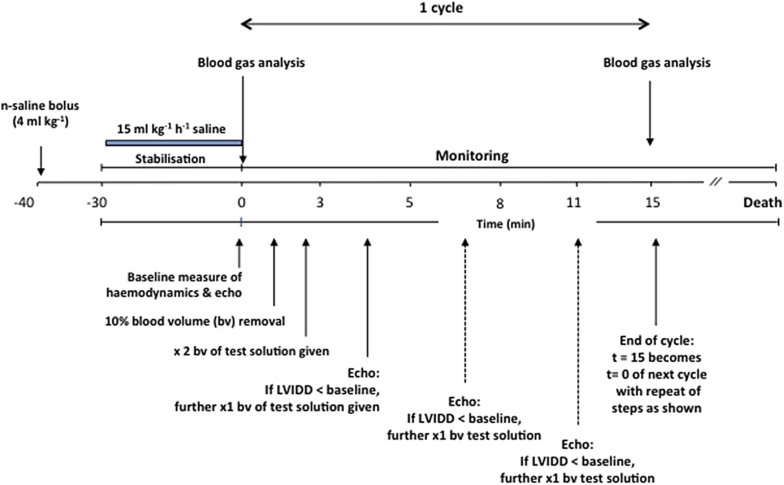
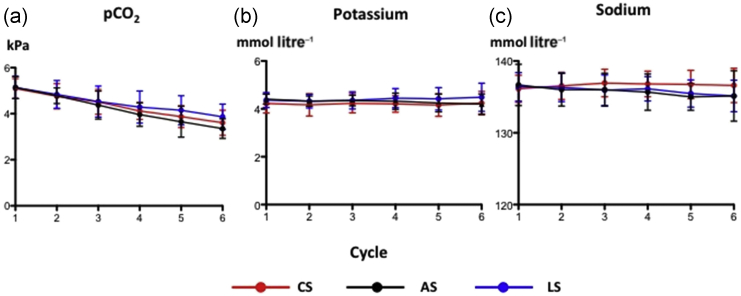
Anaesthetised, fluid-resuscitated, male Wistar rats underwent isovolaemic haemodilution by removal of 10% blood volume every 15 min, followed by replacement with one of three crystalloid solutions based on acetate, lactate, or chloride. Fluids were administered in a protocolised manner to achieve euvolaemia based on echocardiography-derived left ventrical volumetric measures. Removed blood was sampled for plasma ions, acid-base status, haemoglobin, and glucose. This cycle was repeated at 15-min intervals until death. The primary endpoint was change in plasma bicarbonate within each fluid group. Secondary endpoints included time to death and cardiac function.
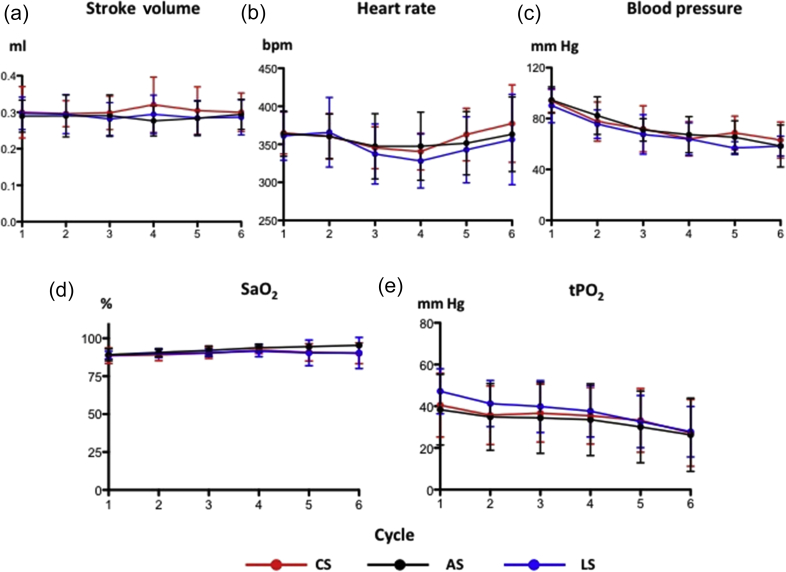
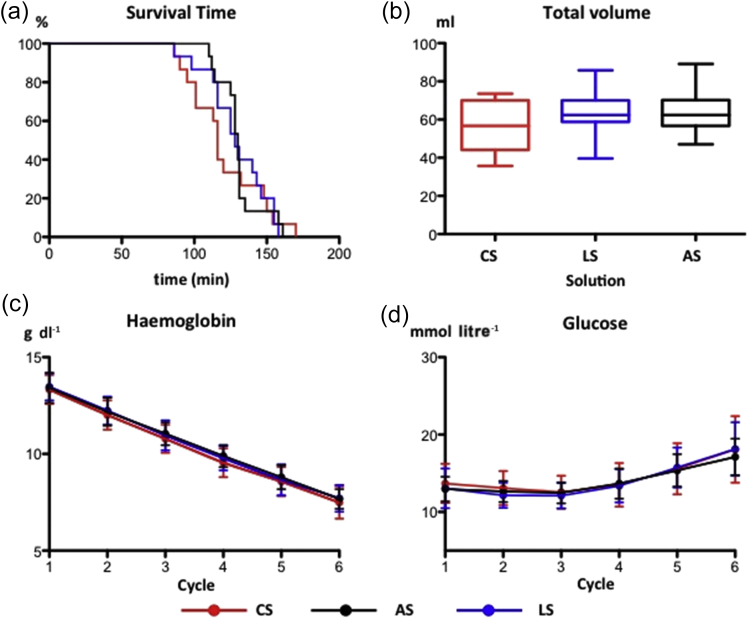
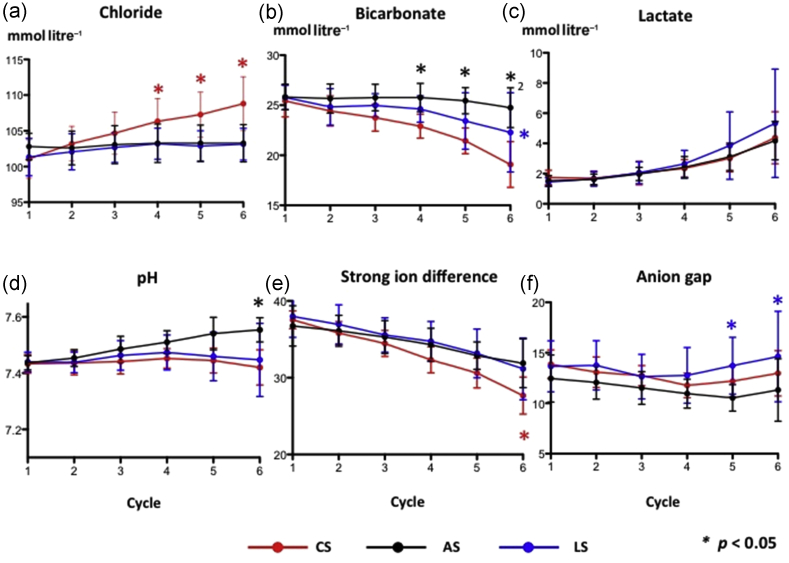
During haemodilution, chloride-treated rats showed significantly greater decreases in plasma bicarbonate and strong ion difference levels compared with acetate- and lactate-treated rats. Time to death, total volume of fluid administered: chloride group 56 (3) ml, lactate group 62 (3) ml, and acetate group 65 (3) ml; haemodynamic and tissue oxygenation changes were, however, similar between groups.
With progressive haemodilution, resuscitation with a chloride-based solution induced more acidosis compared with lactate- and acetate-based solutions, but outcomes were similar. No short-term impact was seen from hyperchloraemia in this model.
用于容量替代的市售晶体溶液与血浆中发现的电解质平衡并不完全匹配。大量给予可能导致电解质失衡和潜在危害。我们假设使用含有不同阴离子的溶液进行血液稀释会导致不同的生化效应,特别是对酸碱状态和不同的结果。
麻醉、液体复苏的雄性 Wistar 大鼠通过每 15 分钟去除 10%的血容量进行等容性血液稀释,然后用三种晶体溶液之一替代,这三种溶液基于醋酸盐、乳酸盐或氯化物。根据超声心动图左心室容积测量结果,以协议方式给予液体以达到等容血症。采集去除的血液用于检测血浆离子、酸碱状态、血红蛋白和葡萄糖。每隔 15 分钟重复此循环,直到死亡。主要终点是每个液体组中血浆碳酸氢盐的变化。次要终点包括死亡时间和心功能。
在血液稀释过程中,与醋酸盐和乳酸盐处理的大鼠相比,氯处理的大鼠的血浆碳酸氢盐和强离子差水平明显下降。死亡时间、给予的总液体量:氯组 56(3)ml,乳酸盐组 62(3)ml,醋酸盐组 65(3)ml;然而,各组之间的血流动力学和组织氧合变化相似。
随着血液稀释的进展,用基于氯的溶液复苏比基于乳酸盐和醋酸盐的溶液引起更多的酸中毒,但结果相似。在这种模型中,高氯血症没有短期影响。