Gastrointestinal Malignancy Section, Thoracic and Gastrointestinal Oncology Branch, Center for Cancer Research, National Cancer Institute, National Institutes of Health, Bethesda, MD, 20892, USA.
Experimental Immunology Branch, Center for Cancer Research, National Cancer Institute, National Institutes of Health, Bethesda, MD, 20892, USA.
Cell Death Dis. 2018 May 23;9(6):620. doi: 10.1038/s41419-018-0687-6.
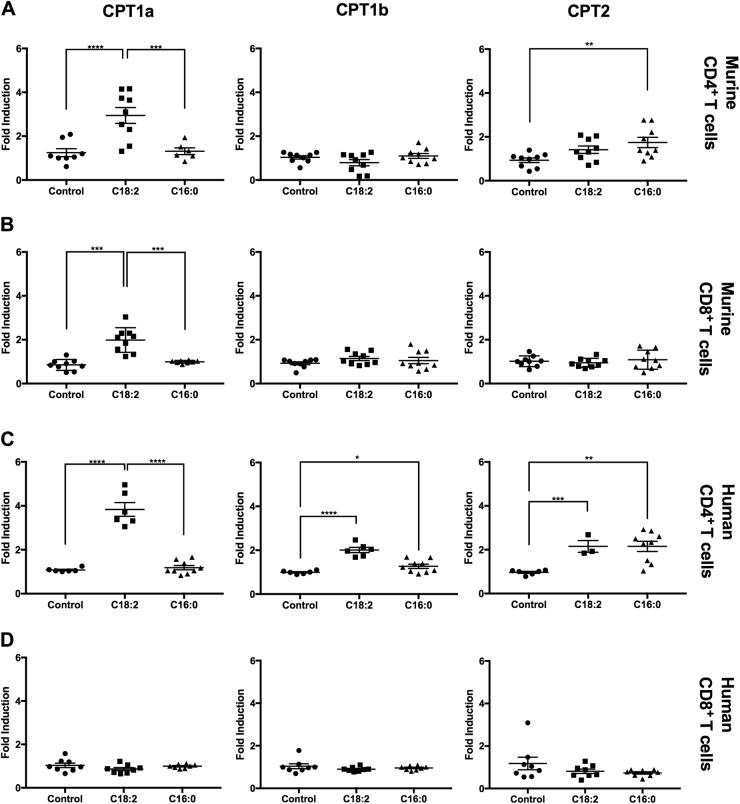
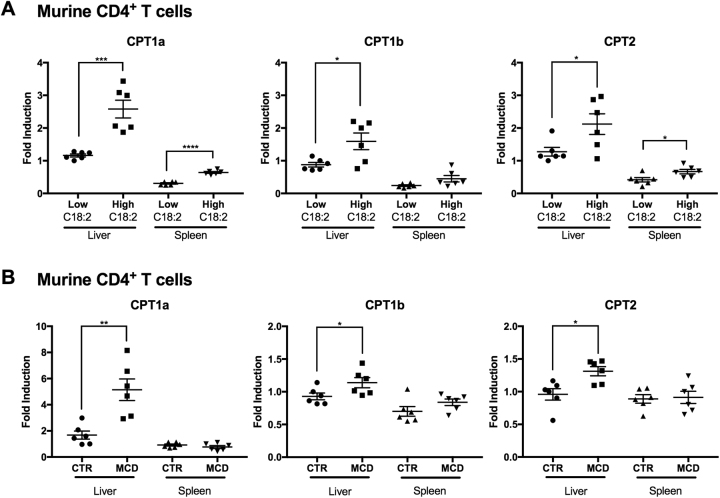
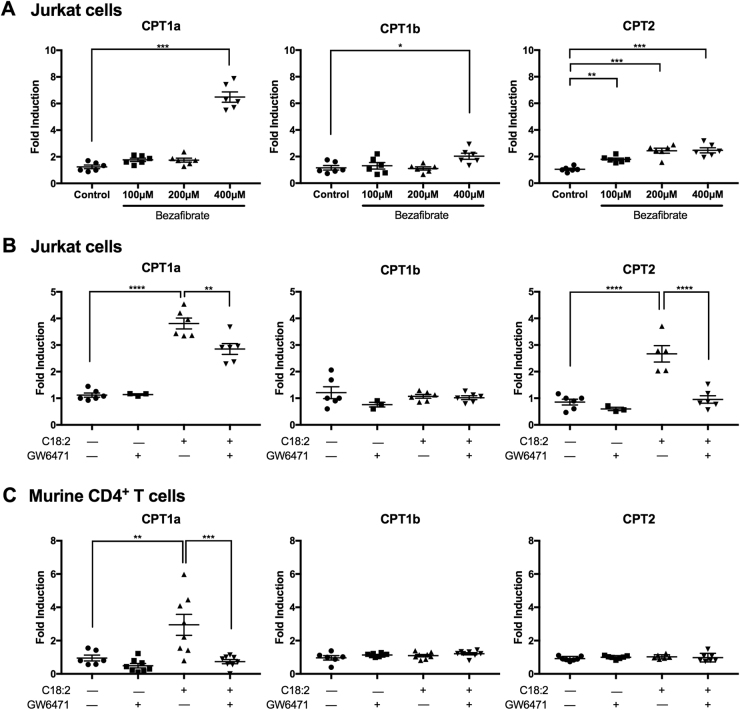
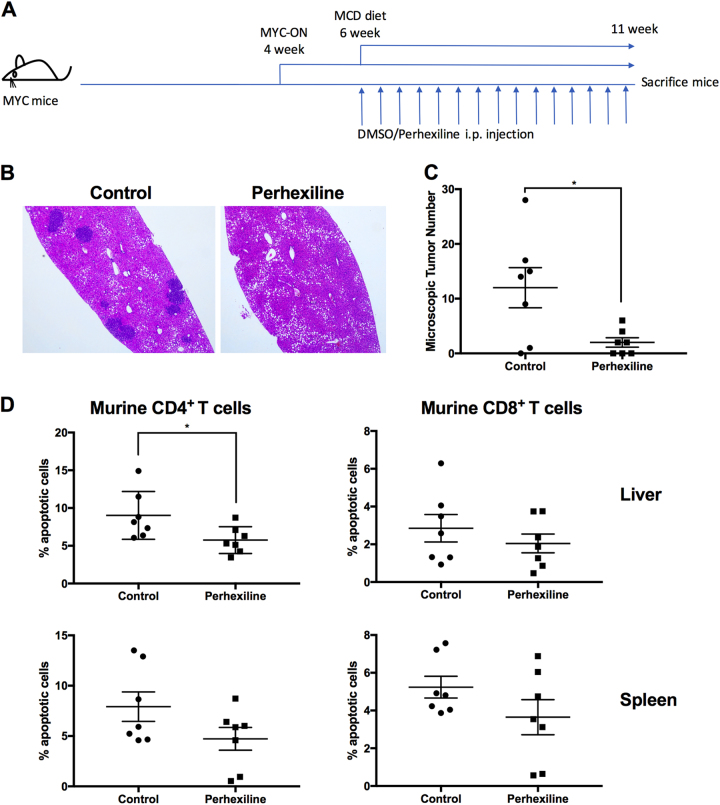
Hepatocellular carcinoma (HCC) is a common cause of cancer-related death worldwide. As obesity and diabetes become more prevalent, the contribution of non-alcoholic fatty liver disease (NAFLD) to HCC is rising. Recently, we reported intrahepatic CD4 T cells are critical for anti-tumor surveillance in NAFLD. Lipid accumulation in the liver is the hallmark of NAFLD, which may perturb T cell function. We sought to investigate how the lipid-rich liver environment influences CD4 T cells by focusing on carnitine palmitoyltransferase (CPT) family members, which control the mitochondrial β-oxidation of fatty acids and act as key molecules in lipid catabolism. Linoleic acid (C18:2) co-localized within the mitochondria along with a corresponding increase in CPT gene upregulation. This CPT upregulation can be recapitulated by feeding mice with a high-C18:2 diet or the NAFLD promoting methionine-choline-deficient (MCD) diet. Using an agonist and antagonist, the induction of CPT genes was found to be mediated by peroxisome proliferator-activated receptor alpha (PPAR-α). CPT gene upregulation increased mitochondrial reactive oxygen species (ROS) and led to cell apoptosis. In vivo, using liver-specific inducible MYC transgenic mice fed MCD diet, blocking CPT with the pharmacological inhibitor perhexiline decreased apoptosis of intrahepatic CD4 T cells and inhibited HCC tumor formation. These results provide useful information for potentially targeting the CPT family to rescue intrahepatic CD4 T cells and to aid immunotherapy for NAFLD-promoted HCC.
肝细胞癌(HCC)是全球癌症相关死亡的常见原因。随着肥胖和糖尿病的日益流行,非酒精性脂肪性肝病(NAFLD)对 HCC 的贡献正在上升。最近,我们报道肝内 CD4 T 细胞对于 NAFLD 中的抗肿瘤监测至关重要。肝脏中的脂质积累是 NAFLD 的标志,可能会扰乱 T 细胞功能。我们试图通过关注肉毒碱棕榈酰基转移酶(CPT)家族成员来研究富含脂质的肝脏环境如何影响 CD4 T 细胞,CPT 家族成员控制脂肪酸的线粒体β-氧化,并作为脂质分解代谢的关键分子。亚油酸(C18:2)与 CPT 基因上调的相应增加一起在线粒体中共同定位。用富含 C18:2 的饮食或促进非酒精性脂肪性肝病的蛋氨酸-胆碱缺乏(MCD)饮食喂养小鼠可以再现这种 CPT 上调。使用激动剂和拮抗剂,发现 CPT 基因的诱导是由过氧化物酶体增殖物激活受体α(PPAR-α)介导的。CPT 基因上调增加了线粒体活性氧(ROS),导致细胞凋亡。在体内,使用肝特异性诱导 MYC 转基因小鼠喂食 MCD 饮食,用药理学抑制剂哌克昔林阻断 CPT 可减少肝内 CD4 T 细胞的凋亡,并抑制 NAFLD 促进的 HCC 肿瘤形成。这些结果为靶向 CPT 家族提供了有用的信息,以挽救肝内 CD4 T 细胞,并有助于针对 NAFLD 促进的 HCC 的免疫治疗。