Mayo Clinic, SW Division of Hematology, 200 First Street, Rochester, MN, 55905, USA.
Blood Cancer J. 2018 May 23;8(5):44. doi: 10.1038/s41408-018-0080-9.
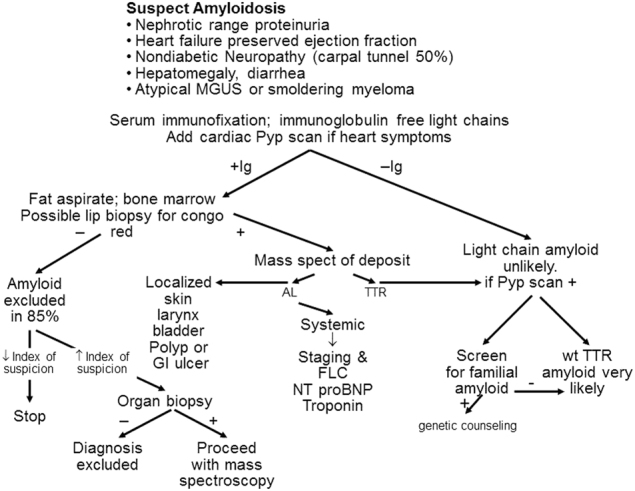
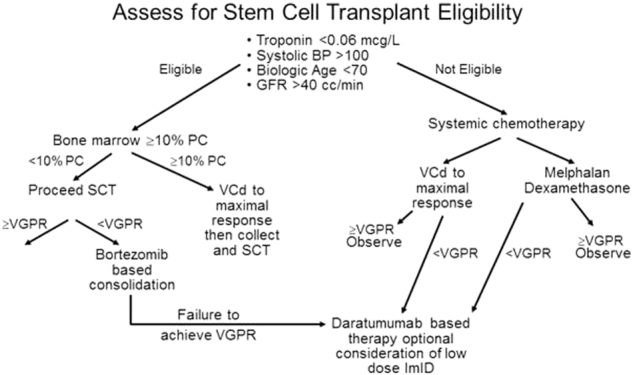
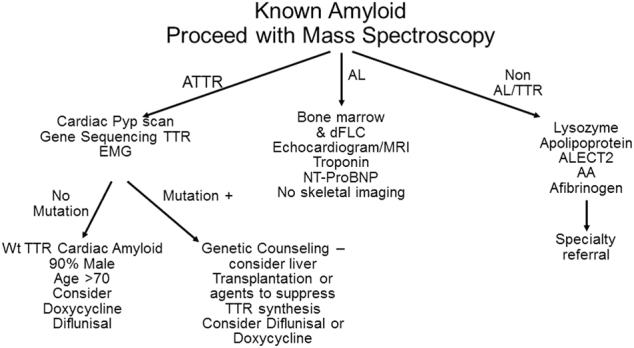
Immunoglobulin light chain amyloidosis (AL) should be considered in any patient that presents to a cancer care provider with nephrotic range proteinuria, heart failure with preserved ejection fraction, non-diabetic peripheral neuropathy, unexplained hepatomegaly or diarrhea. More importantly, patients being monitored for smoldering multiple myeloma and a monoclonal gammopathy of undetermined significance (MGUS) are at risk for developing AL amyloidosis. MGUS and myeloma patients that have atypical features, including unexplained weight loss; lower extremity edema, early satiety, and dyspnea on exertion should be considered at risk for light chain amyloidosis. Overlooking the diagnosis of light chain amyloidosis leading to therapy delay is common, and it represents an error of diagnostic consideration. Algorithms will be provided on how to evaluate patients with suspected AL amyloid as well as how to manage patients referred from other medical specialties with biopsy-proven amyloid. An organized stepwise approach to the treatment of patients with light chain amyloidosis, including established and investigational therapies, will be reviewed.
免疫球蛋白轻链淀粉样变(AL)应被视为任何向癌症治疗提供者就诊的患者的考虑因素,这些患者表现为肾病范围蛋白尿、射血分数保留的心力衰竭、非糖尿病性周围神经病、原因不明的肝肿大或腹泻。更重要的是,正在监测冒烟型多发性骨髓瘤和意义未明的单克隆丙种球蛋白病(MGUS)的患者有发生 AL 淀粉样变的风险。MGUS 和骨髓瘤患者有不典型特征,包括不明原因的体重减轻;下肢水肿、早饱和活动时呼吸困难,应被视为有发生轻链淀粉样变的风险。忽视轻链淀粉样变的诊断导致治疗延迟很常见,这是诊断考虑的一个错误。将提供用于评估疑似 AL 淀粉样变患者的算法,以及如何管理来自其他医学专业的活检证实的淀粉样变患者。将审查针对轻链淀粉样变患者的治疗的有条理的逐步方法,包括已确立的和研究性的治疗方法。