Recover Injury Research Centre, NHMRC Centre of Research Excellence in Recovery Following Road Traffic Injury, The University of Queensland, Brisbane, Australia.
Menzies Health Institute Queensland, Griffith University, Gold Coast, Australia.
PLoS One. 2018 May 24;13(5):e0197438. doi: 10.1371/journal.pone.0197438. eCollection 2018.
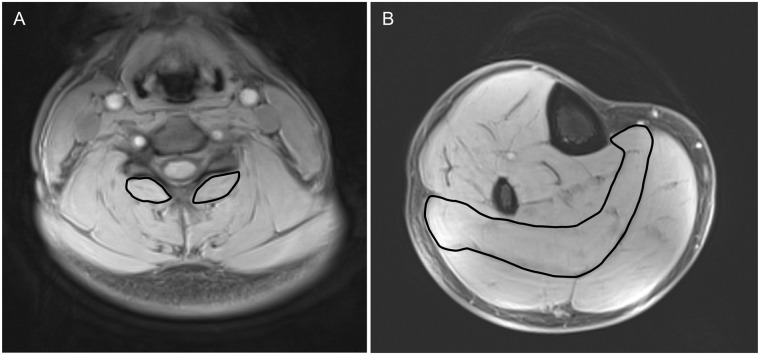
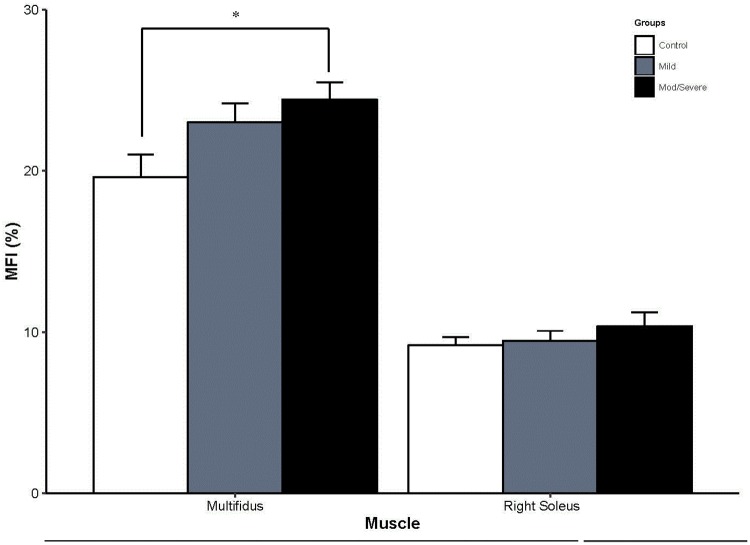
The presence of intramuscular fat (IMF) in the cervical spine muscles of patients with whiplash associated disorders (WAD) has been consistently found. The mechanisms underlying IMF are not clear but preliminary evidence implicates a relationship with stress system responses. We hypothesised that if systemic stress system responses do play a role then IMF would be present in muscles remote to the cervical spine. We aimed to investigate if IMF are present in muscle tissue remote (soleus) to the cervical spine in people with chronic WAD. A secondary aim was to investigate associations between IMF and posttraumatic stress symptom levels. Forty-three people with chronic WAD (25 female) and 16 asymptomatic control participants (11 female) participated. Measures of pain, disability and posttraumatic stress symptoms were collected from the WAD participants. Both groups underwent MRI measures of IMF in cervical multifidus and the right soleus muscle. There was significantly greater IMF in cervical multifidus in patients with WAD and moderate/severe disability compared to controls (p = 0.009). There was no difference in multifidus IMF between the mild and moderate/severe disability WAD groups (p = 0.64), or the control and mild WAD groups (p = 0.21). IMF in the right soleus was not different between the groups (p = 0.47). In the WAD group, we found no correlation between PDS symptoms and cervical multifidus IMF or between PDS symptoms and soleus IMF. Global differences in IMF are not a feature of chronic WAD, with differences in IMF limited to the cervical spine musculature. While the mechanisms for the development of IMF in the cervical spine following whiplash injury remain unclear, our data indicate that local factors more likely contribute to these differences.
在颈性挥鞭伤相关疾病(WAD)患者的颈脊柱肌肉中,一直存在肌内脂肪(IMF)。IMF 的发生机制尚不清楚,但初步证据表明与应激系统反应有关。我们假设,如果全身应激系统反应确实起作用,那么 IMF 就会存在于远离颈椎的肌肉中。我们旨在研究慢性 WAD 患者的颈脊柱远处(比目鱼肌)的肌肉组织中是否存在 IMF。次要目的是研究 IMF 与创伤后应激症状水平之间的关联。43 名慢性 WAD 患者(25 名女性)和 16 名无症状对照参与者(11 名女性)参加了研究。WAD 参与者接受疼痛、残疾和创伤后应激症状的测量。两组均接受颈多裂肌和右侧比目鱼肌 IMF 的 MRI 测量。与对照组相比,WAD 患者和中度/重度残疾患者的颈多裂肌 IMF 明显更大(p = 0.009)。轻度和中度/重度残疾 WAD 组之间的多裂肌 IMF 没有差异(p = 0.64),或对照组和轻度 WAD 组之间也没有差异(p = 0.21)。两组间右侧比目鱼肌 IMF 无差异(p = 0.47)。在 WAD 组中,我们没有发现 PDS 症状与颈多裂肌 IMF 之间或 PDS 症状与比目鱼肌 IMF 之间的相关性。IMF 的总体差异不是慢性 WAD 的特征,IMF 的差异仅限于颈脊柱肌肉。虽然挥鞭伤后颈脊柱 IMF 形成的机制尚不清楚,但我们的数据表明,局部因素更可能导致这些差异。