Kobayashi Toshiyuki, Shiozaki Atsushi, Nako Yoshito, Ichikawa Daisuke, Kosuga Toshiyuki, Shoda Katsutoshi, Arita Tomohiro, Konishi Hirotaka, Komatsu Shuhei, Kubota Takeshi, Fujiwara Hitoshi, Okamoto Kazuma, Kishimoto Mitsuo, Konishi Eiichi, Marunaka Yoshinori, Otsuji Eigo
Division of Digestive Surgery, Department of Surgery, Kyoto Prefectural University of Medicine, Kyoto, 602-8566, Japan.
Department of Gastrointestinal, Breast & Endocrine Surgery, Faculty of Medicine, University of Yamanashi, Chuo, 409-3898, Japan.
Oncotarget. 2018 May 1;9(33):23237-23252. doi: 10.18632/oncotarget.25296.
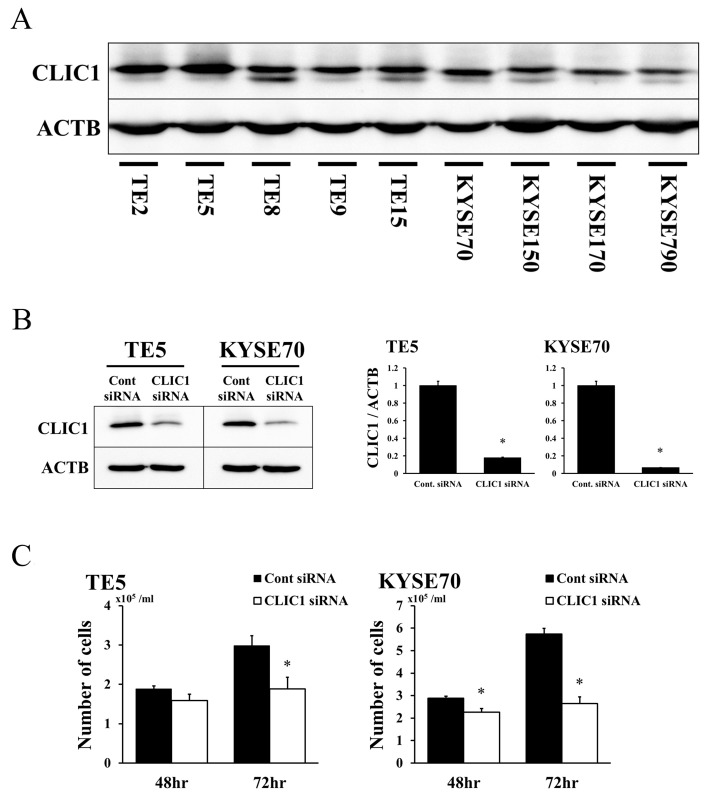
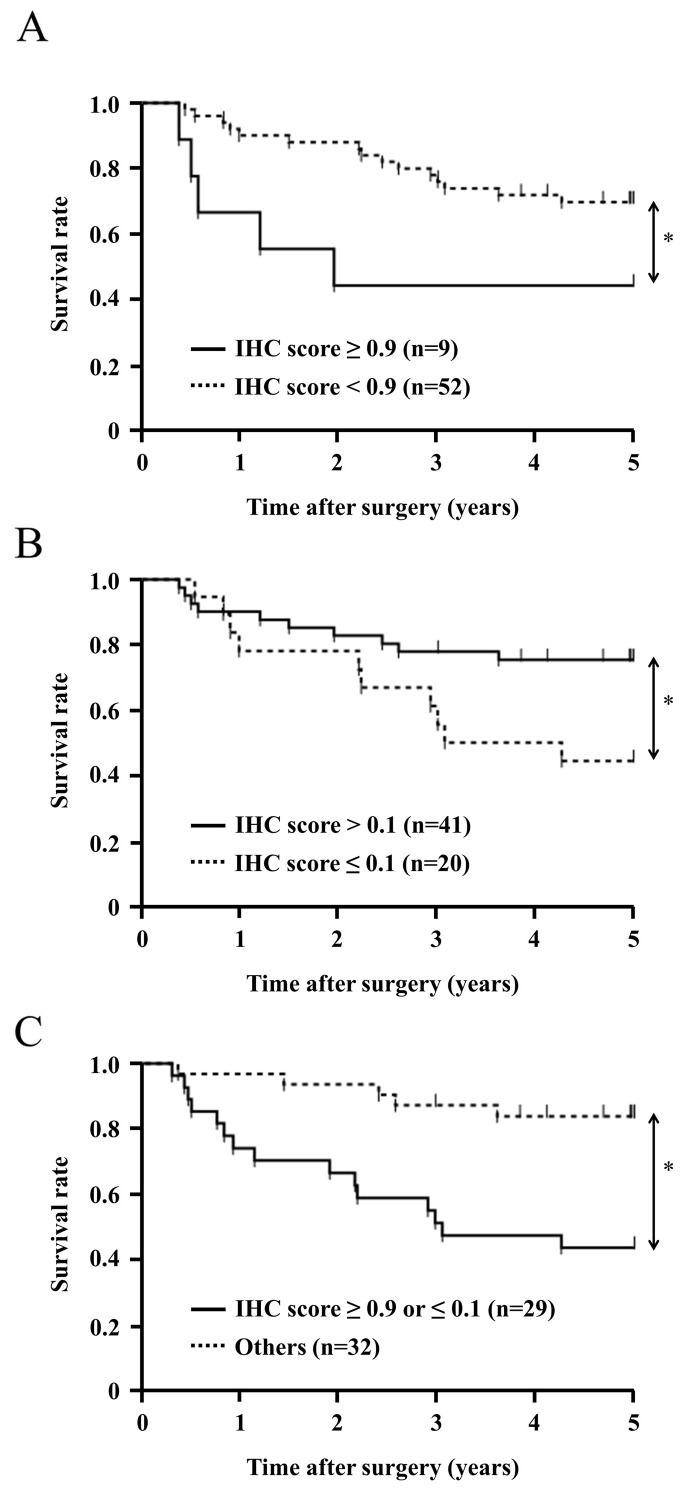
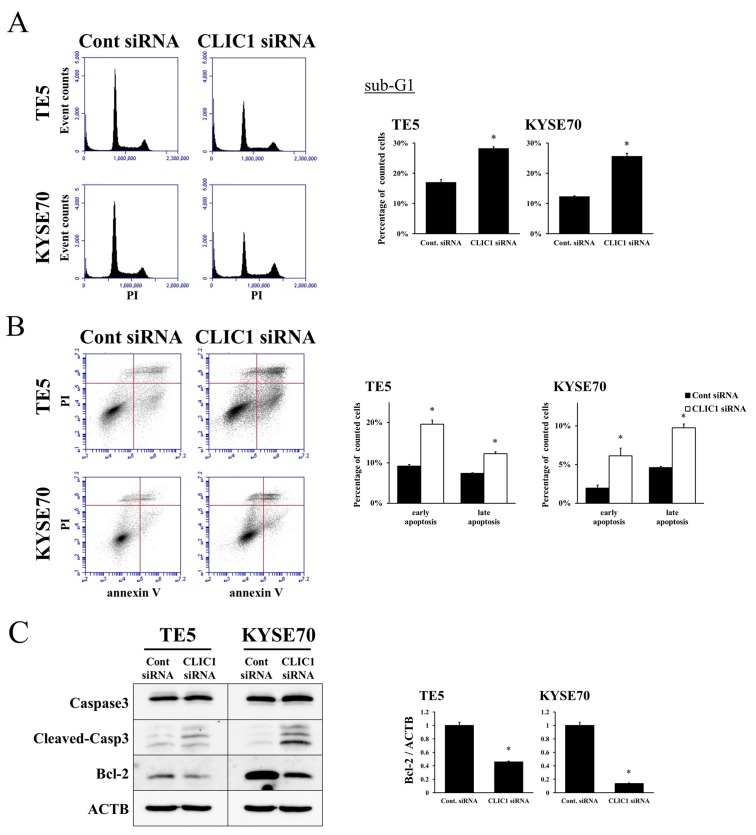
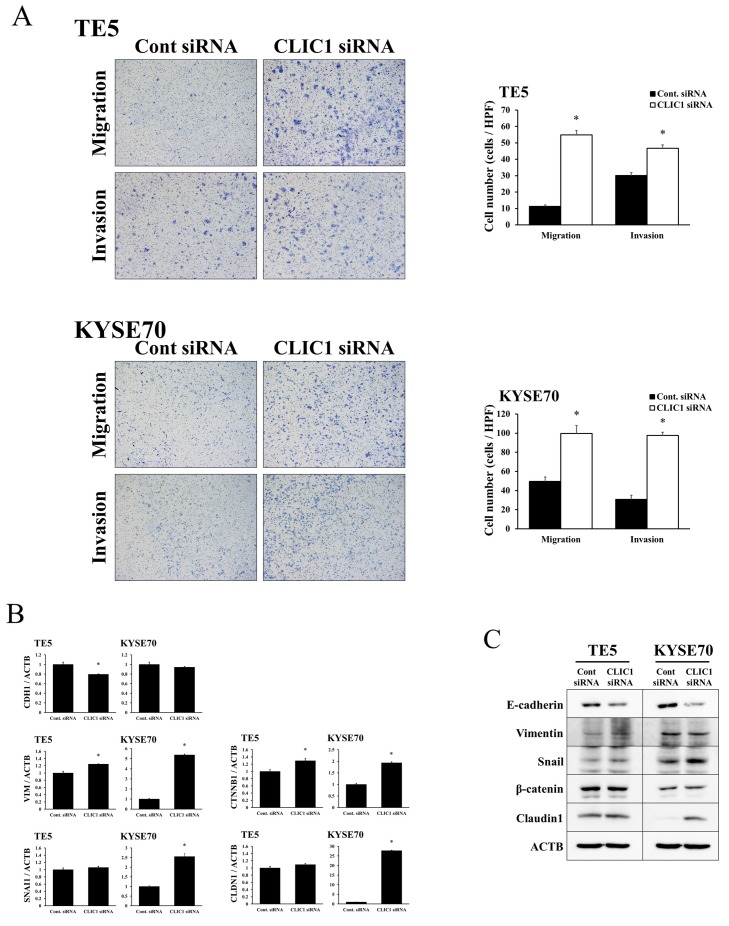
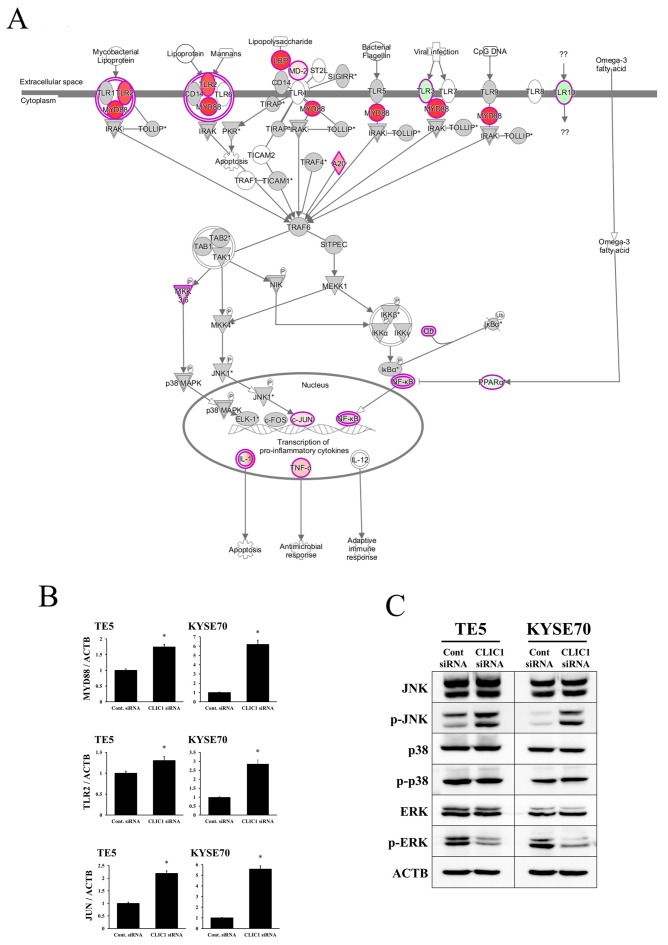
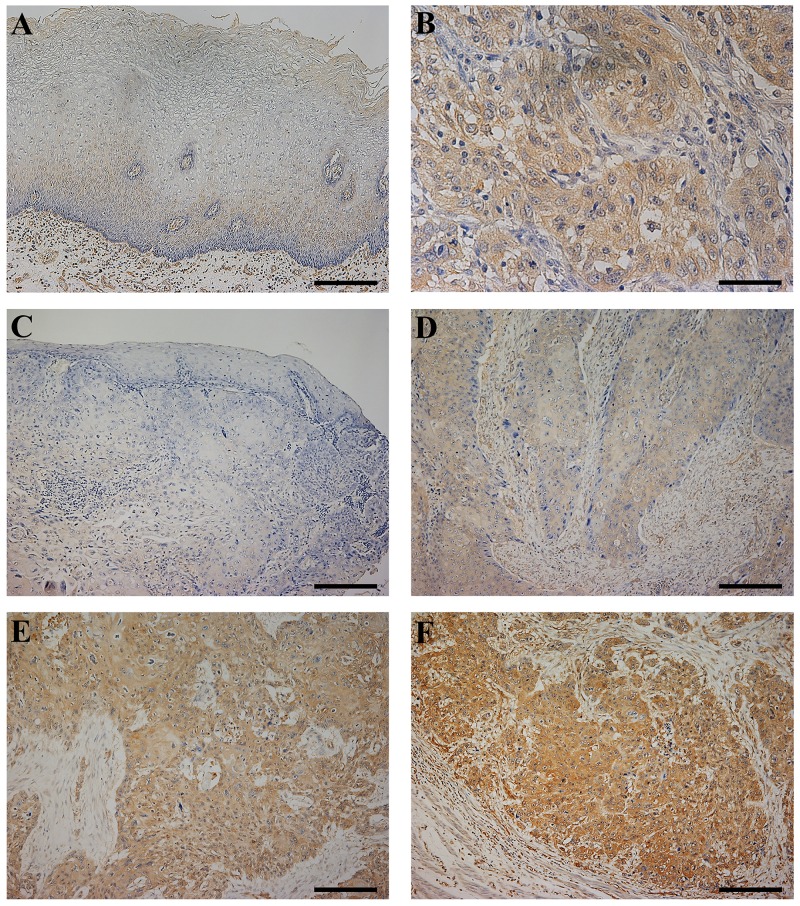
Recent studies have reported important roles for chloride intracellular channel 1 (CLIC1) in various cancers; however, its involvement in esophageal squamous cell carcinoma (ESCC) remains unclear. The aim of the present study was to investigate the role of CLIC1 in human ESCC. : CLIC1 expression in human ESCC cell lines was analyzed by Western blotting. Knockdown experiments were conducted with CLIC1 siRNA, and their effects on cell proliferation, the cell cycle, apoptosis, migration, and invasion were analyzed. The gene expression profiles of cells were analyzed using a microarray analysis. An immunohistochemical analysis was performed on 61 primary tumor samples obtained from ESCC patients who underwent esophagectomy. ESCC cells strongly expressed CLIC1. The depletion of CLIC1 using siRNA inhibited cell proliferation, induced apoptosis, and promoted cell migration and invasion. The results of the microarray analysis revealed that the depletion of CLIC1 regulated apoptosis via the TLR2/JNK pathway. Immunohistochemistry showed that CLIC1 was present in the cytoplasm of carcinoma cells, and that the very strong or very weak expression of CLIC1 was an independent poor prognostic factor. The present results suggest that the very strong expression of CLIC1 enhances tumor survival, while its very weak expression promotes cellular movement. The present study provides an insight into the role of CLIC1 as a switch among tumor behaviors in ESCC.
近期研究报道了氯离子细胞内通道1(CLIC1)在多种癌症中发挥重要作用;然而,其在食管鳞状细胞癌(ESCC)中的作用仍不清楚。本研究旨在探讨CLIC1在人ESCC中的作用。通过蛋白质印迹法分析CLIC1在人ESCC细胞系中的表达。用CLIC1小干扰RNA(siRNA)进行敲低实验,并分析其对细胞增殖、细胞周期、凋亡、迁移和侵袭的影响。使用基因芯片分析来分析细胞的基因表达谱。对61例接受食管切除术的ESCC患者的原发性肿瘤样本进行免疫组织化学分析。ESCC细胞强烈表达CLIC1。使用siRNA敲低CLIC1可抑制细胞增殖、诱导凋亡,并促进细胞迁移和侵袭。基因芯片分析结果显示,敲低CLIC1通过Toll样受体2(TLR2)/应激活化蛋白激酶(JNK)途径调节凋亡。免疫组织化学显示,CLIC1存在于癌细胞的细胞质中,CLIC1的极强或极弱表达是一个独立的不良预后因素。本研究结果表明,CLIC1的极强表达增强肿瘤存活,而其极弱表达促进细胞运动。本研究为CLIC1作为ESCC肿瘤行为开关的作用提供了见解。