Guo Zhenglong, Jing Renwei, Rao Quan, Zhang Ludi, Gao Yimeng, Liu Fengyong, Wang Xin, Hui Lijian, Yin HaiFang
1Department of Cell Biology, Tianjin Medical University, Qixiangtai Road, Heping District, Tianjin, 300070 China.
2State Key Laboratory of Cell Biology, Institute of Biochemistry and Cell Biology, Shanghai Institutes for Biological Sciences, Chinese Academy of Sciences, Shanghai, 200031 China.
Cell Discov. 2018 May 15;4:23. doi: 10.1038/s41421-018-0020-7. eCollection 2018.
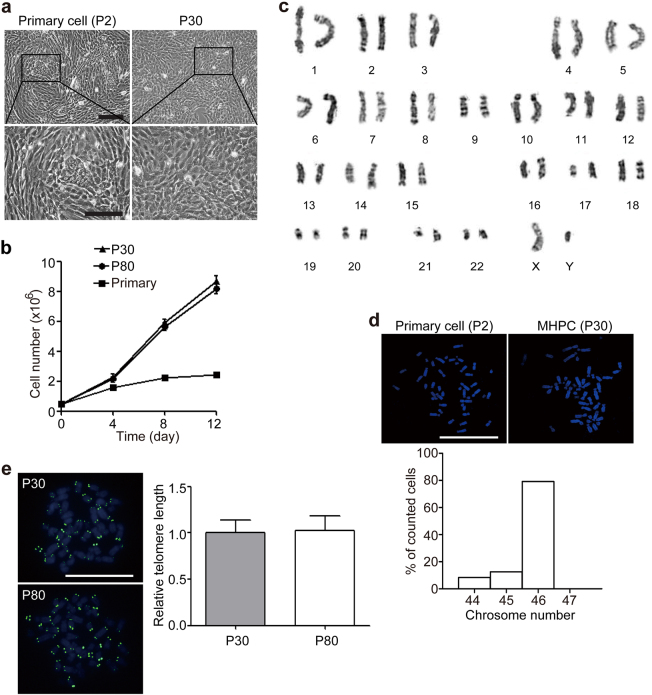
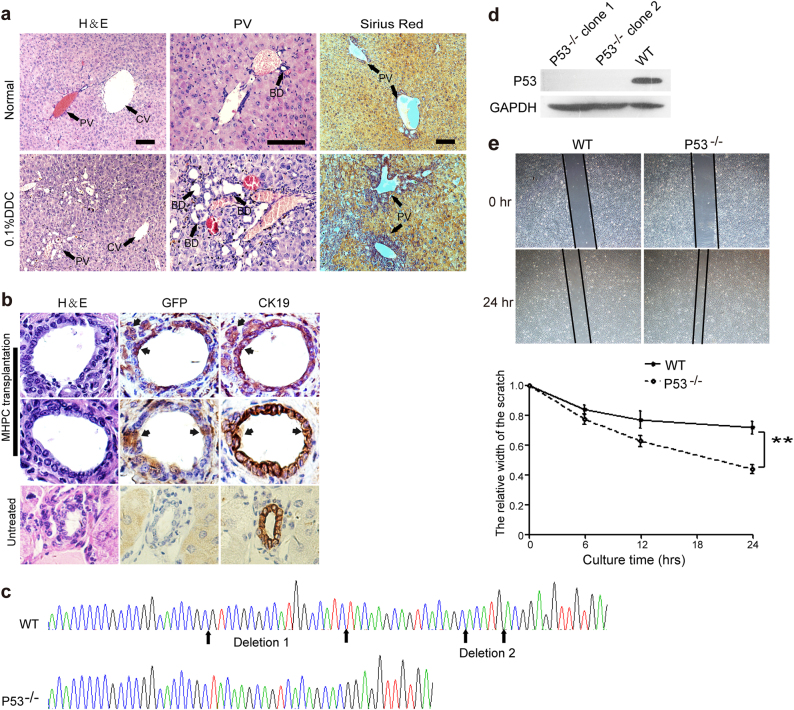
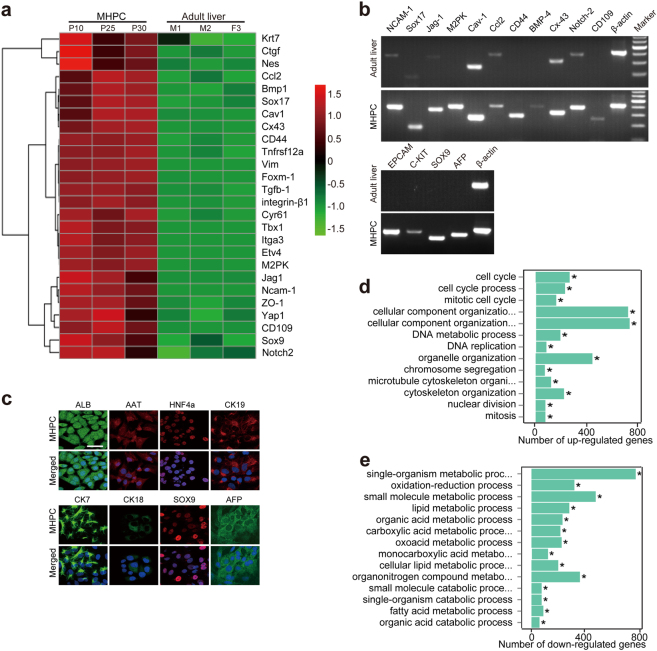
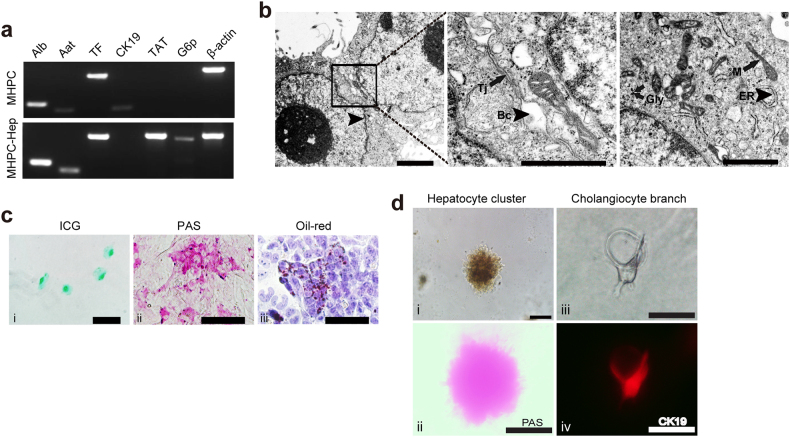
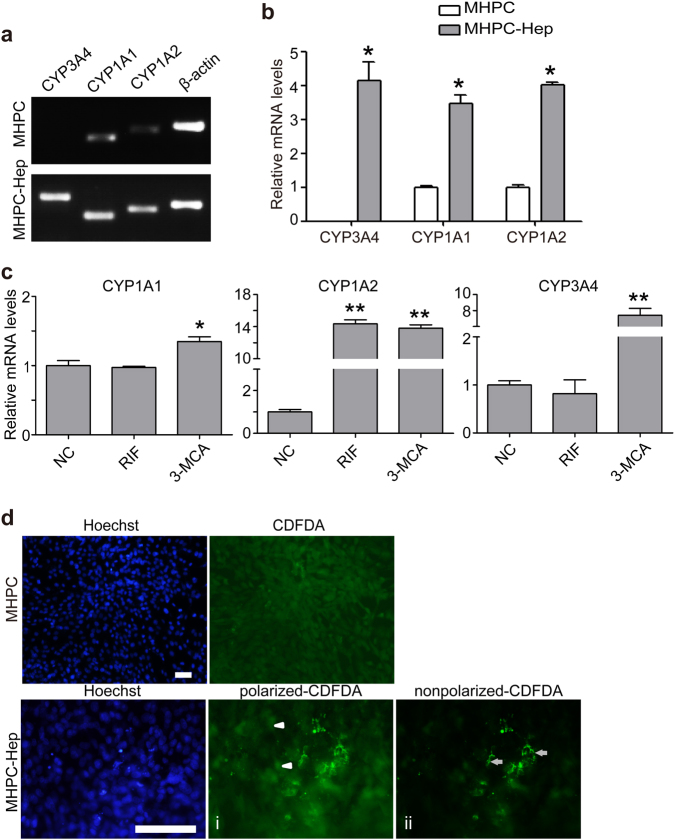
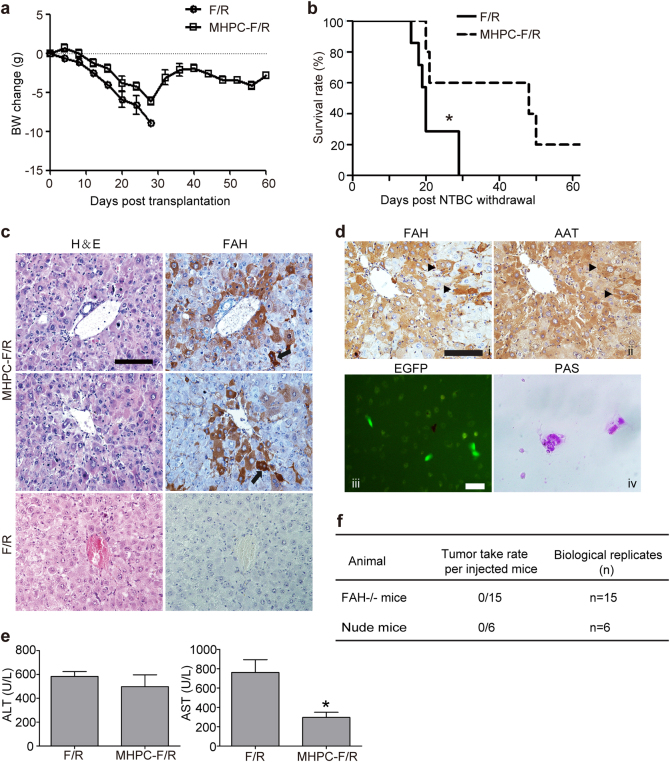
Common marmoset () is emerging as a clinically relevant nonhuman primate model for various diseases, but is hindered by the availability of marmoset cell lines, which are critical for understanding the disease pathogenesis and drug/toxicological screening prior to animal testing. Here we describe the generation of immortalized marmoset hepatic progenitor cells (MHPCs) by lentivirus-mediated transfer of the simian virus 40 large T antigen gene in fetal liver polygonal cells. MHPCs proliferate indefinitely in vitro without chromosomal alteration and telomere shortening. These cells possess hepatic progenitor cell-specific gene expression profiles with potential to differentiate into both hepatocytic and cholangiocytic lineages in vitro and in vivo and also can be genetically modified. Importantly, injected MHPCs repopulated the injured liver of fumarylacetoacetate hydrolase ()-deficient mice with hepatocyte-like cells. MHPCs also engraft as cholangiocytes into bile ducts of 3,5-diethoxycarbonyl-1,4-dihydrocollidine (DDC)-induced bile ductular injured mice. MHPCs provide a tool to enable efficient derivation and genetic modification of both hepatocytes and cholangiocytes for use in disease modeling, tissue engineering, and drug screening.
普通狨猴正在成为多种疾病具有临床相关性的非人灵长类动物模型,但由于狨猴细胞系的可获得性而受到阻碍,这些细胞系对于在动物试验前理解疾病发病机制以及药物/毒理学筛选至关重要。在此,我们描述了通过慢病毒介导将猿猴病毒40大T抗原基因转移至胎儿肝脏多边形细胞中来产生永生化狨猴肝祖细胞(MHPCs)。MHPCs在体外无限增殖,且无染色体改变和端粒缩短。这些细胞具有肝祖细胞特异性基因表达谱,在体外和体内均有分化为肝细胞和胆管细胞谱系的潜力,并且还可以进行基因改造。重要的是,注射的MHPCs能让延胡索酰乙酰乙酸水解酶(FAH)缺陷小鼠的受损肝脏重新填充类似肝细胞的细胞。MHPCs还能作为胆管细胞植入3,5 - 二乙氧基羰基 - 1,4 - 二氢可力丁(DDC)诱导的胆管损伤小鼠的胆管中。MHPCs提供了一种工具,可实现肝细胞和胆管细胞的高效衍生和基因改造,用于疾病建模、组织工程和药物筛选。