a Bioenergy and Defense Technologies, Sandia National Laboratories , Albuquerque , NM , USA.
Drug Deliv. 2018 Nov;25(1):1234-1257. doi: 10.1080/10717544.2018.1474964.
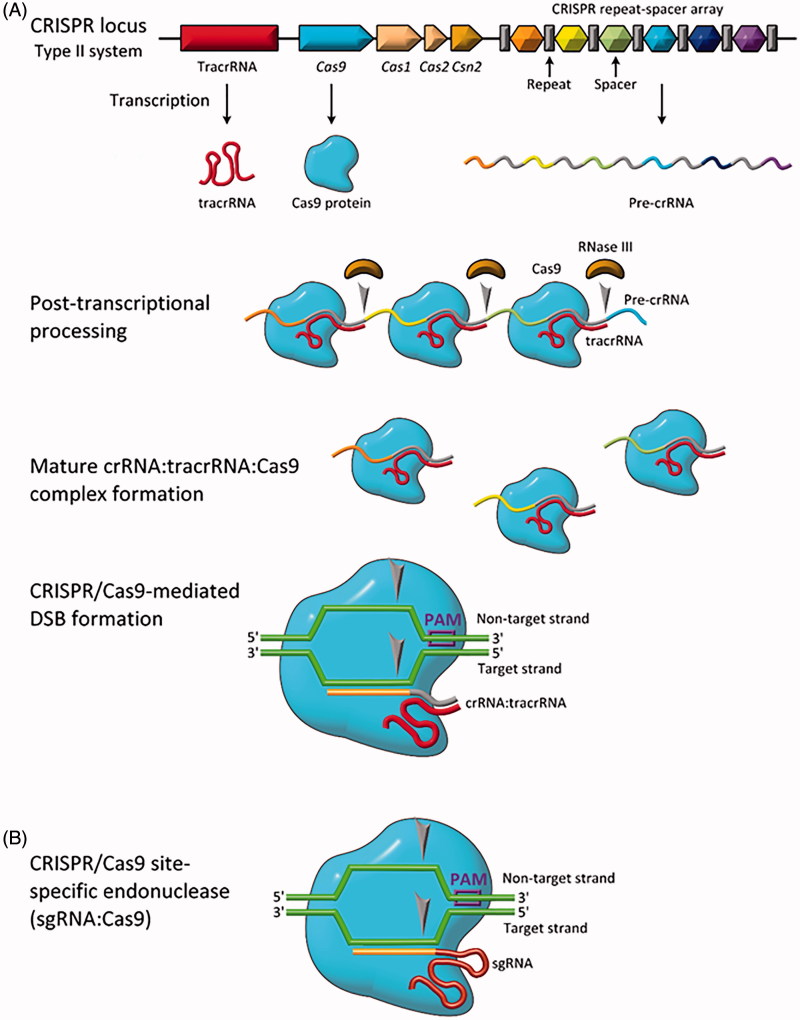
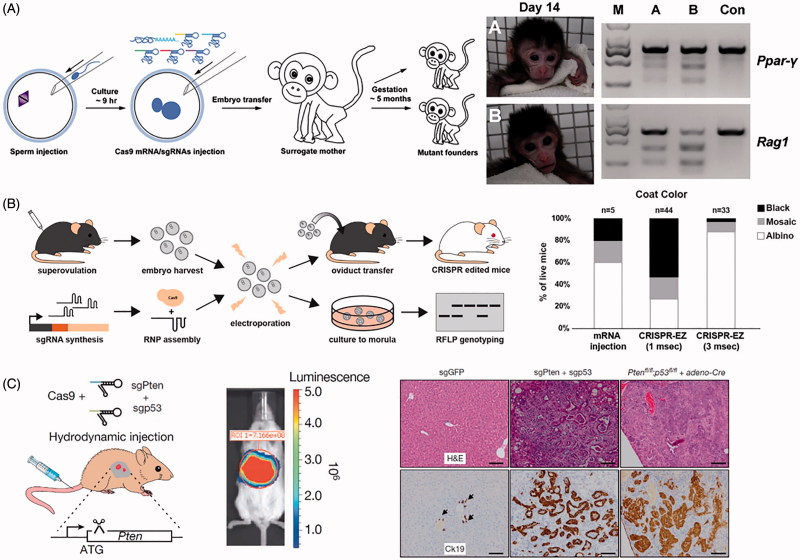
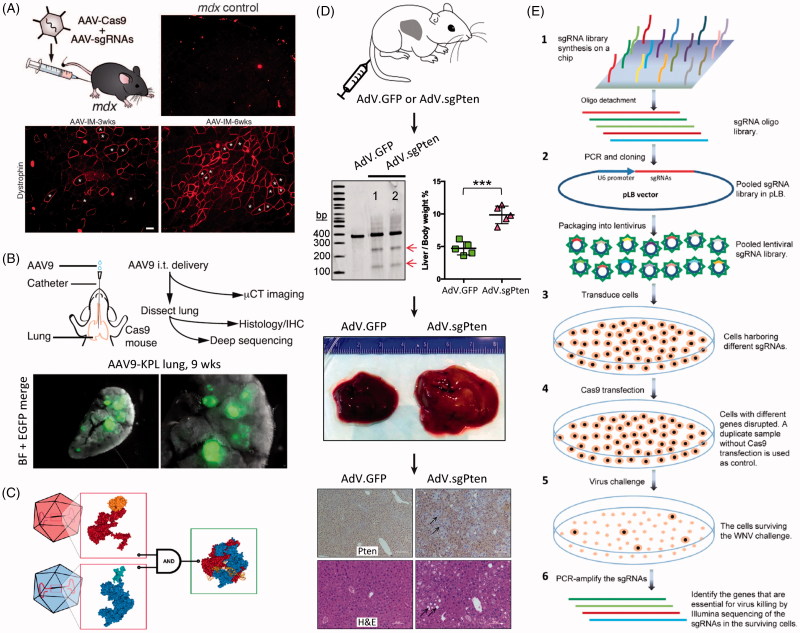
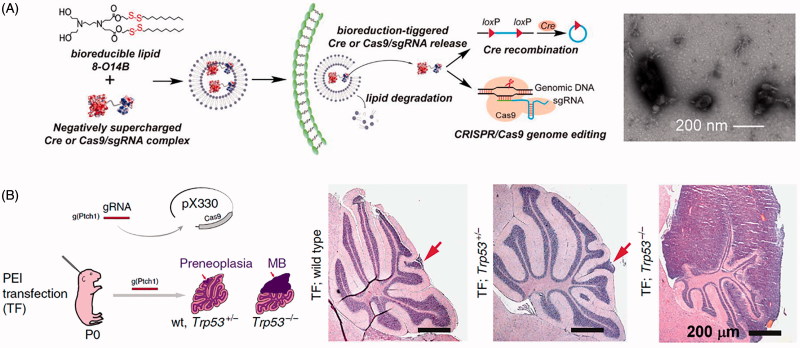
Gene therapy has long held promise to correct a variety of human diseases and defects. Discovery of the Clustered Regularly-Interspaced Short Palindromic Repeats (CRISPR), the mechanism of the CRISPR-based prokaryotic adaptive immune system (CRISPR-associated system, Cas), and its repurposing into a potent gene editing tool has revolutionized the field of molecular biology and generated excitement for new and improved gene therapies. Additionally, the simplicity and flexibility of the CRISPR/Cas9 site-specific nuclease system has led to its widespread use in many biological research areas including development of model cell lines, discovering mechanisms of disease, identifying disease targets, development of transgene animals and plants, and transcriptional modulation. In this review, we present the brief history and basic mechanisms of the CRISPR/Cas9 system and its predecessors (ZFNs and TALENs), lessons learned from past human gene therapy efforts, and recent modifications of CRISPR/Cas9 to provide functions beyond gene editing. We introduce several factors that influence CRISPR/Cas9 efficacy which must be addressed before effective in vivo human gene therapy can be realized. The focus then turns to the most difficult barrier to potential in vivo use of CRISPR/Cas9, delivery. We detail the various cargos and delivery vehicles reported for CRISPR/Cas9, including physical delivery methods (e.g. microinjection; electroporation), viral delivery methods (e.g. adeno-associated virus (AAV); full-sized adenovirus and lentivirus), and non-viral delivery methods (e.g. liposomes; polyplexes; gold particles), and discuss their relative merits. We also examine several technologies that, while not currently reported for CRISPR/Cas9 delivery, appear to have promise in this field. The therapeutic potential of CRISPR/Cas9 is vast and will only increase as the technology and its delivery improves.
基因治疗长期以来一直有望纠正各种人类疾病和缺陷。发现了 CRISPR(成簇的、规律间隔的短回文重复序列)、基于 CRISPR 的原核适应性免疫系统(CRISPR 相关系统,Cas)的机制及其重新用于强大的基因编辑工具,彻底改变了分子生物学领域,并为新的和改进的基因治疗带来了兴奋。此外,CRISPR/Cas9 位点特异性核酸酶系统的简单性和灵活性导致其在许多生物学研究领域得到广泛应用,包括开发模型细胞系、发现疾病机制、鉴定疾病靶点、转基因动植物的开发以及转录调节。在这篇综述中,我们介绍了 CRISPR/Cas9 系统及其前身(ZFNs 和 TALENs)的简要历史和基本机制、过去人类基因治疗努力中吸取的教训,以及 CRISPR/Cas9 的最新修改,以提供超越基因编辑的功能。我们介绍了影响 CRISPR/Cas9 功效的几个因素,在实现有效的体内人类基因治疗之前必须解决这些因素。然后重点转向潜在体内使用 CRISPR/Cas9 的最困难障碍,即递送。我们详细介绍了用于 CRISPR/Cas9 的各种有效载荷和递送载体,包括物理递送方法(例如微注射;电穿孔)、病毒递送方法(例如腺相关病毒(AAV);全长腺病毒和慢病毒)和非病毒递送方法(例如脂质体;多聚物;金颗粒),并讨论了它们的相对优点。我们还研究了几种技术,尽管目前尚未报道用于 CRISPR/Cas9 的递送,但它们在该领域似乎具有潜力。CRISPR/Cas9 的治疗潜力是巨大的,随着技术及其递送的改进,它只会增加。