Department of Neurology, the First People's Hospital of Chang Zhou, Jiang Su, China
The Third Affiliated Hospital of Soochow University.
Biosci Rep. 2018 Jul 2;38(4). doi: 10.1042/BSR20180127. Print 2018 Aug 31.
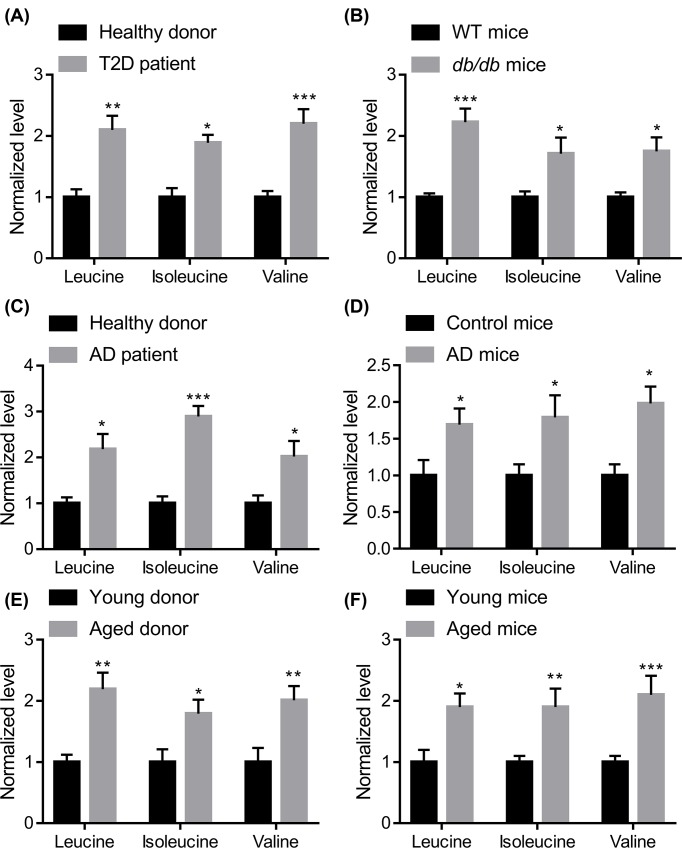
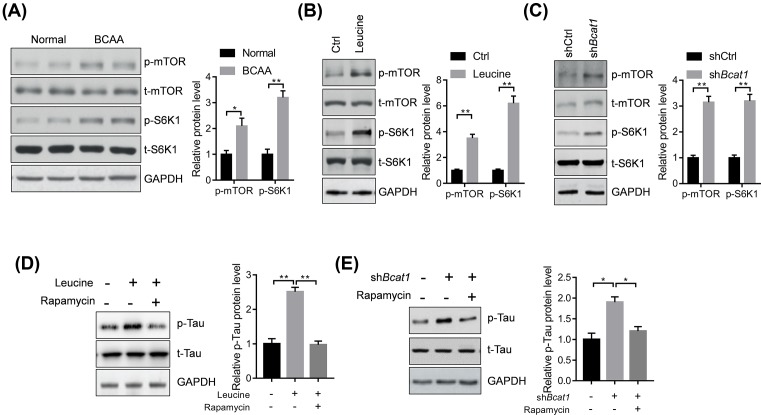
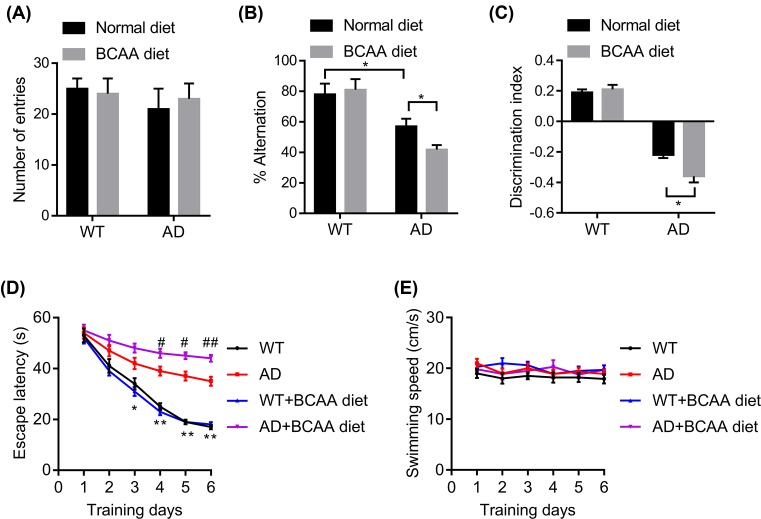
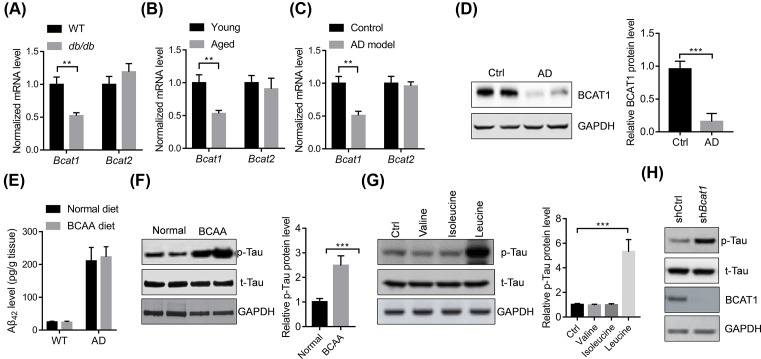
Diabetes is a risk factor for Alzheimer's disease (AD) in humans. Branched-chain amino acids (BCAAs, namely valine, leucine, and isoleucine) metabolic defect is observed in human diabetes, which is associated with insulin resistance. But whether BCAAs connect diabetes and AD remains unknown. Here, we show that BCAA metabolic defect may be one of the drivers of AD. BCAA levels were increased in the blood in human patients and mice with diabetes or AD. BCAA-enriched diet promoted the development of AD in mice as evidenced by the behavior and pathological analysis. Branched-chain amino acid transaminase 1 and 2 (BCAT1 and BCAT2) are the two enzymes for the first step metabolism of BCAAs by catalyzing BCAAs to generate branched-chain ketoacids. The expression of but not was significantly down-regulated in the brain tissues of diabetic, aged, and AD mice. Leucine up-regulated the phosphorylation of Tau but not affected the accumulation of amyloid β in the brain tissues or isolated neurons. In addition, knockdown of the expression of , which would result in the accumulation of BCAAs, led to the same phenotype as BCAAs supplement in neurons. Interestingly, leucine supplement or knockdown promoted the activation of the mTOR signaling in the brains of AD mice or neurons. Subsequently, mTOR was critically involved in leucine and knockdown-mediated phosphorylation of Tau. Taken together, our findings demonstrated that diabetes-related BCAA accumulation in the brain tissues led to the phosphorylation of Tau and, subsequently, the development of diabetes-related AD.
糖尿病是人类阿尔茨海默病(AD)的一个风险因素。支链氨基酸(BCAAs,即缬氨酸、亮氨酸和异亮氨酸)代谢缺陷在人类糖尿病中观察到,与胰岛素抵抗有关。但是,BCAAs 是否将糖尿病和 AD 联系起来尚不清楚。在这里,我们表明,BCAA 代谢缺陷可能是 AD 的驱动因素之一。糖尿病或 AD 患者的血液中 BCAA 水平升高。富含 BCAA 的饮食促进了 AD 在小鼠中的发展,这可以通过行为和病理分析来证明。支链氨基酸转氨酶 1 和 2(BCAT1 和 BCAT2)是通过催化 BCAA 生成支链酮酸来代谢 BCAAs 的第一步的两种酶。在糖尿病、衰老和 AD 小鼠的脑组织中, 但不是 的表达显著下调。亮氨酸上调 Tau 的磷酸化,但不影响脑组织或分离神经元中淀粉样β的积累。此外, 表达的敲低会导致 BCAAs 的积累,导致与 BCAA 补充在神经元中相同的表型。有趣的是,亮氨酸补充或 敲低促进了 AD 小鼠或神经元中 mTOR 信号的激活。随后,mTOR 蛋白激酶在亮氨酸和 敲低介导的 Tau 磷酸化中起着关键作用。总之,我们的研究结果表明,与糖尿病相关的脑组织中 BCAA 积累导致 Tau 的磷酸化,随后导致与糖尿病相关的 AD 的发展。