William Harvey Research Institute and John Vane Science Centre, Barts and The London School of Medicine and Dentistry, Queen Mary University of London, Charterhouse Square, London EC1M 6BQ, UK.
School of Pharmacy, Department of Pharmaceutical Chemistry, University of Oslo, P.O. Box 1068 Blindern, Oslo 0316, Norway.
Cell Chem Biol. 2018 Jun 21;25(6):749-760.e9. doi: 10.1016/j.chembiol.2018.04.017. Epub 2018 May 24.
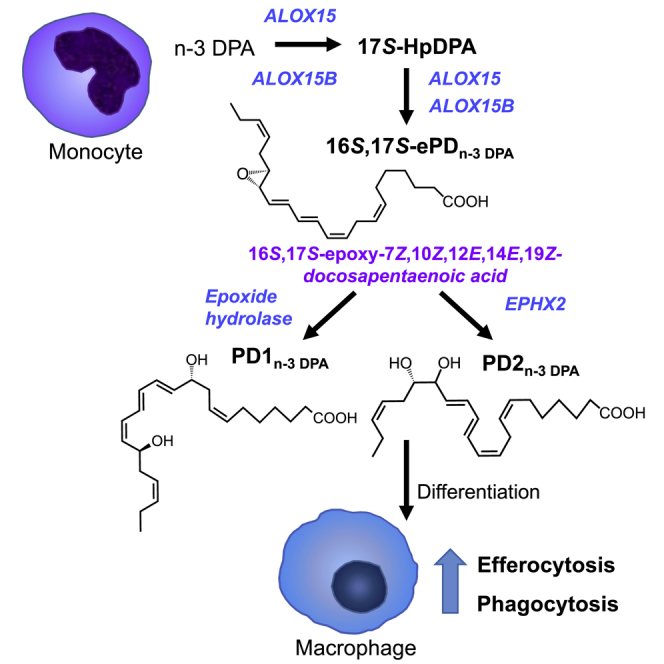
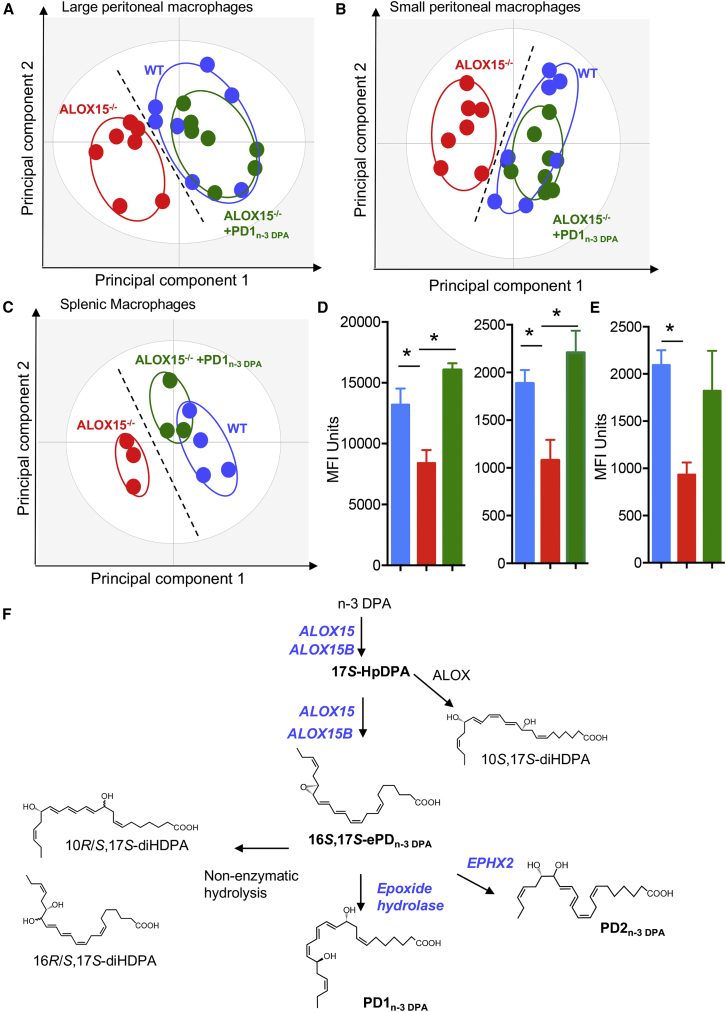
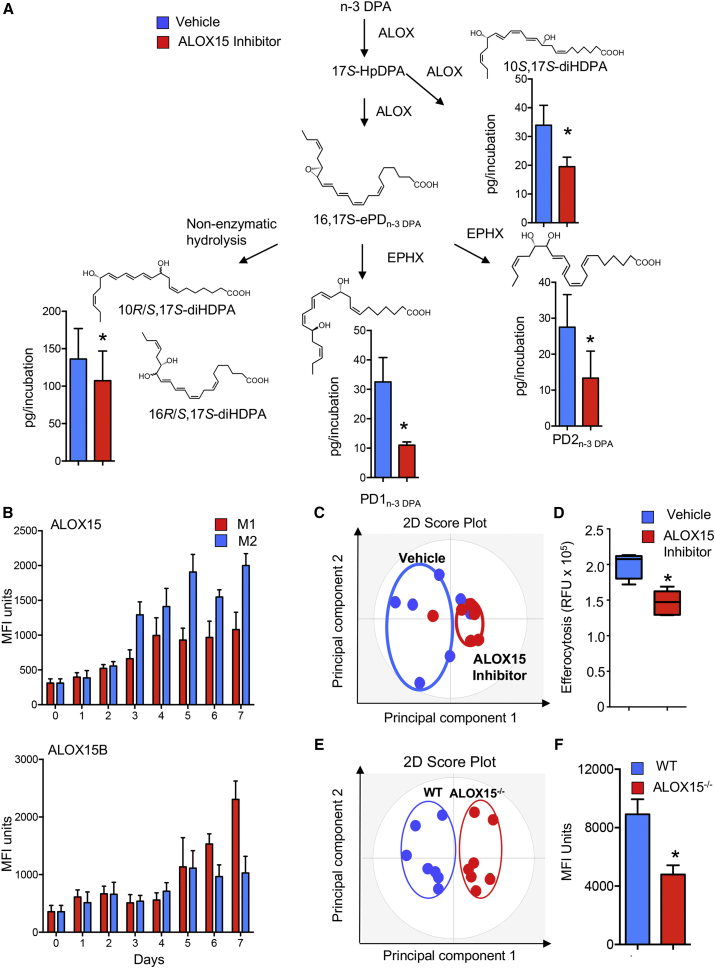
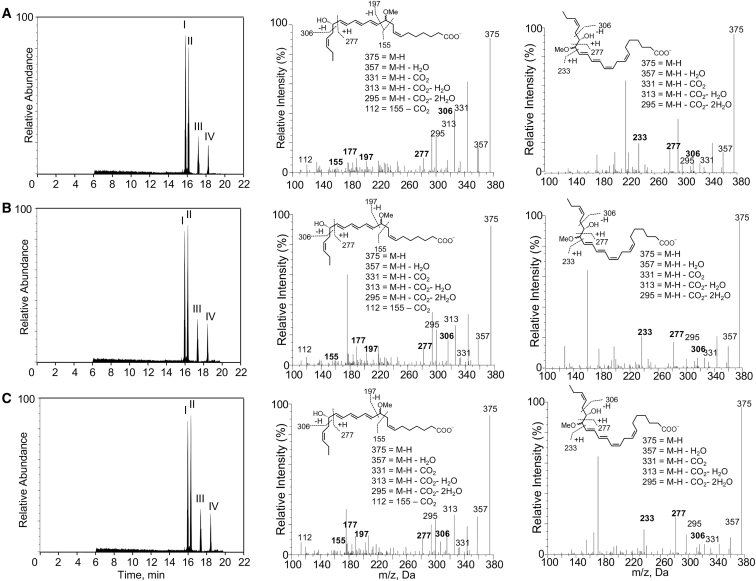
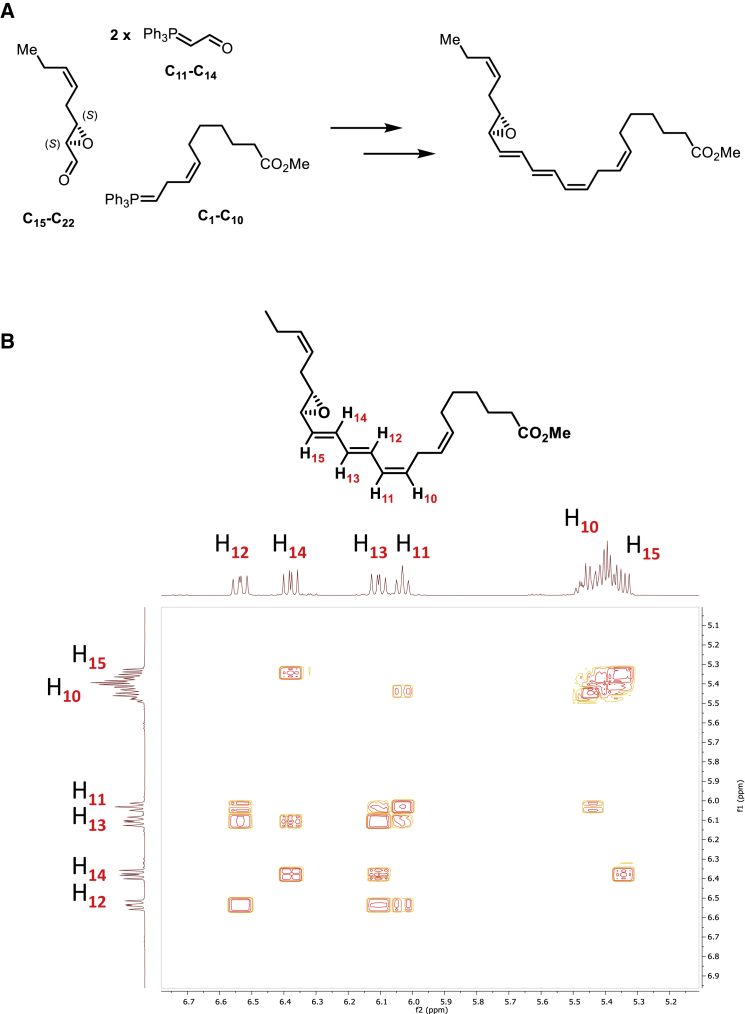
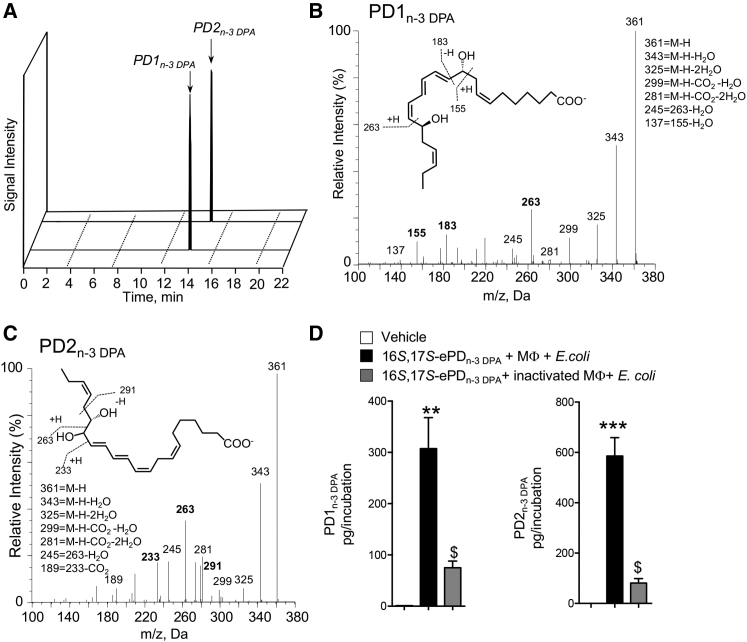
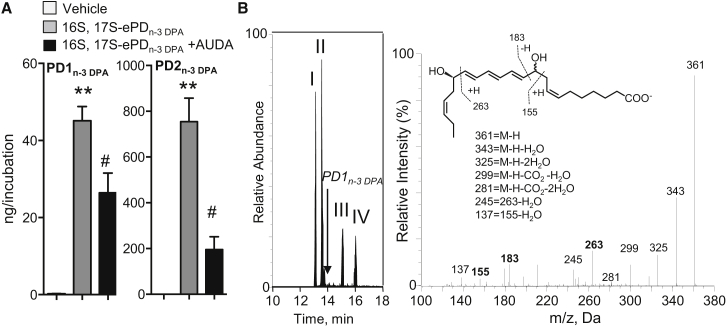
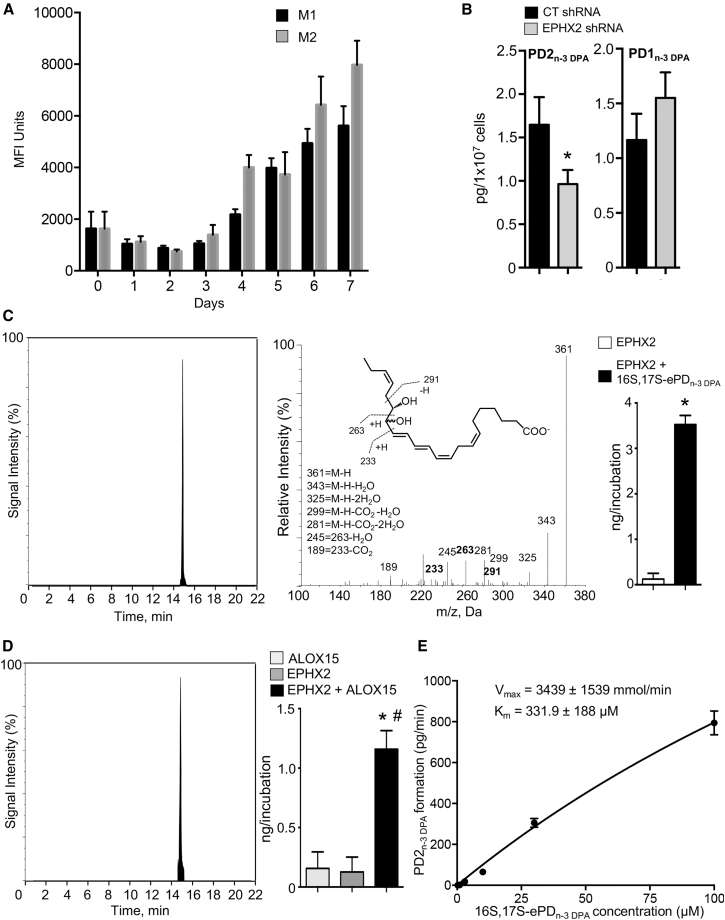
Macrophages are central in orchestrating the clearance of apoptotic cells and cellular debris during inflammation, with the mechanism(s) regulating this process remaining of interest. Herein, we found that the n-3 docosapentaenoic acid-derived protectin (PD) biosynthetic pathway regulated the differentiation of human monocytes, altering macrophage phenotype, efferocytosis, and bacterial phagocytosis. Using lipid mediator profiling, human primary cells and recombinant enzymes we found that human 15-lipoxygenases initiate the PD pathway catalyzing the formation of an allylic epoxide. The complete stereochemistry of this epoxide was determined using stereocontrolled total organic synthesis as 16S,17S-epoxy-7Z,10Z,12E,14E,19Z-docosapentaenoic acid (16S,17S-ePD). This intermediate was enzymatically converted by epoxide hydrolases to PD1 and PD2, with epoxide hydrolase 2 converting 16S,17S-ePD to PD2 in human monocytes. Taken together these results establish the PD biosynthetic pathway in human monocytes and macrophages and its role in regulating macrophage resolution responses.
巨噬细胞在炎症过程中协调细胞凋亡和细胞碎片的清除中起着核心作用,调节这一过程的机制仍然是研究的热点。在此,我们发现 n-3 二十二碳五烯酸衍生的保护素(PD)生物合成途径调节人单核细胞的分化,改变巨噬细胞表型、吞噬作用和细菌吞噬作用。通过脂质介质谱分析、人原代细胞和重组酶,我们发现人类 15-脂氧合酶启动 PD 途径,催化形成烯丙基环氧化物。使用立体控制全有机合成,确定了该环氧化物的完整立体化学结构,为 16S、17S-环氧-7Z、10Z、12E、14E、19Z-二十二碳五烯酸(16S、17S-ePD)。这种中间体通过环氧化物水解酶转化为 PD1 和 PD2,而环氧水解酶 2 在人单核细胞中将 16S、17S-ePD 转化为 PD2。这些结果共同确立了人单核细胞和巨噬细胞中 PD 生物合成途径及其在调节巨噬细胞分辨率反应中的作用。