Zhang Zaiyun, Wang Jihua, Cheng Jian, Yu Xiaoming
Cancer Center, The Second Hospital of Shandong University, Jinan, Shandong 250033, P.R. China.
Oncol Lett. 2018 Jun;15(6):8412-8416. doi: 10.3892/ol.2018.8360. Epub 2018 Mar 28.
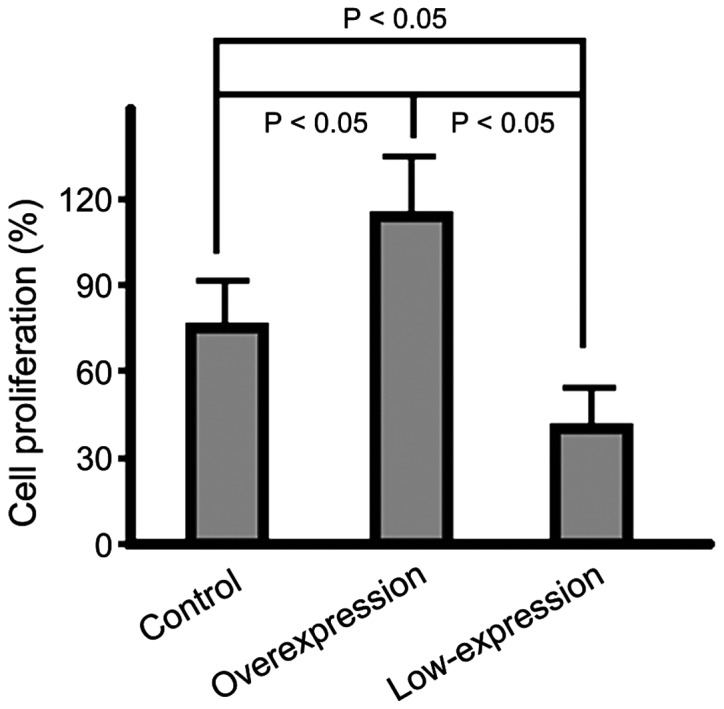
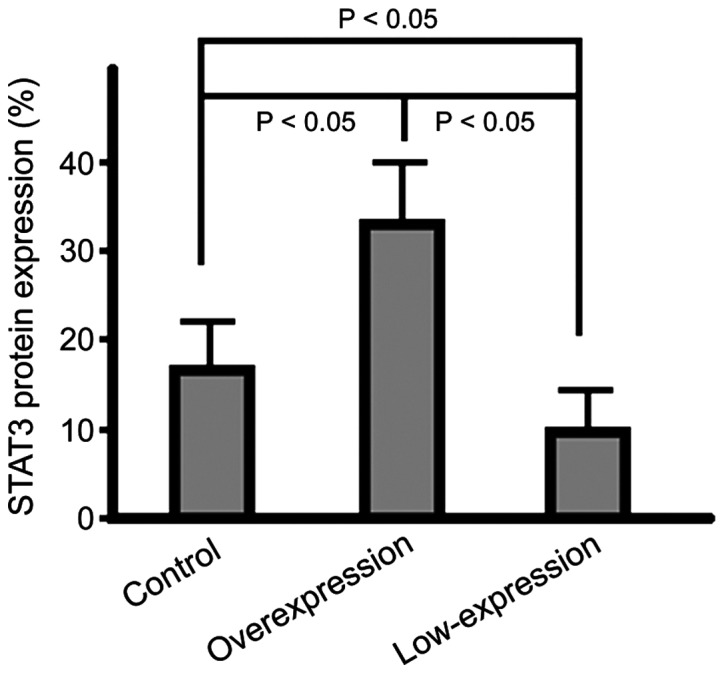
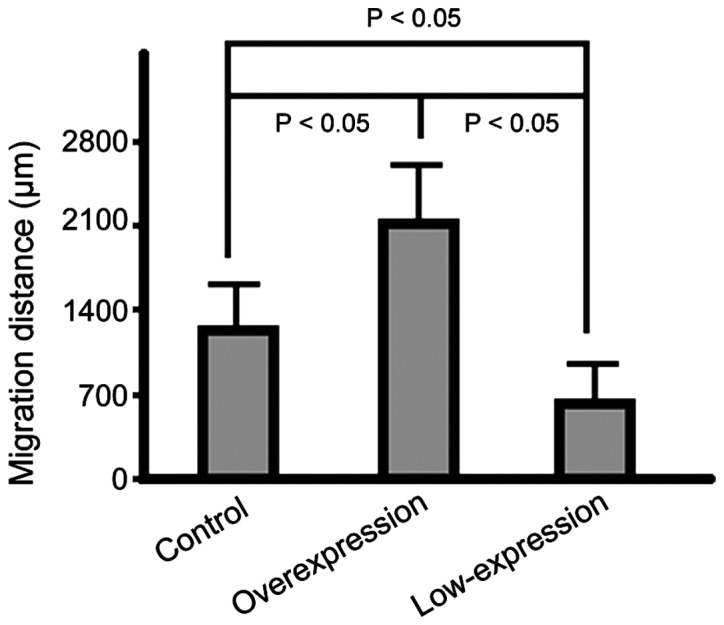
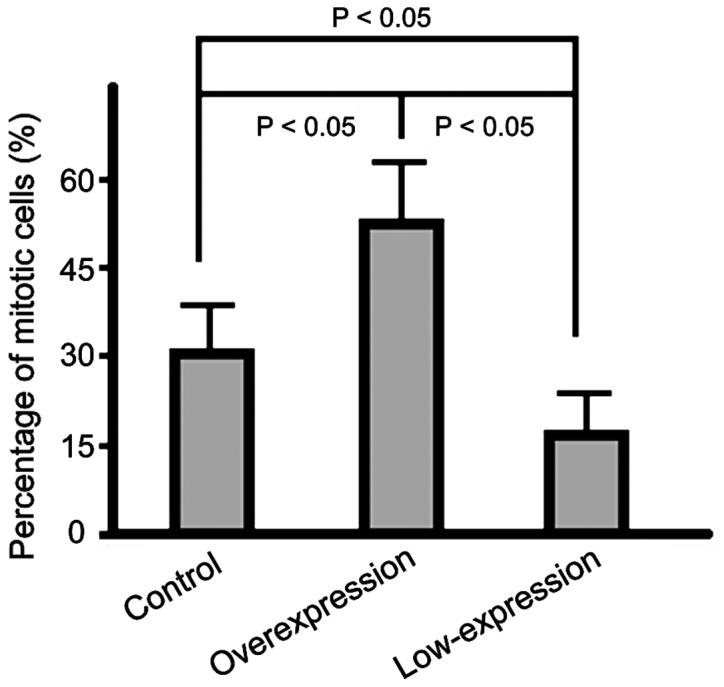
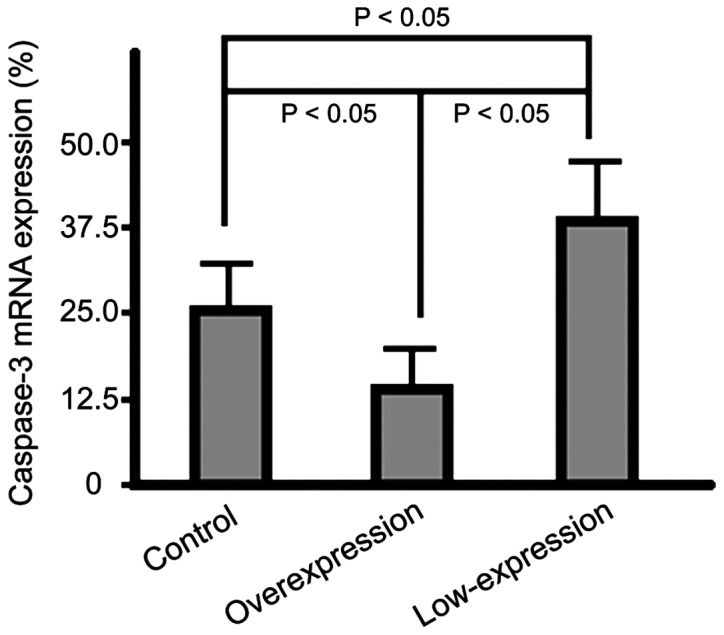
The functions of miR-126-mediated signal transducers and activators of the transcription 3 (STAT3) signal pathway were investigated in regulating the behavior of cells in non-small cell lung cancer (NSCLC). Cultured NSCLC A549 cells were transfected with empty, miR-126 overexpression or miR-126 knocked-down expression plasmids. After transfection efficiency verification by reverse transcription polymerase chain reaction (RT-PCR) and culture for 24 h, methyl thiazolyl tetrazolium (MTT) was applied to detect cell proliferation rate, migration distance was measured in scratch assays, cell cycle was determined through flow cytometry, the mRNA expression level of caspase-3 in cells was detected using RT-PCR and protein expression levels of STAT3 were detected using western blotting. Our results showed the cell proliferation rate was significantly higher in cells of the overexpression group than that in those of the control group (p<0.05) and the rate in the cells of the low-expression group was the lowest among the three groups (p<0.05). The migration distance of the overexpression group cells was significantly longer than that in the control group cells and the shortest migration distance was found in the low-expression group cells (p<0.05). The amount of cells in mitotic phase in the overexpression group was significantly higher than that in the control group and the same amount in the low-expression group was the lowest (p<0.05). The mRNA expression level of caspase-3 of cells in the overexpression group was significantly lower than that of cells in the control group and the highest expression level was found in the low-expression group (p<0.05). Finally, the protein expression levels of STAT3 in cells in the overexpression group were significantly lower than those in the control group and the highest expression levels were identified in the low-expression group (p<0.05). Based on our findings, the cancer-promoting miR-126 can mediate the activation of the STAT3 signal pathway to regulate the malignant biological behavior of NSCLC cells affecting their proliferation, migration, cycle and apoptosis susceptibility.
研究了miR-126介导的信号转导和转录激活因子3(STAT3)信号通路在调节非小细胞肺癌(NSCLC)细胞行为中的作用。将培养的NSCLC A549细胞用空质粒、miR-126过表达质粒或miR-126敲低表达质粒进行转染。通过逆转录聚合酶链反应(RT-PCR)验证转染效率并培养24小时后,应用甲基噻唑基四氮唑(MTT)检测细胞增殖率,在划痕试验中测量迁移距离,通过流式细胞术确定细胞周期,使用RT-PCR检测细胞中caspase-3的mRNA表达水平,并使用蛋白质印迹法检测STAT3的蛋白质表达水平。我们的结果显示,过表达组细胞的增殖率显著高于对照组(p<0.05),低表达组细胞的增殖率在三组中最低(p<0.05)。过表达组细胞的迁移距离显著长于对照组细胞,低表达组细胞的迁移距离最短(p<0.05)。过表达组有丝分裂期细胞数量显著高于对照组,低表达组的细胞数量最少(p<0.05)。过表达组细胞中caspase-3的mRNA表达水平显著低于对照组,低表达组的表达水平最高(p<0.05)。最后,过表达组细胞中STAT3的蛋白质表达水平显著低于对照组,低表达组的表达水平最高(p<0.05)。基于我们的研究结果,促癌性miR-126可介导STAT3信号通路的激活,以调节NSCLC细胞的恶性生物学行为,影响其增殖、迁移、周期和凋亡敏感性。