Department of Computational Biology and Medical Sciences, Graduate School of Frontier Sciences, The University of Tokyo, 5-1-5 Kashiwanoha, Kashiwa, Chiba, 277-8562, Japan.
Faculty of Medicine, Sam Ratulangi University, Kampus Unsrat, Bahu Manado, 95115, Indonesia.
Sci Rep. 2018 May 29;8(1):8286. doi: 10.1038/s41598-018-26334-3.
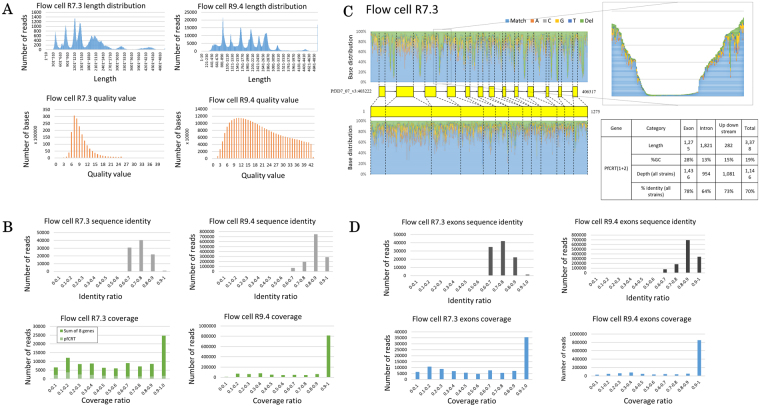
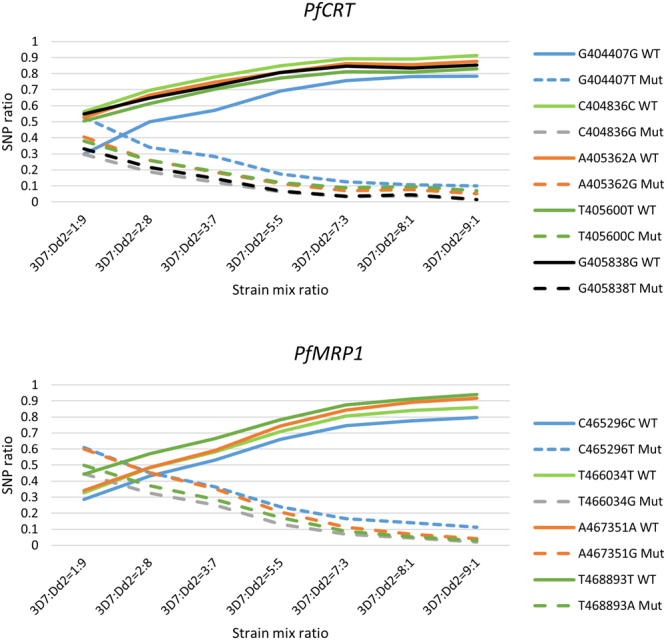
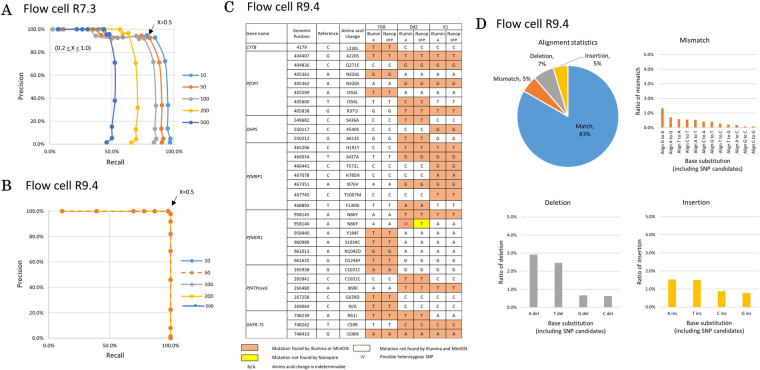
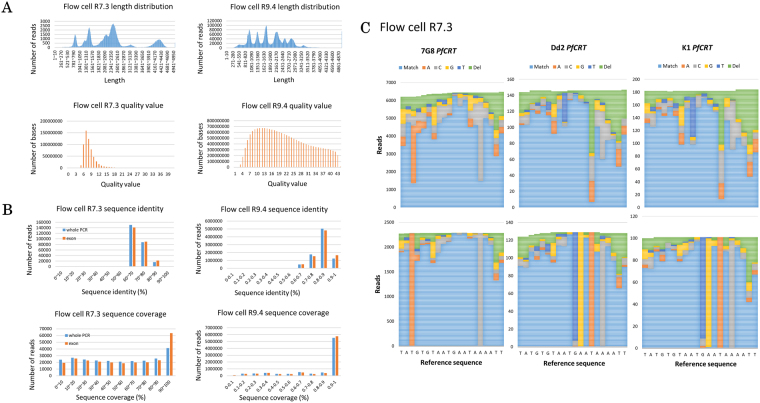
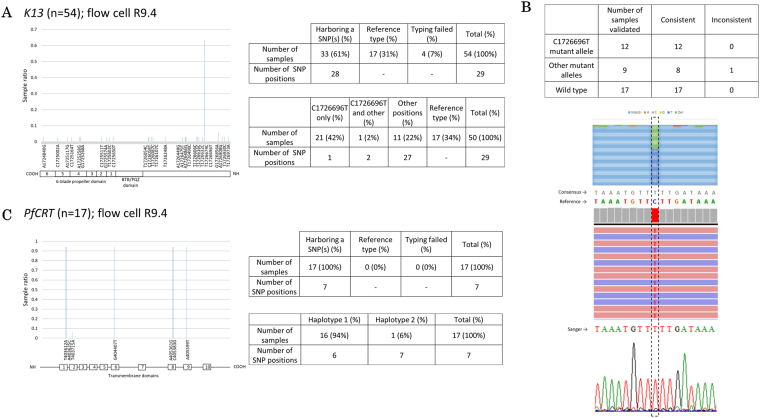
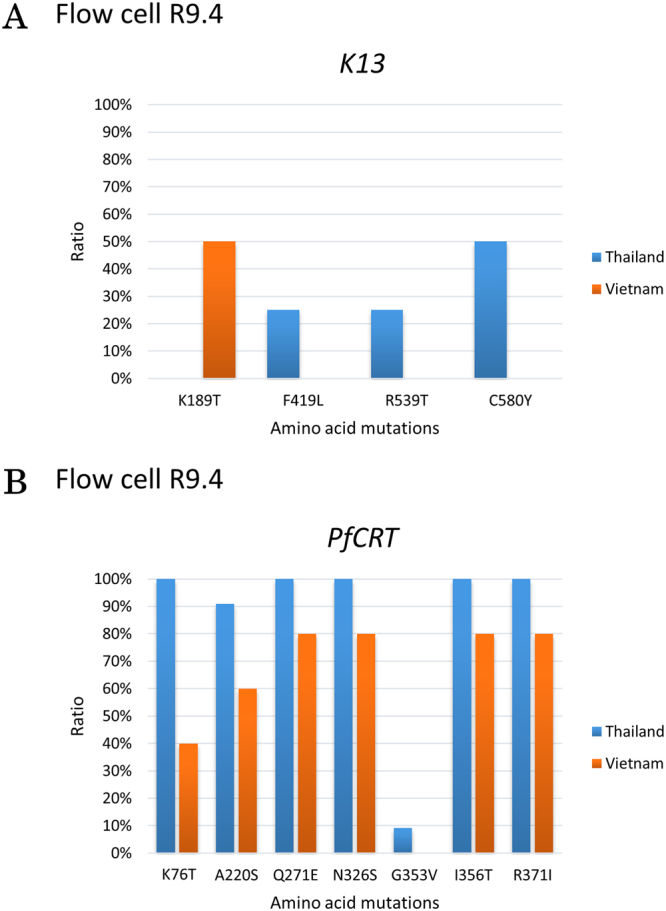
Here, we report the application of a portable sequencer, MinION, for genotyping the malaria parasite Plasmodium falciparum. In the present study, an amplicon mixture of nine representative genes causing resistance to anti-malaria drugs is diagnosed. First, we developed the procedure for four laboratory strains (3D7, Dd2, 7G8, and K1), and then applied the developed procedure to ten clinical samples. We sequenced and re-sequenced the samples using the obsolete flow cell R7.3 and the most recent flow cell R9.4. Although the average base-call accuracy of the MinION sequencer was 74.3%, performing >50 reads at a given position improves the accuracy of the SNP call, yielding a precision and recall rate of 0.92 and 0.8, respectively, with flow cell R7.3. These numbers increased significantly with flow cell R9.4, in which the precision and recall are 1 and 0.97, respectively. Based on the SNP information, the drug resistance status in ten clinical samples was inferred. We also analyzed K13 gene mutations from 54 additional clinical samples as a proof of concept. We found that a novel amino-acid changing variation is dominant in this area. In addition, we performed a small population-based analysis using 3 and 5 cases (K13) and 10 and 5 cases (PfCRT) from Thailand and Vietnam, respectively. We identified distinct genotypes from the respective regions. This approach will change the standard methodology for the sequencing diagnosis of malaria parasites, especially in developing countries.
在这里,我们报告了一种便携式测序仪 MinION 在疟原虫恶性疟原虫基因分型中的应用。在本研究中,诊断了导致抗疟药物耐药的九个代表性基因的扩增子混合物。首先,我们为四个实验室菌株(3D7、Dd2、7G8 和 K1)开发了该程序,然后将开发的程序应用于十个临床样本。我们使用过时的 R7.3 流动池和最新的 R9.4 流动池对样本进行测序和重新测序。尽管 MinION 测序仪的平均碱基调用准确率为 74.3%,但在给定位置执行>50 次读取可以提高 SNP 调用的准确性,从而使 R7.3 流动池的准确率和召回率分别达到 0.92 和 0.8。这些数字随着 R9.4 流动池的使用显著增加,其准确率和召回率分别为 1 和 0.97。基于 SNP 信息,推断了十个临床样本中的耐药状态。我们还分析了来自 54 个额外临床样本的 K13 基因突变,作为概念验证。我们发现该区域存在一种新的氨基酸改变变异,占据主导地位。此外,我们还分别使用来自泰国和越南的 3 例和 5 例(K13)以及 10 例和 5 例(PfCRT)进行了小的基于人群的分析。我们从各自的地区确定了不同的基因型。这种方法将改变疟疾寄生虫测序诊断的标准方法,特别是在发展中国家。