Quick Joshua, Loman Nicholas J, Duraffour Sophie, Simpson Jared T, Severi Ettore, Cowley Lauren, Bore Joseph Akoi, Koundouno Raymond, Dudas Gytis, Mikhail Amy, Ouédraogo Nobila, Afrough Babak, Bah Amadou, Baum Jonathan Hj, Becker-Ziaja Beate, Boettcher Jan-Peter, Cabeza-Cabrerizo Mar, Camino-Sanchez Alvaro, Carter Lisa L, Doerrbecker Juiliane, Enkirch Theresa, Dorival Isabel Graciela García, Hetzelt Nicole, Hinzmann Julia, Holm Tobias, Kafetzopoulou Liana Eleni, Koropogui Michel, Kosgey Abigail, Kuisma Eeva, Logue Christopher H, Mazzarelli Antonio, Meisel Sarah, Mertens Marc, Michel Janine, Ngabo Didier, Nitzsche Katja, Pallash Elisa, Patrono Livia Victoria, Portmann Jasmine, Repits Johanna Gabriella, Rickett Natasha Yasmin, Sachse Andrea, Singethan Katrin, Vitoriano Inês, Yemanaberhan Rahel L, Zekeng Elsa G, Trina Racine, Bello Alexander, Sall Amadou Alpha, Faye Ousmane, Faye Oumar, Magassouba N'Faly, Williams Cecelia V, Amburgey Victoria, Winona Linda, Davis Emily, Gerlach Jon, Washington Franck, Monteil Vanessa, Jourdain Marine, Bererd Marion, Camara Alimou, Somlare Hermann, Camara Abdoulaye, Gerard Marianne, Bado Guillaume, Baillet Bernard, Delaune Déborah, Nebie Koumpingnin Yacouba, Diarra Abdoulaye, Savane Yacouba, Pallawo Raymond Bernard, Gutierrez Giovanna Jaramillo, Milhano Natacha, Roger Isabelle, Williams Christopher J, Yattara Facinet, Lewandowski Kuiama, Taylor Jamie, Rachwal Philip, Turner Daniel, Pollakis Georgios, Hiscox Julian A, Matthews David A, O'Shea Matthew K, Johnston Andrew McD, Wilson Duncan, Hutley Emma, Smit Erasmus, Di Caro Antonino, Woelfel Roman, Stoecker Kilian, Fleischmann Erna, Gabriel Martin, Weller Simon A, Koivogui Lamine, Diallo Boubacar, Keita Sakoba, Rambaut Andrew, Formenty Pierre, Gunther Stephan, Carroll Miles W
Institute of Microbiology and Infection, University of Birmingham, Birmingham, B15 2TT, UK.
The European Mobile Laboratory Consortium, Bernhard-Nocht-Institute for Tropical Medicine, D-20359 Hamburg, Germany.
Nature. 2016 Feb 11;530(7589):228-232. doi: 10.1038/nature16996. Epub 2016 Feb 3.
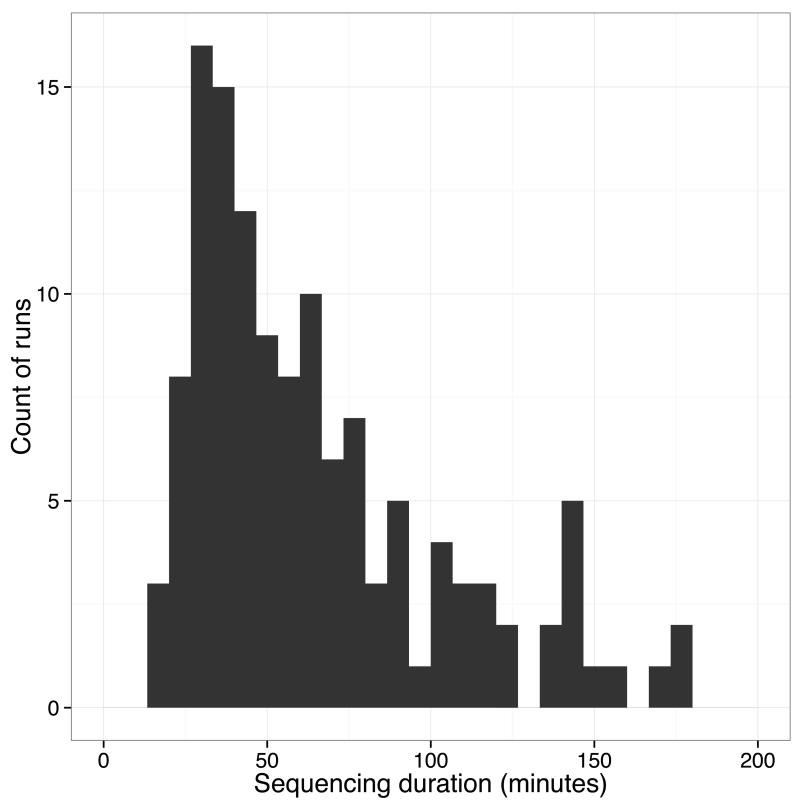
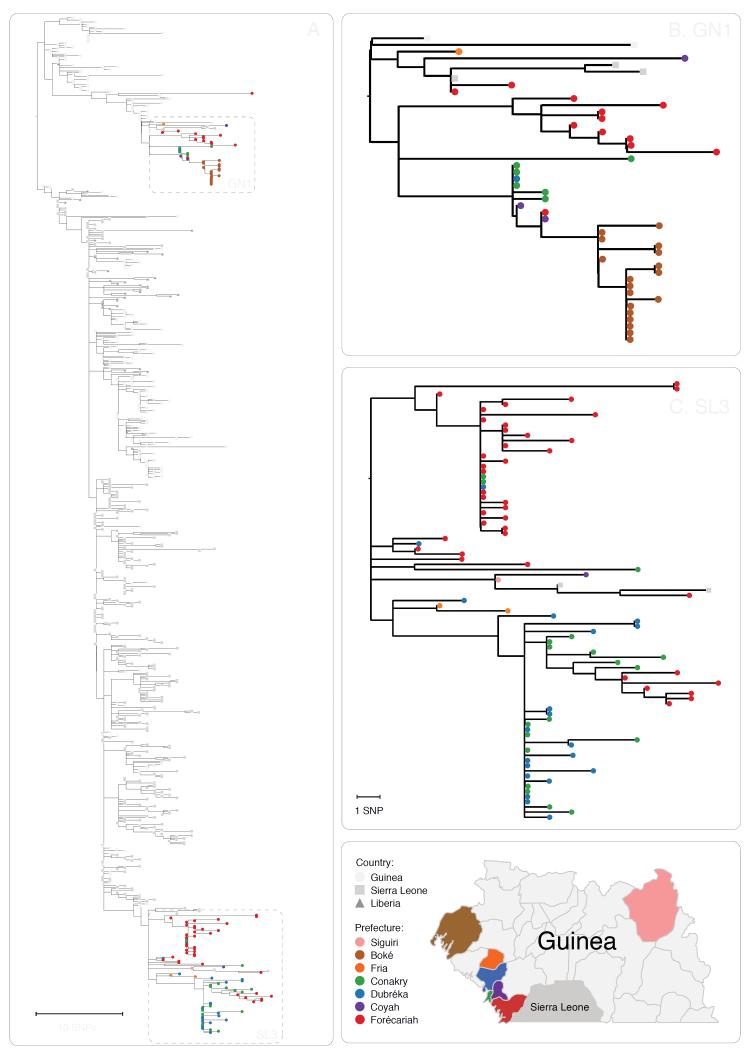
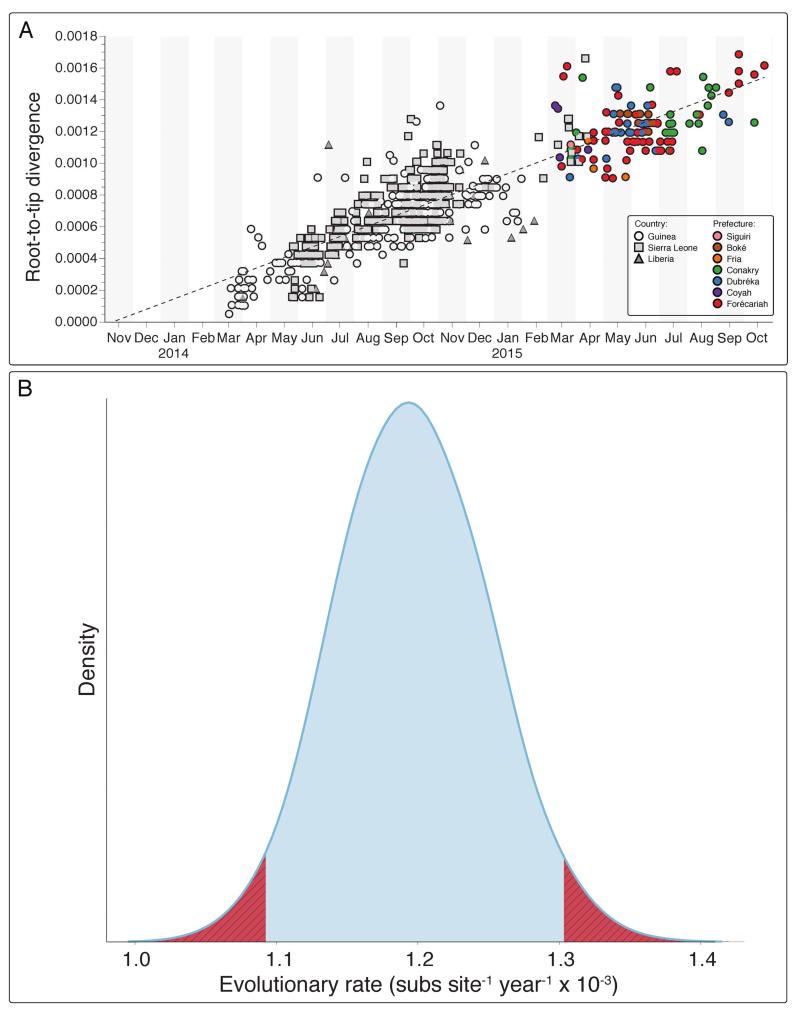
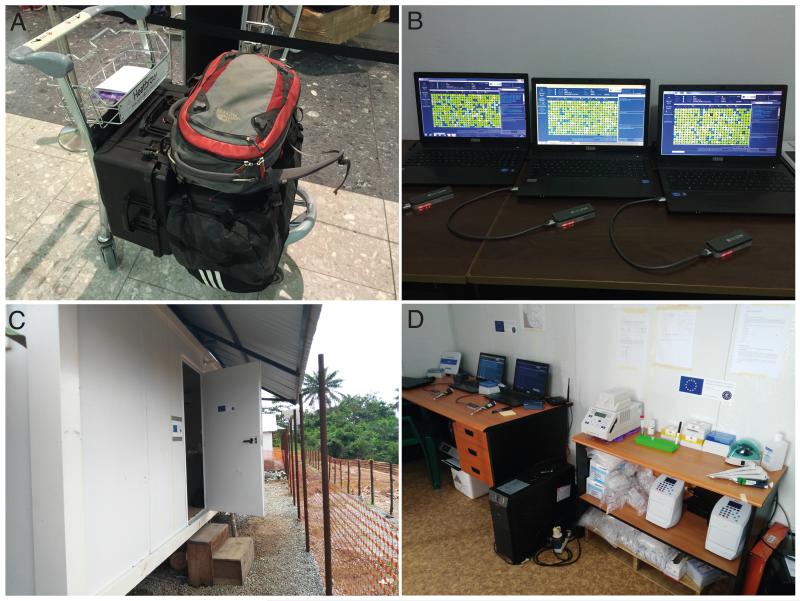
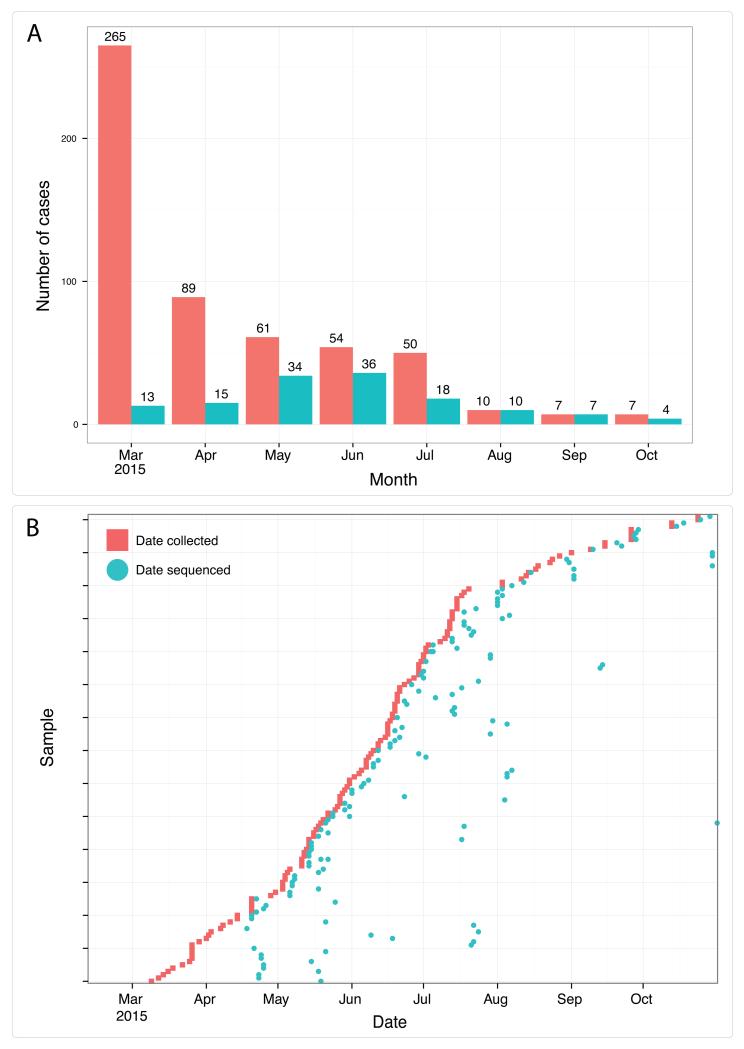
The Ebola virus disease epidemic in West Africa is the largest on record, responsible for over 28,599 cases and more than 11,299 deaths. Genome sequencing in viral outbreaks is desirable to characterize the infectious agent and determine its evolutionary rate. Genome sequencing also allows the identification of signatures of host adaptation, identification and monitoring of diagnostic targets, and characterization of responses to vaccines and treatments. The Ebola virus (EBOV) genome substitution rate in the Makona strain has been estimated at between 0.87 × 10(-3) and 1.42 × 10(-3) mutations per site per year. This is equivalent to 16-27 mutations in each genome, meaning that sequences diverge rapidly enough to identify distinct sub-lineages during a prolonged epidemic. Genome sequencing provides a high-resolution view of pathogen evolution and is increasingly sought after for outbreak surveillance. Sequence data may be used to guide control measures, but only if the results are generated quickly enough to inform interventions. Genomic surveillance during the epidemic has been sporadic owing to a lack of local sequencing capacity coupled with practical difficulties transporting samples to remote sequencing facilities. To address this problem, here we devise a genomic surveillance system that utilizes a novel nanopore DNA sequencing instrument. In April 2015 this system was transported in standard airline luggage to Guinea and used for real-time genomic surveillance of the ongoing epidemic. We present sequence data and analysis of 142 EBOV samples collected during the period March to October 2015. We were able to generate results less than 24 h after receiving an Ebola-positive sample, with the sequencing process taking as little as 15-60 min. We show that real-time genomic surveillance is possible in resource-limited settings and can be established rapidly to monitor outbreaks.
西非的埃博拉病毒病疫情是有记录以来规模最大的一次,造成了超过28,599例病例和11,299例以上死亡。对病毒爆发进行基因组测序有助于鉴定传染源并确定其进化速率。基因组测序还能识别宿主适应性特征、鉴定和监测诊断靶点以及表征对疫苗和治疗的反应。据估计,埃博拉病毒(EBOV)马科纳毒株的基因组替换率为每年每个位点0.87×10⁻³至1.42×10⁻³个突变。这相当于每个基因组有16 - 27个突变,意味着在长时间的疫情期间,序列分歧速度足够快,能够识别出不同的亚谱系。基因组测序提供了病原体进化的高分辨率视图,并且在疫情监测中越来越受到青睐。序列数据可用于指导控制措施,但前提是结果产生得足够快,以便为干预措施提供依据。由于缺乏本地测序能力,再加上将样本运送到偏远测序设施存在实际困难,疫情期间的基因组监测一直很零散。为了解决这个问题,我们在此设计了一种利用新型纳米孔DNA测序仪的基因组监测系统。2015年4月,该系统被装在标准航空行李中运往几内亚,并用于对正在流行的疫情进行实时基因组监测。我们展示了2015年3月至10月期间收集的142份埃博拉病毒样本的序列数据和分析结果。我们能够在收到埃博拉病毒阳性样本后不到24小时就得出结果,测序过程最短只需15 - 60分钟。我们表明,在资源有限的环境中进行实时基因组监测是可行的,并且可以迅速建立以监测疫情爆发。