Chen Chun-Bing, Wu Ming-Ying, Ng Chau Yee, Lu Chun-Wei, Wu Jennifer, Kao Pei-Han, Yang Chan-Keng, Peng Meng-Ting, Huang Chen-Yang, Chang Wen-Cheng, Hui Rosaline Chung-Yee, Yang Chih-Hsun, Yang Shun-Fa, Chung Wen-Hung, Su Shih-Chi
Department of Dermatology, Drug Hypersensitivity Clinical and Research Center, Chang Gung Memorial Hospital, Linkou, Taiwan.
Department of Dermatology, Drug Hypersensitivity Clinical and Research Center, Chang Gung Memorial Hospital, Taipei, Taiwan.
Cancer Manag Res. 2018 May 17;10:1259-1273. doi: 10.2147/CMAR.S163391. eCollection 2018.
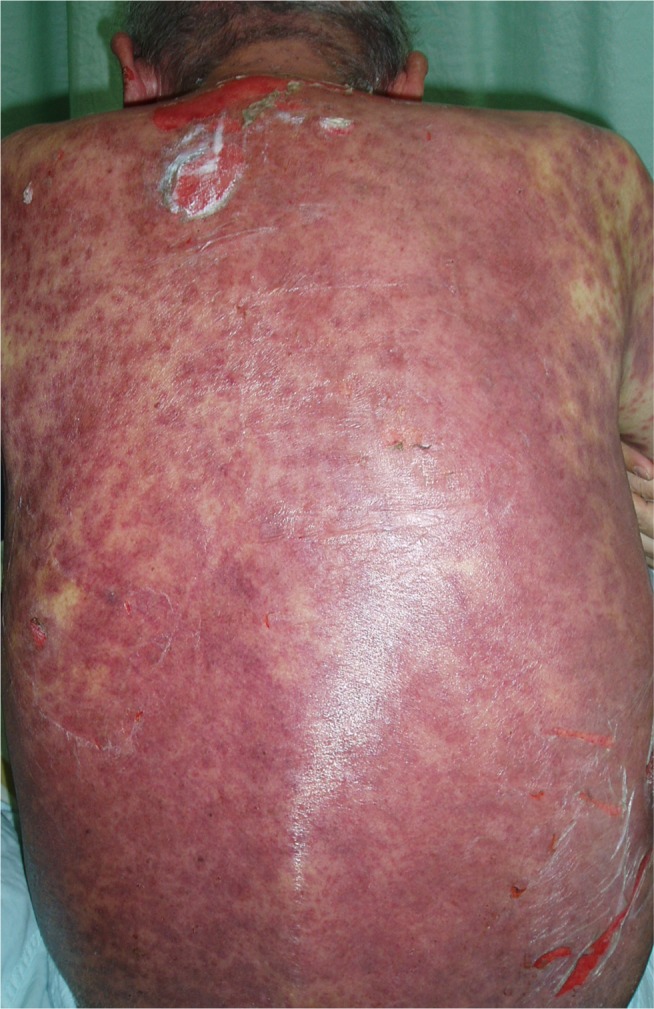
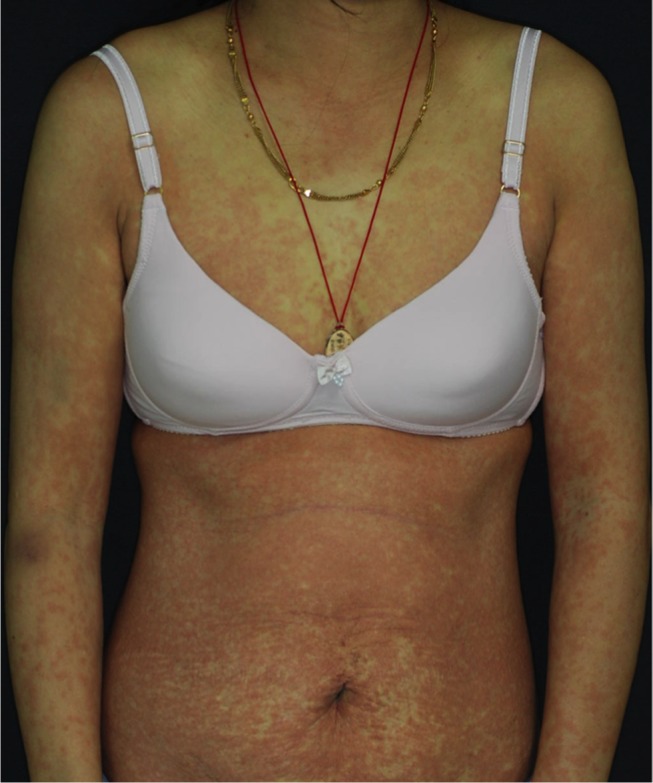
With the increasing use of targeted anticancer drugs and immunotherapies, there have been a substantial number of reports concerning life-threatening severe cutaneous adverse reactions (SCARs), including Stevens-Johnson syndrome (SJS), toxic epidermal necrolysis (TEN), drug rash with eosinophilia and systemic symptoms, drug-induced hypersensitivity syndrome, and acute generalized exanthematous pustulosis. Although the potential risks and characteristics for targeted anticancer agent- and immunotherapy-induced SCAR were not well understood, these serious adverse reactions usually result in morbidity and sequela. As a treatment guideline for this devastating condition is still unavailable, prompt withdrawal of causative drugs is believed to be a priority of patient management. In this review, we outline distinct types of SCARs caused by targeted anticancer therapies and immunotherapies. Also, we discuss the clinical course, latency, concomitant medication, tolerability of rechallenge or alternatives, tumor response, and mortality associated with these devastating conditions. Imatinib, vemurafenib, and rituximab were the top three offending medications that most commonly caused SJS/TEN, while EGFR inhibitors were the group of drugs that most frequently induced SJS/TEN. For drug rash with eosinophilia and systemic symptoms/drug-induced hypersensitivity syndrome and acute generalized exanthematous pustulosis, imatinib was also the most common offending drug. Additionally, we delineated 10 SCAR cases related to innovative immunotherapies, including PD1 and CTLA4 inhibitors. There was a wide range of latency periods: 5.5-91 days (median). Only eight of 16 reported patients with SCAR showed clinical responses. Targeted anticancer drugs and immunotherapies can lead to lethal SCAR (14 deceased patients were identified as suffering from SJS/TEN). The mortality rate of TEN was high: up to 52.4%. The information compiled herein will serve as a solid foundation to formulate ideas for early recognition of SCAR and to discontinue offending drugs for better management.
随着靶向抗癌药物和免疫疗法的使用日益增加,出现了大量关于危及生命的严重皮肤不良反应(SCARs)的报告,包括史蒂文斯 - 约翰逊综合征(SJS)、中毒性表皮坏死松解症(TEN)、伴有嗜酸性粒细胞增多和全身症状的药疹、药物性超敏反应综合征以及急性泛发性脓疱病。尽管对于靶向抗癌药物和免疫疗法诱导的SCAR的潜在风险和特征尚未完全了解,但这些严重不良反应通常会导致发病和后遗症。由于针对这种毁灭性疾病的治疗指南仍然缺乏,迅速停用致病药物被认为是患者管理的首要任务。在本综述中,我们概述了由靶向抗癌疗法和免疫疗法引起的不同类型的SCARs。此外,我们讨论了这些毁灭性疾病的临床病程、潜伏期、合并用药、再次激发或替代药物的耐受性、肿瘤反应以及死亡率。伊马替尼、维莫非尼和利妥昔单抗是最常引起SJS/TEN的前三种致病药物,而表皮生长因子受体(EGFR)抑制剂是最常诱发SJS/TEN的药物类别。对于伴有嗜酸性粒细胞增多和全身症状的药疹/药物性超敏反应综合征以及急性泛发性脓疱病,伊马替尼也是最常见的致病药物。此外,我们描述了10例与创新免疫疗法相关的SCAR病例,包括程序性死亡受体1(PD1)和细胞毒性T淋巴细胞相关蛋白4(CTLA4)抑制剂。潜伏期范围很广:5.5 - 91天(中位数)。在16例报告的SCAR患者中,只有8例显示出临床反应。靶向抗癌药物和免疫疗法可导致致命的SCAR(14例死亡患者被确定患有SJS/TEN)。TEN的死亡率很高:高达52.4%。本文汇编的信息将为制定早期识别SCAR和停用致病药物以进行更好管理的思路奠定坚实基础。