Mäder Lisa, Blank Anna E, Capper David, Jansong Janina, Baumgarten Peter, Wirsik Naita M, Zachskorn Cornelia, Ehlers Jakob, Seifert Michael, Klink Barbara, Liebner Stefan, Niclou Simone, Naumann Ulrike, Harter Patrick N, Mittelbronn Michel
Edinger Institute (Neurological Institute), Goethe University, Frankfurt, Germany.
Department of Neuropathology, University of Heidelberg, Heidelberg, Germany.
Oncotarget. 2018 May 8;9(35):24041-24053. doi: 10.18632/oncotarget.25275.
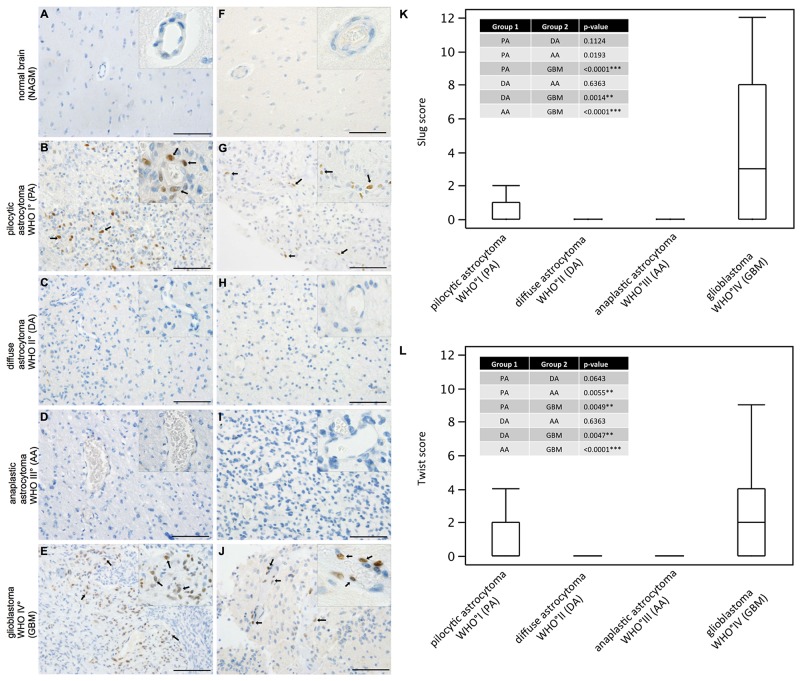
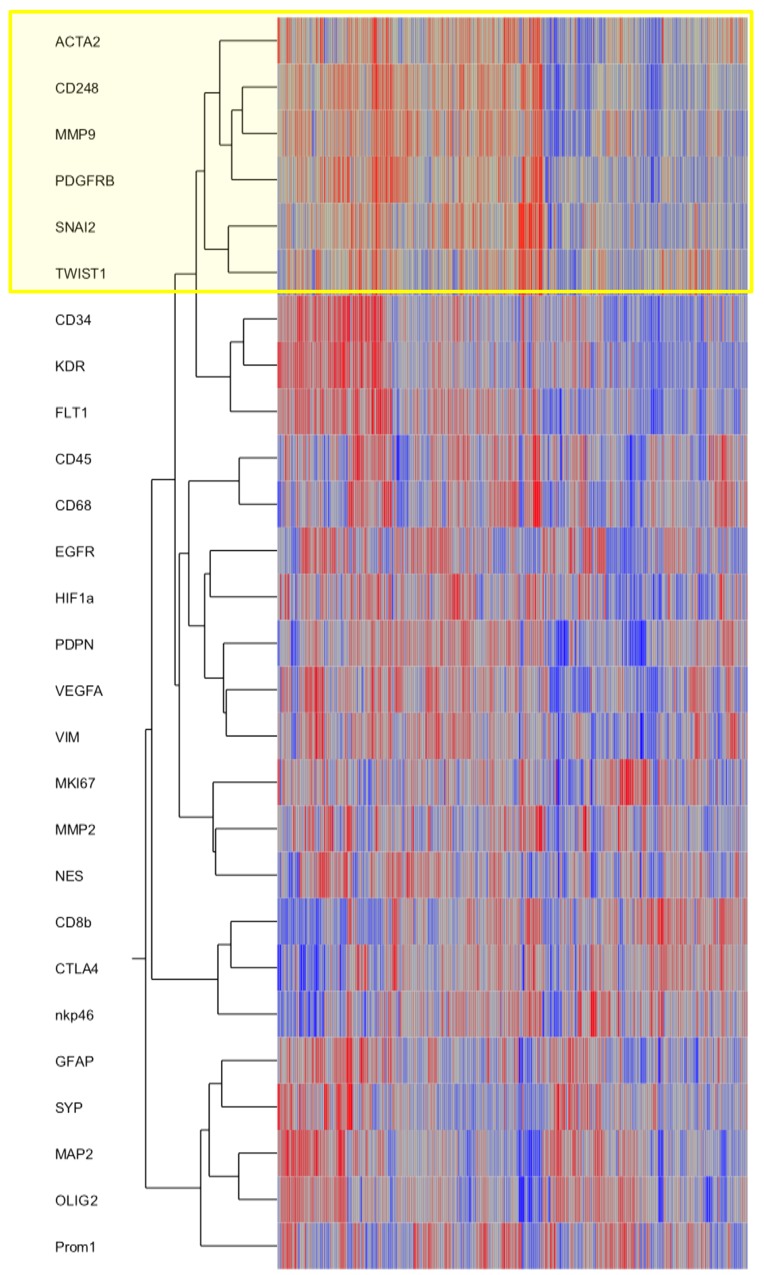
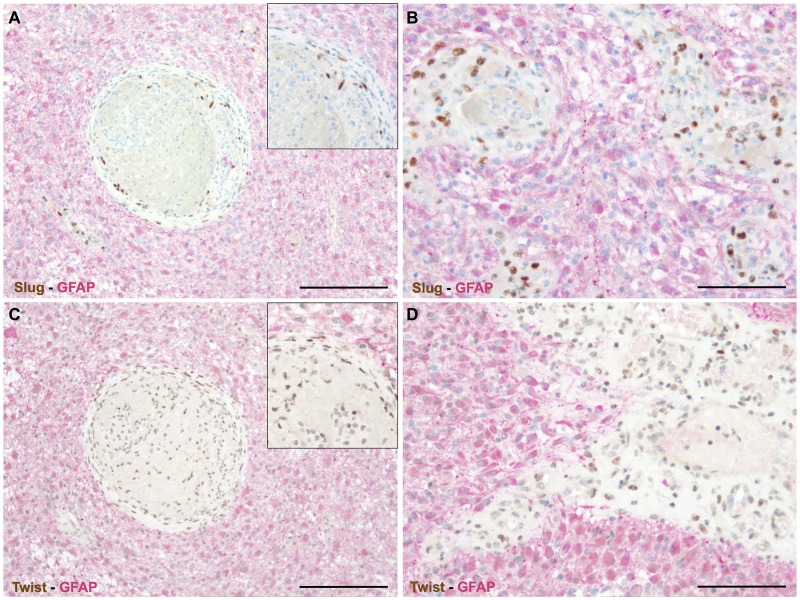
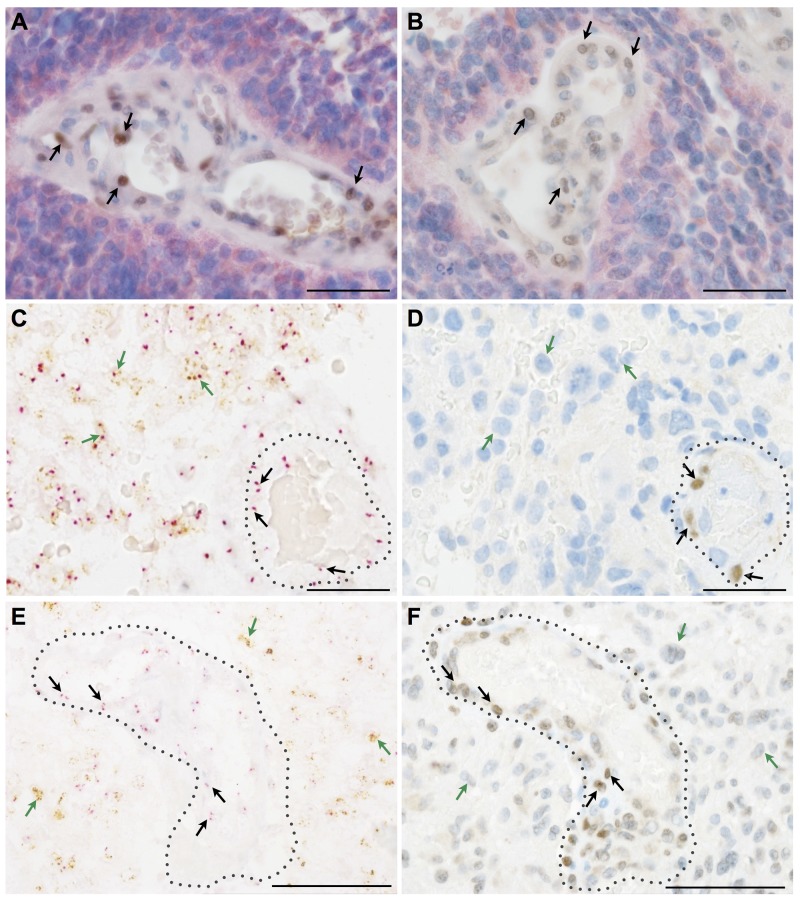
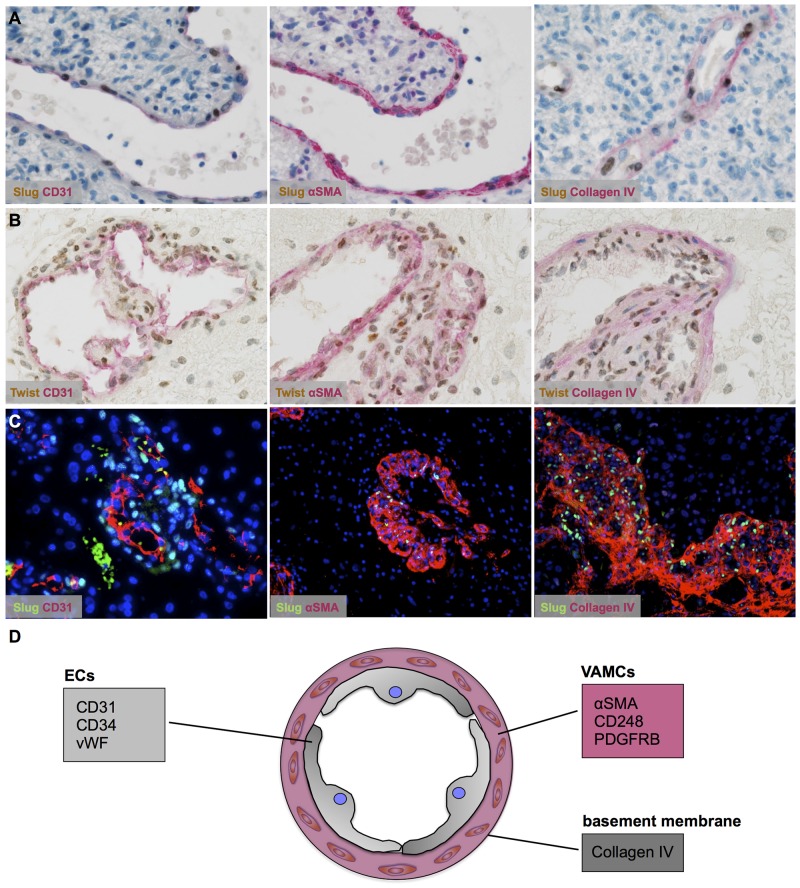
Epithelial-to-mesenchymal transition (EMT) is supposed to be responsible for increased invasion and metastases in epithelial cancer cells. The activation of EMT genes has further been proposed to be important in the process of malignant transformation of primary CNS tumors. Since the cellular source and clinical impact of EMT factors in primary CNS tumors still remain unclear, we aimed at deciphering their distribution and clinico-pathological relevance in human gliomas. We investigated 350 glioma patients for the expression of the key EMT factors SLUG and TWIST by immunohistochemistry and immunofluorescence related to morpho-genetic alterations such as -amplification, (R132H) mutation and 1p/19q LOH. Furthermore, transcriptional cluster and survival analyses were performed. Our data illustrate that SLUG and TWIST are overexpressed in gliomas showing vascular proliferation such as pilocytic astrocytomas and glioblastomas. EMT factors are exclusively expressed by non-neoplastic pericytes/vessel-associated mural cells (VAMCs). They are not associated with patient survival but correlate with pericytic/VAMC genes in glioblastoma cluster analysis. In summary, the upregulation of EMT genes in pilocytic astrocytomas and glioblastomas reflects the level of activation of pericytes/VAMCs in newly formed blood vessels. Our results underscore that the negative prognostic potential of the EMT signature in the group of diffuse gliomas of WHO grade II-IV does most likely not derive from glioma cells but rather reflects the degree of proliferating mural cells thereby constituting a potential target for future alternative treatment approaches.
上皮-间质转化(EMT)被认为与上皮癌细胞侵袭和转移能力增强有关。EMT基因的激活在原发性中枢神经系统肿瘤的恶性转化过程中也被认为具有重要作用。由于原发性中枢神经系统肿瘤中EMT因子的细胞来源和临床影响仍不清楚,我们旨在阐明其在人类胶质瘤中的分布及临床病理相关性。我们通过免疫组织化学和免疫荧光技术,研究了350例胶质瘤患者中关键EMT因子SLUG和TWIST的表达情况,并将其与形态学改变相关联,如基因扩增、(R132H)突变和1p/19q杂合性缺失。此外,还进行了转录聚类分析和生存分析。我们的数据表明,SLUG和TWIST在表现出血管增殖的胶质瘤中过度表达,如毛细胞型星形细胞瘤和胶质母细胞瘤。EMT因子仅由非肿瘤性周细胞/血管相关壁细胞(VAMCs)表达。它们与患者生存率无关,但在胶质母细胞瘤聚类分析中与周细胞/VAMC基因相关。总之,毛细胞型星形细胞瘤和胶质母细胞瘤中EMT基因的上调反映了新生血管中周细胞/VAMCs的激活水平。我们的结果强调,WHO II-IV级弥漫性胶质瘤组中EMT特征的负面预后潜力很可能并非源于胶质瘤细胞,而是反映了增殖壁细胞的程度,从而构成了未来替代治疗方法的潜在靶点。