Tao Chuming, Huang Kai, Shi Jin, Hu Qing, Li Kuangxun, Zhu Xingen
Department of Neurosurgery, The Second Affiliated Hospital of Nanchang University, Nanchang, China.
Scientific Research Center, East China Institute of Digital Medical Engineering, Shangrao, China.
Front Oncol. 2020 Feb 21;10:183. doi: 10.3389/fonc.2020.00183. eCollection 2020.
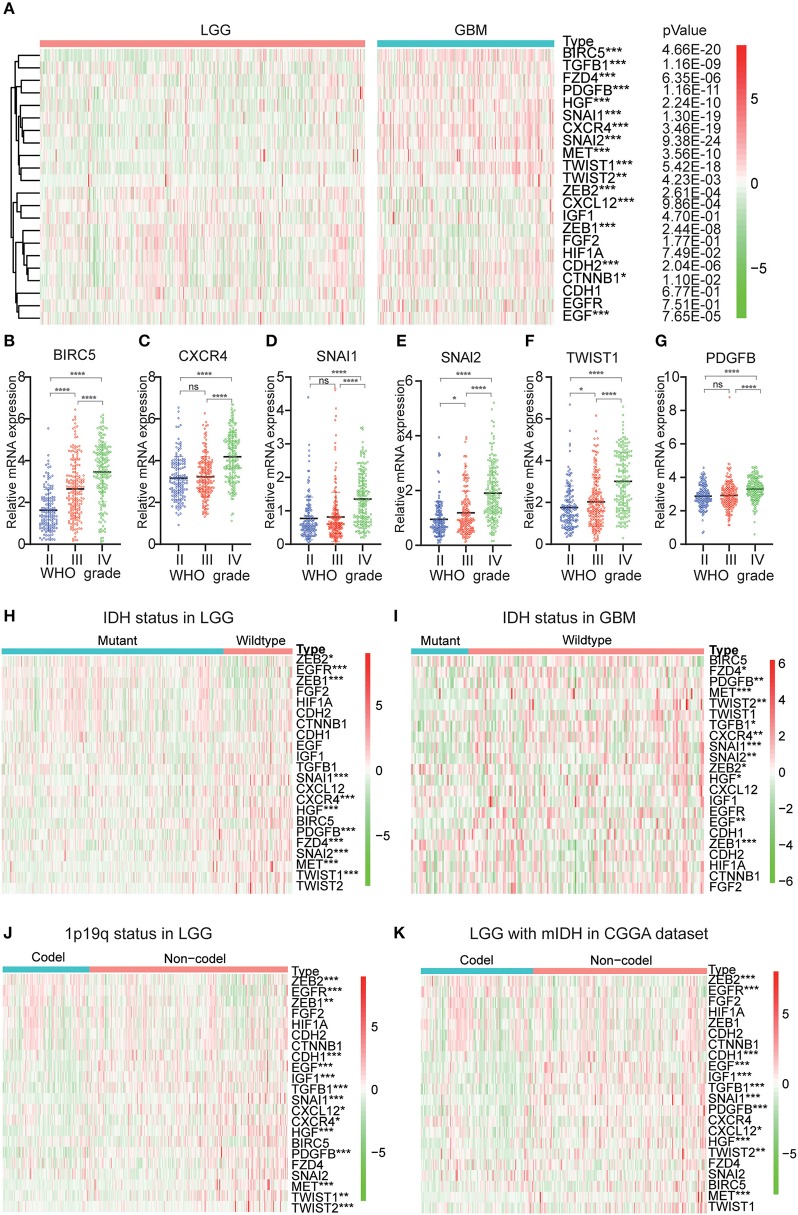
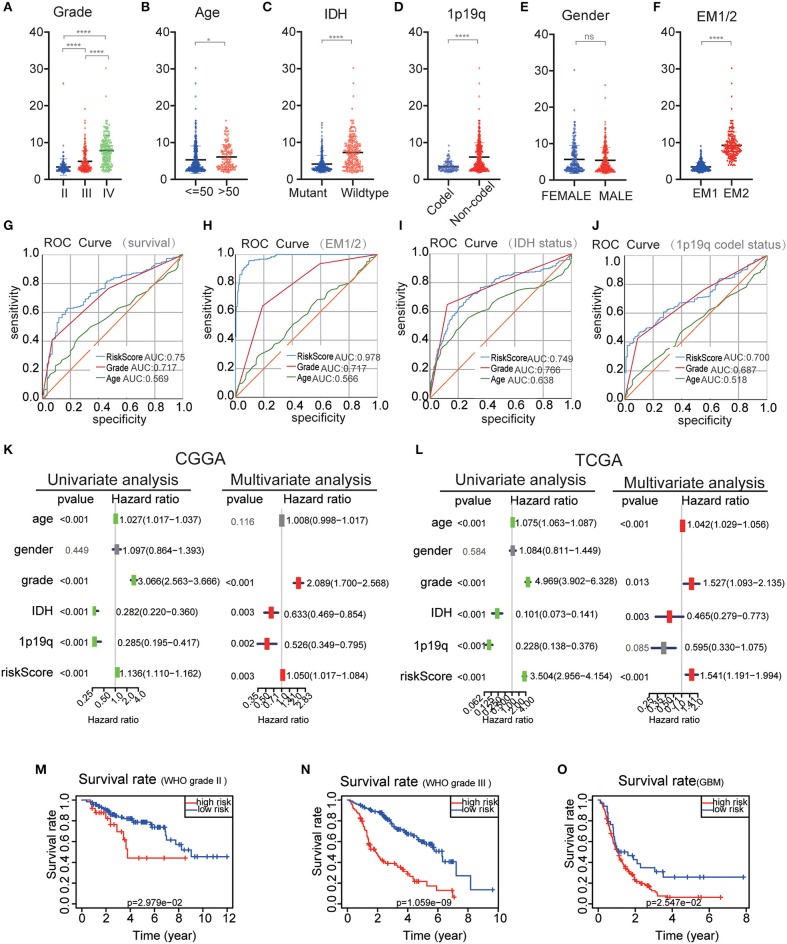
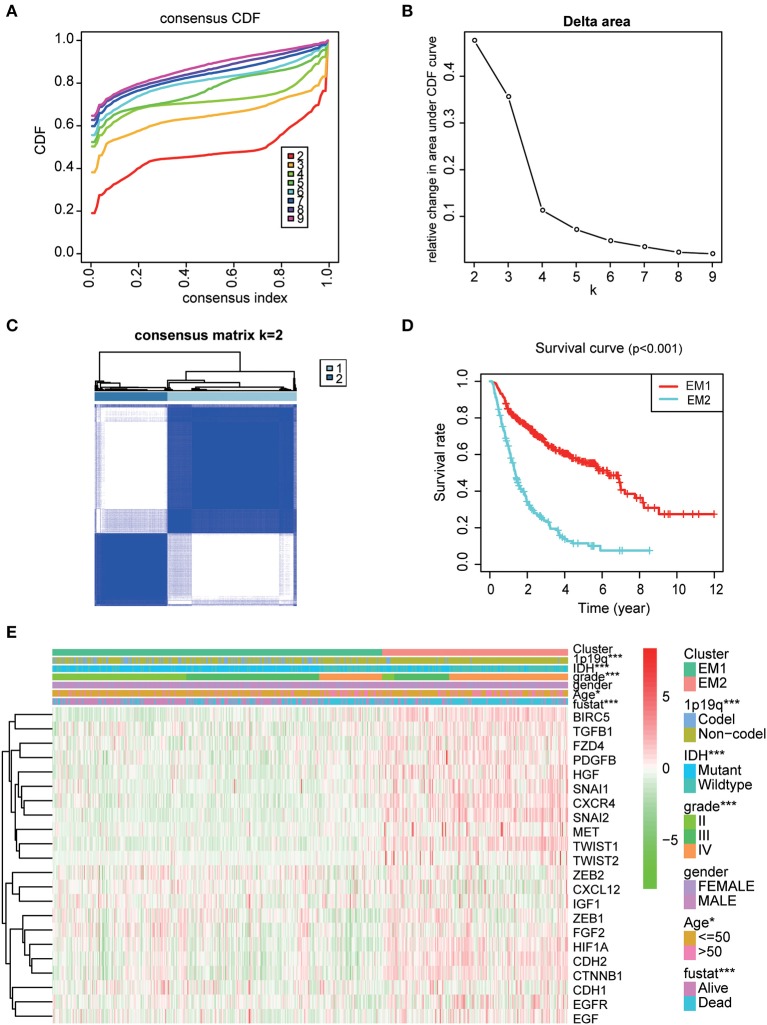
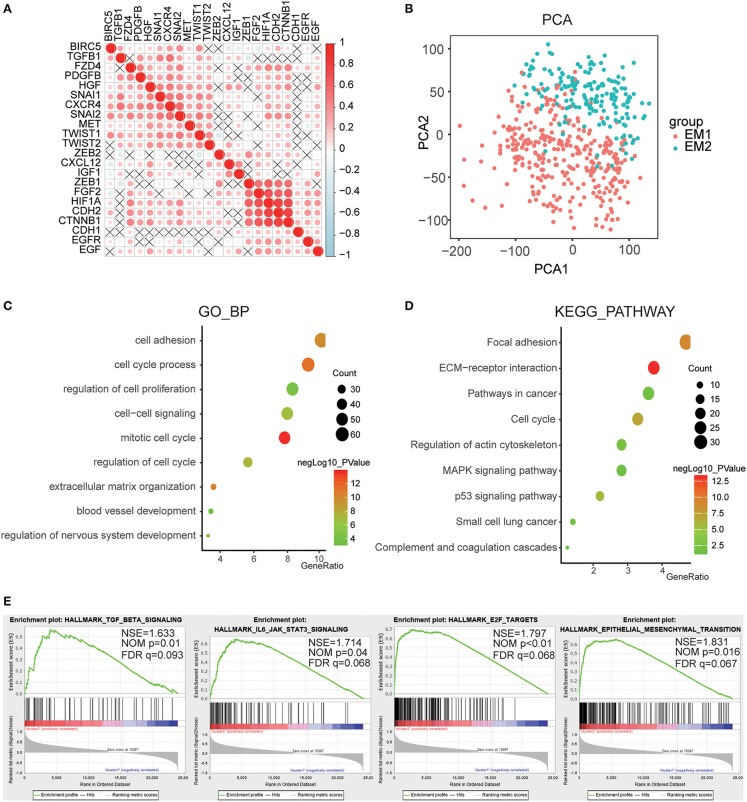
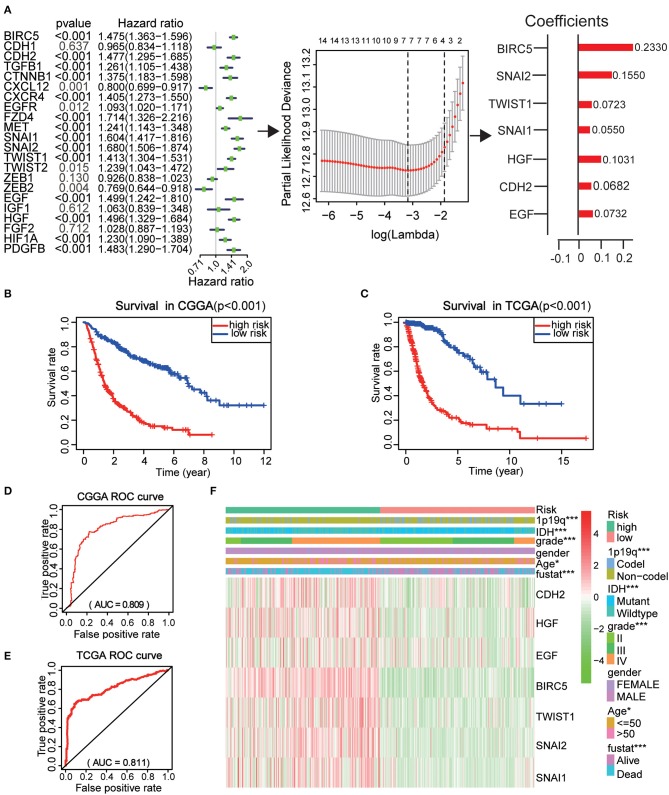
Epithelial-mesenchymal transition (EMT) is regulated by induction factors, transcription factor families and an array of signaling pathways genes, and has been implicated in the invasion and progression of gliomas. We obtained the Clinicopathological data sets from Chinese Glioma Genome Atlas (CGGA). The "limma" package was used to analyze the expression of EMT-related genes in gliomas with different pathological characteristics. We used the "ConsensusClusterPlus" package to divide gliomas into two groups to study their correlation with glioma malignancy. The least absolute shrinkage and selection operator (LASSO) Cox regression was applied to select seven prognosis-associated genes to build the risk signature, and the coefficients obtained from the LASSO algorithm were used to calculate the risk score which we applied to determine the prognostic value of the risk signature. Univariate and multivariate Cox regression analyses were used to determine whether the risk signature is an independent prognostic indicator. We analyzed the differentially expressed 22 common epithelial-mesenchymal transition-associated genes in 508 gliomas graded by different clinicopathological features. Two glioma subgroups (EM1/2) were identified by consistent clustering of the proteins, of which the EM1 subgroup had a better prognosis than the EM2 subgroup, and the EM2 group was associated with cancer migration and proliferation. Significant enrichment analysis revealed that EMT-related transcriptional regulators and signaling pathways genes were highly related to glioma malignancies. Seven EMT-related genes were used to derive risk scores, which served as independent prognostic markers and prediction factors for the clinicopathological features of glioma. And we found the overall survival (OS) was significantly different between the low- and high-risk groups, the ROC curve indicated that the risk score can predict survival rates for glioma patients. EMT-related induction factors, transcriptional regulators and signaling pathways genes are important players in the malignant progression of glioma and may help in decision making regarding the choice of prognosis assessment and provide us clues to understand EMT epigenetic modification in glioma.
上皮-间质转化(EMT)受诱导因子、转录因子家族及一系列信号通路基因调控,与胶质瘤的侵袭和进展有关。我们从中国胶质瘤基因组图谱(CGGA)获取临床病理数据集。使用“limma”软件包分析不同病理特征胶质瘤中EMT相关基因的表达。我们用“ConsensusClusterPlus”软件包将胶质瘤分为两组,研究它们与胶质瘤恶性程度的相关性。应用最小绝对收缩和选择算子(LASSO)Cox回归选择7个预后相关基因构建风险特征模型,并将LASSO算法得到的系数用于计算风险评分,进而确定风险特征模型的预后价值。采用单因素和多因素Cox回归分析确定风险特征模型是否为独立预后指标。我们分析了508例不同临床病理分级的胶质瘤中22个常见上皮-间质转化相关基因的差异表达。通过蛋白质一致性聚类鉴定出两个胶质瘤亚组(EM1/2),其中EM1亚组预后优于EM2亚组,且EM2组与癌症迁移和增殖相关。显著富集分析显示,EMT相关转录调节因子和信号通路基因与胶质瘤恶性程度高度相关。7个EMT相关基因用于推导风险评分,其作为独立预后标志物及胶质瘤临床病理特征的预测因子。我们发现低风险组和高风险组的总生存期(OS)有显著差异,ROC曲线表明风险评分可预测胶质瘤患者的生存率。EMT相关诱导因子、转录调节因子和信号通路基因在胶质瘤恶性进展中起重要作用,可能有助于预后评估选择的决策制定,并为我们理解胶质瘤中EMT表观遗传修饰提供线索。