Bernetti Laura, Nuzzaco Graziamaria, Muscia Francesco, Gamboni Alessio, Zedde Marialuisa, Eusebi Paolo, Zampolini Mauro, Corea Francesco
Neurologic Clinic, Department of Medicine, University of Perugia.
Stroke and Neurology Units, San Giovanni Battista Hospital, Foligno.
Neurol Int. 2018 Apr 4;10(1):7599. doi: 10.4081/ni.2018.7599. eCollection 2018 Mar 30.
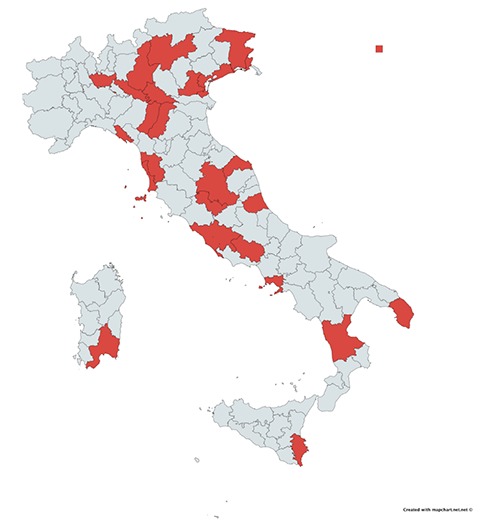
Stroke is the leading cause of disability and death. Nowadays, clinical benefits of stroke units and thrombolysis in ischemic stroke are evidence-based. Also the benefit of endovascular treatment for acute ischemic stroke has been established. Telemedicine has been used to improve access to care by allowing a neurologist at a remote location to interact with the patient and their family members. Prior studies have shown that the use of telemedicine for acute ischemic stroke is not only safe and effective, but it also increases the utilization of tPA, improving patient outcomes. This study aimed to investigate the diffusion of telemedicine in Italian stroke networks with an online questionnaire to assess: type of stroke care setting, Volume of thrombolysis- thrombectomy/year, access to stroke care between different hospitals, the presence of imaging sharing protocols within the network or patients dispatchment screening; type of network solutions. We have interviewed 24 Italian neurologists, working in large urban areas, from north southward, including Italian islands. In particular, these neurologists represented 14 different regions and 20 countries. A majority of neurologists replying to the survey (47.83%) worked in large general hospitals or smaller general hospitals (26%) and a smaller number of physicians (17.3%) were committed in University Hospital or (8.7%) independent foundation hospitals. The 60.87% of stroke networks involved in the survey had a low thrombolysis/year volume while the 30.43% had a thrombolysis/year volume above 100. According to the survey a local stroke network was established in 87.50% of cases. In the 45.83% of cases, the hospitals care is not homogeneous within the network. A network for the consultation of neuroimaging between hospitals is available in 33.33% of cases. Whitin those describing an active network for Teleconsult the 57.14% used personal devices, while only the 25 % use professional teleconference system, and in 25% of cases used medical devices. Our findings demonstrated a relevant diffusion of Teleconsult in Italian stroke networks. The systems adopted are mostly individual solutions not integrated in protocolled pathways. These findings may encourage a systematization of Telemedicine medical curricula to increase larger access to neurological consults.
中风是导致残疾和死亡的主要原因。如今,中风单元和缺血性中风溶栓治疗的临床益处已有循证依据。急性缺血性中风血管内治疗的益处也已得到证实。远程医疗通过让远程的神经科医生与患者及其家属互动,已被用于改善医疗服务的可及性。先前的研究表明,将远程医疗用于急性缺血性中风不仅安全有效,还能提高组织型纤溶酶原激活剂(tPA)的使用率,改善患者预后。本研究旨在通过在线问卷调查意大利中风网络中远程医疗的普及情况,以评估:中风护理机构类型、每年溶栓 - 取栓的数量、不同医院之间获得中风护理的情况、网络内影像共享协议的存在情况或患者派遣筛查情况;网络解决方案类型。我们采访了24位意大利神经科医生,他们从北到南、包括意大利各岛屿,在大城市地区工作。具体而言,这些神经科医生代表了14个不同地区和20家医院。回复调查的大多数神经科医生(47.83%)在大型综合医院或小型综合医院工作(26%),少数医生(17.3%)就职于大学医院或(8.7%)独立基金会医院。参与调查的中风网络中,60.87%的网络每年溶栓量较低,而30.43%的网络每年溶栓量超过100例。根据调查,87.50%的情况建立了当地中风网络。在45.83%的情况中,网络内医院护理情况不均衡。33.33%的情况中有医院间神经影像会诊网络。在那些描述有活跃远程会诊网络的情况中,57.14%使用个人设备,而只有25%使用专业电话会议系统,25%的情况使用医疗设备。我们的研究结果表明远程会诊在意大利中风网络中有显著普及。所采用的系统大多是未整合到规范流程中的个体解决方案。这些发现可能会促使远程医疗医学课程系统化,以增加获得神经科会诊的机会。