Swaroop A, Paco-Larson M L, Garen A
Proc Natl Acad Sci U S A. 1985 Mar;82(6):1751-5. doi: 10.1073/pnas.82.6.1751.
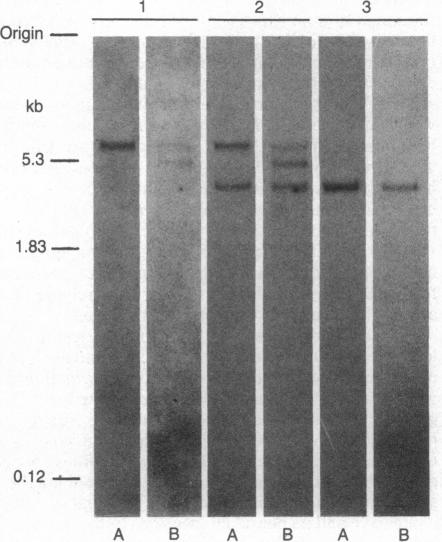
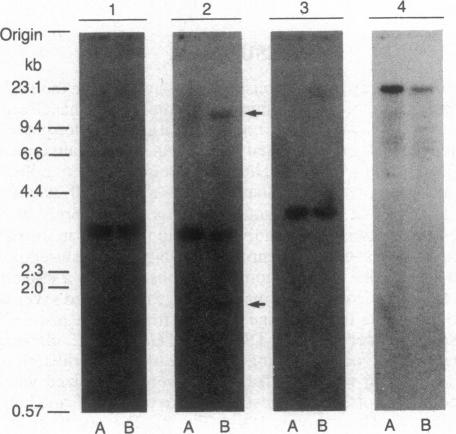
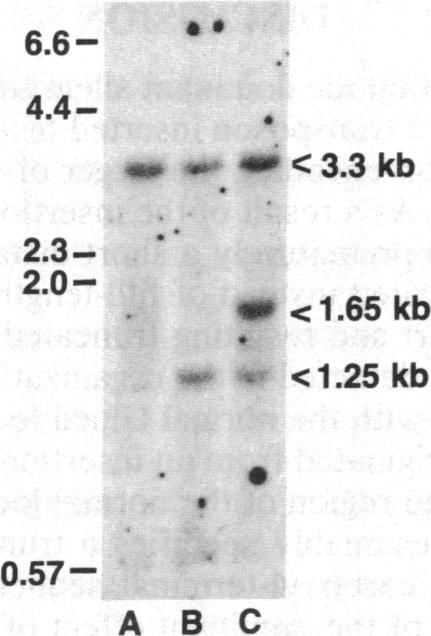
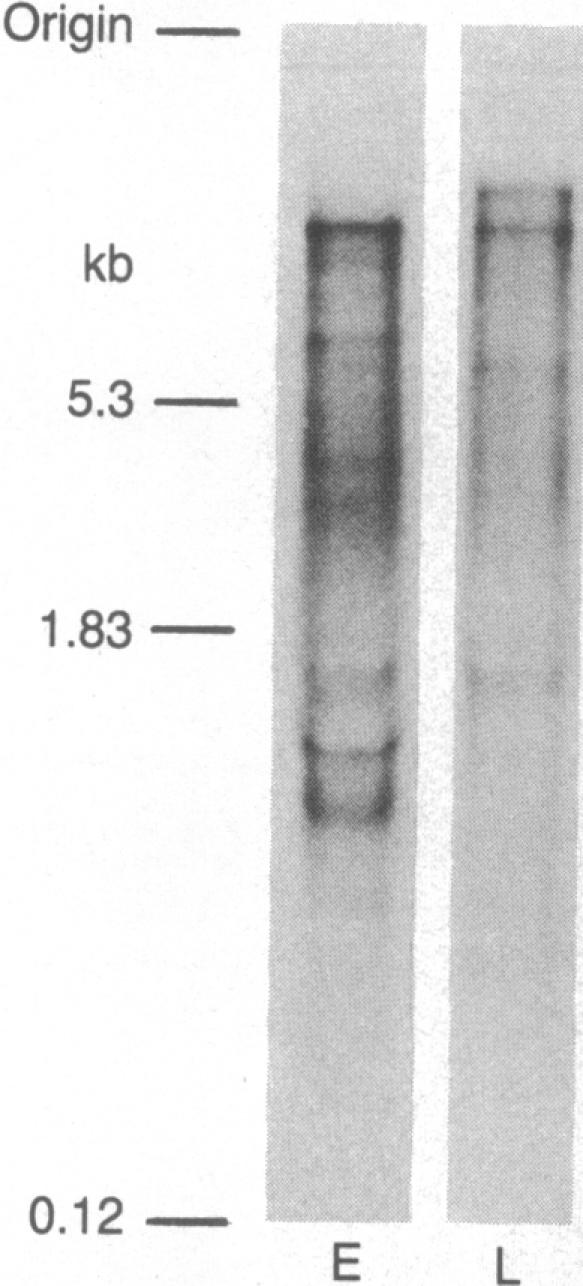
The organization of the Drosophila locus Glued containing the dominant allele Gl was shown to differ from that of the normal locus by an insertion of a 9-kilobase-pair DNA segment near the 3' end of a transcribed region. The insertion causes the formation of a truncated polyadenylylated transcript of 5.1 kilobases instead of the normal 6.0 kilobases. The inserted DNA segment has the properties of a transposon and was identified by its corresponding restriction map as B104, which is a retrovirus-like transposon with direct terminal repeats. B104 appears to be oriented in Gl with the same polarity of transcription as Gl. The truncated Gl transcript terminates prematurely inside the 5' terminal repeat of B104, in the region of a putative polyadenylylation signal. We discuss the general implications of this finding for transposon- and retrovirus-induced mutagenesis and for the origin of dominant mutations.
含有显性等位基因Gl的果蝇位点Glued的组织方式,被证明与正常位点不同,原因是在一个转录区域的3'端附近插入了一段9千碱基对的DNA片段。该插入导致形成了一个5.1千碱基的截短的多聚腺苷酸化转录本,而不是正常的6.0千碱基转录本。插入的DNA片段具有转座子的特性,通过其相应的限制性图谱被鉴定为B104,它是一种具有直接末端重复序列的类逆转录病毒转座子。B104在Gl中似乎与Gl具有相同的转录极性。截短的Gl转录本在B104的5'末端重复序列内、在一个假定的多聚腺苷酸化信号区域过早终止。我们讨论了这一发现对转座子和逆转录病毒诱导的诱变以及显性突变起源的一般影响。