Division of Gastroenterology, Boston Children's Hospital, Boston, United States.
Department of Pediatrics, Harvard Medical School, Boston, United States.
Elife. 2018 May 31;7:e34469. doi: 10.7554/eLife.34469.
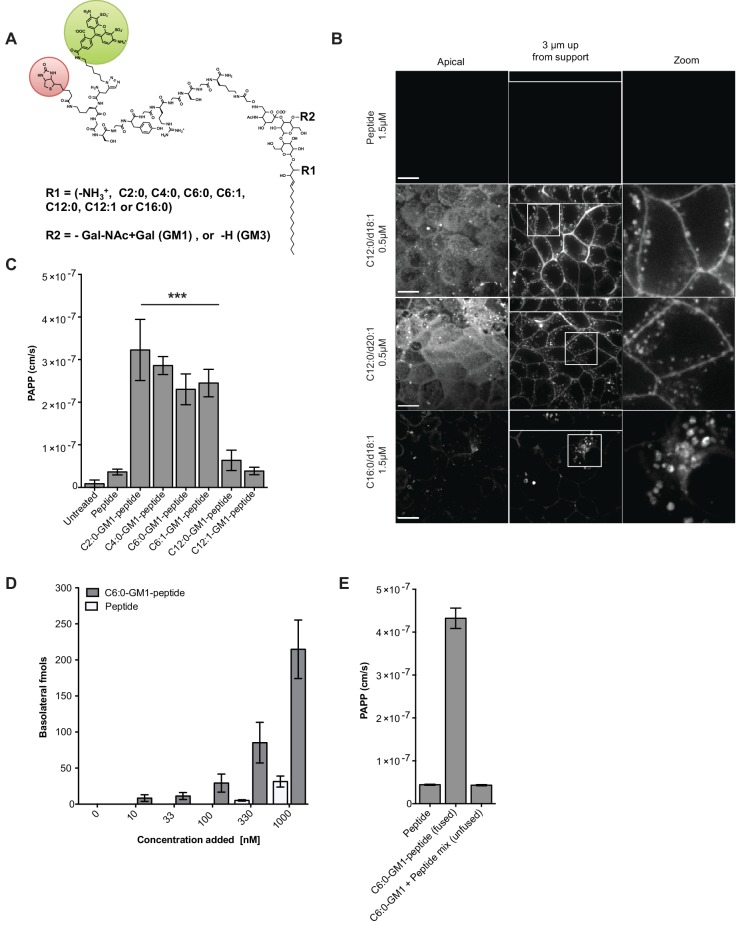
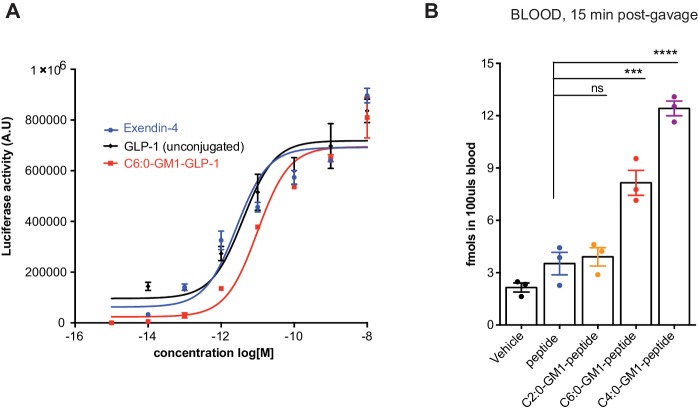
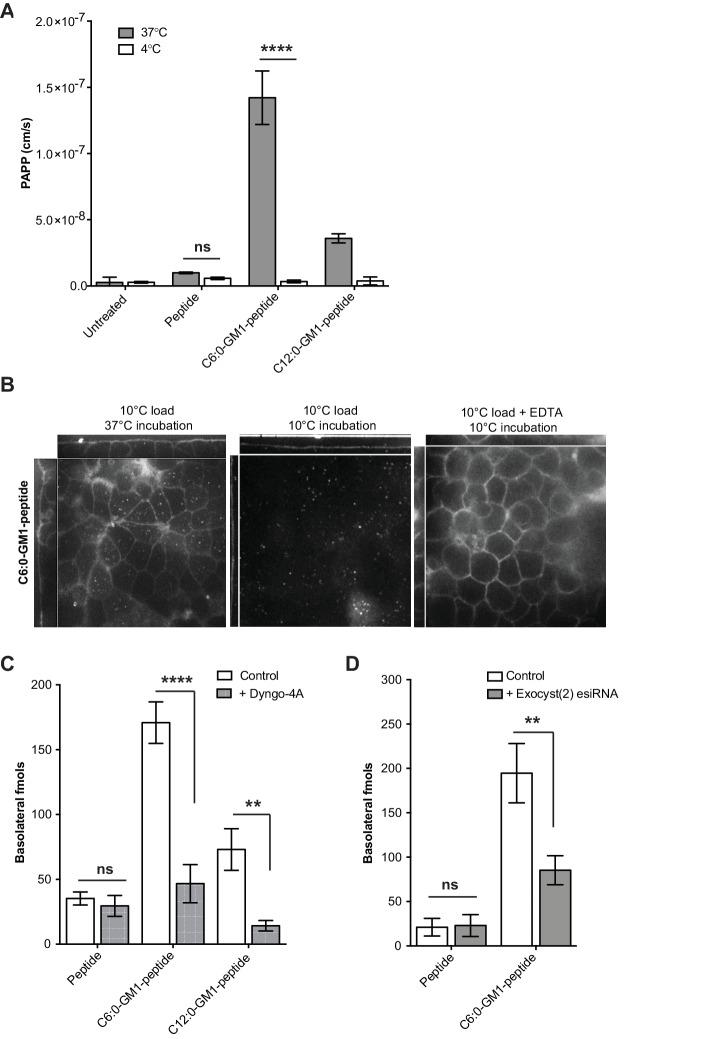
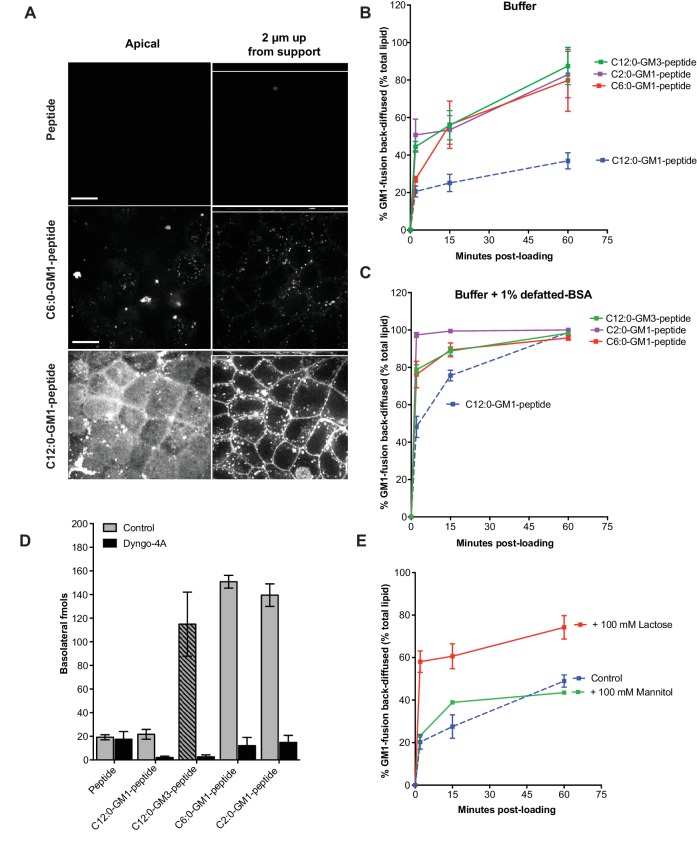
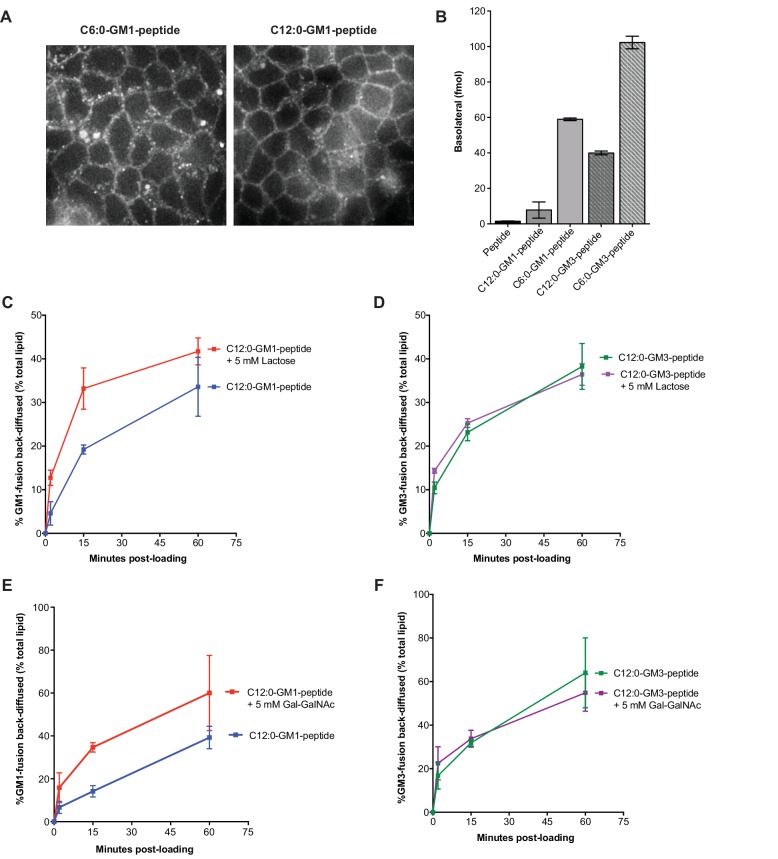
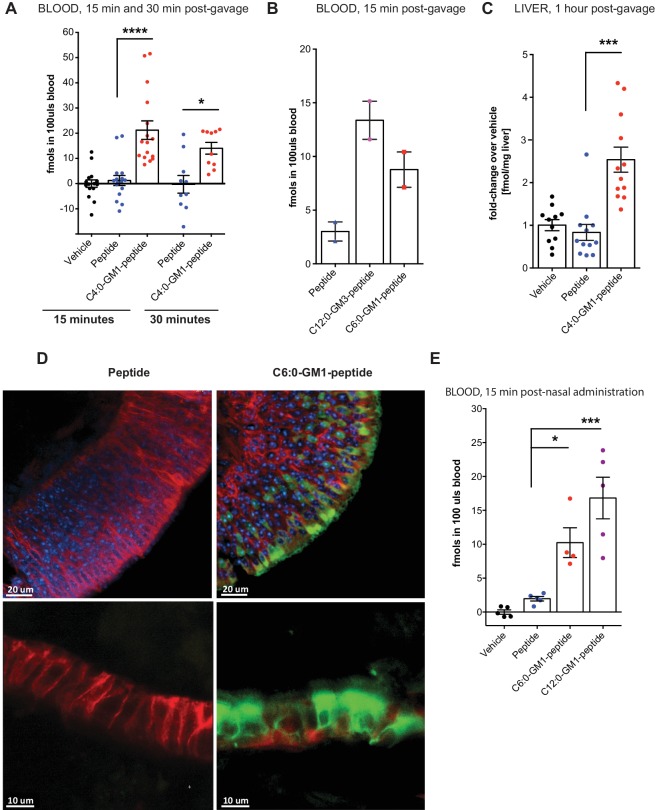
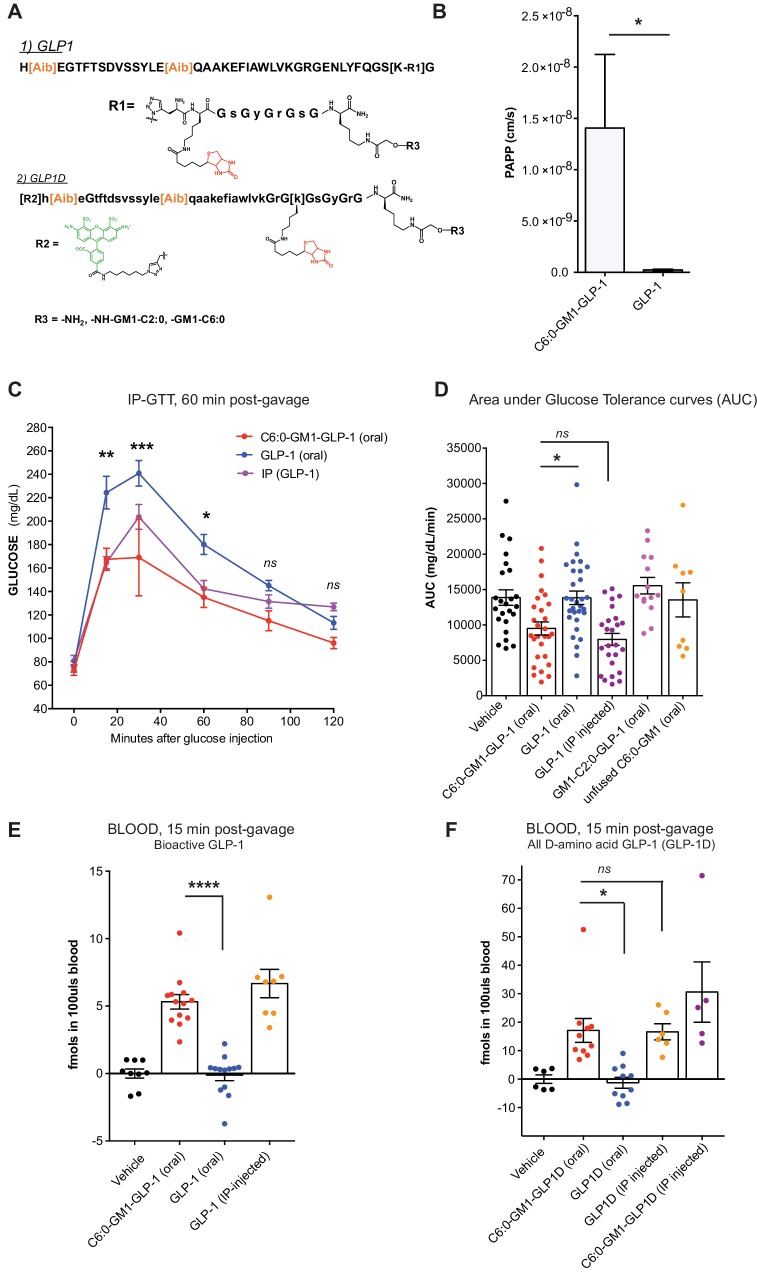
Transport of biologically active molecules across tight epithelial barriers is a major challenge preventing therapeutic peptides from oral drug delivery. Here, we identify a set of synthetic glycosphingolipids that harness the endogenous process of intracellular lipid-sorting to enable mucosal absorption of the incretin hormone GLP-1. Peptide cargoes covalently fused to glycosphingolipids with ceramide domains containing C6:0 or smaller fatty acids were transported with 20-100-fold greater efficiency across epithelial barriers in vitro and in vivo. This was explained by structure-function of the ceramide domain in intracellular sorting and by the affinity of the glycosphingolipid species for insertion into and retention in cell membranes. In mice, GLP-1 fused to short-chain glycosphingolipids was rapidly and systemically absorbed after gastric gavage to affect glucose tolerance with serum bioavailability comparable to intraperitoneal injection of GLP-1 alone. This is unprecedented for mucosal absorption of therapeutic peptides, and defines a technology with many other clinical applications.
生物活性分子跨紧密上皮屏障的转运是阻止治疗性肽经口服给药的主要挑战。在这里,我们鉴定了一组合成糖脂,利用细胞内脂质分选的内源性过程使肠促胰岛素激素 GLP-1 能够经粘膜吸收。与含有 C6:0 或更小脂肪酸的神经酰胺结构域的糖脂共价连接的肽货物在体外和体内跨上皮屏障的转运效率提高了 20-100 倍。这可以通过细胞内分选过程中神经酰胺结构域的结构-功能以及糖脂种类与插入和保留在细胞膜中的亲和力来解释。在小鼠中,GLP-1 与短链糖脂融合后经胃灌胃快速全身吸收,影响葡萄糖耐量,血清生物利用度可与单独腹腔内注射 GLP-1 相媲美。这是治疗性肽经粘膜吸收前所未有的,定义了一种具有许多其他临床应用的技术。