Ayehunie Seyoum, Wang Ying-Ying, Landry Timothy, Bogojevic Stephanie, Cone Richard A
MatTek Corporation, 200 Homer Avenue, Ashland, MA 01721, United States.
T.C. Jenkins Department of Biophysics, Johns Hopkins University, 3400 N. Charles Street, Baltimore, MD 21218, United States.
Toxicol Rep. 2017 Dec 16;5:134-140. doi: 10.1016/j.toxrep.2017.12.011. eCollection 2018.
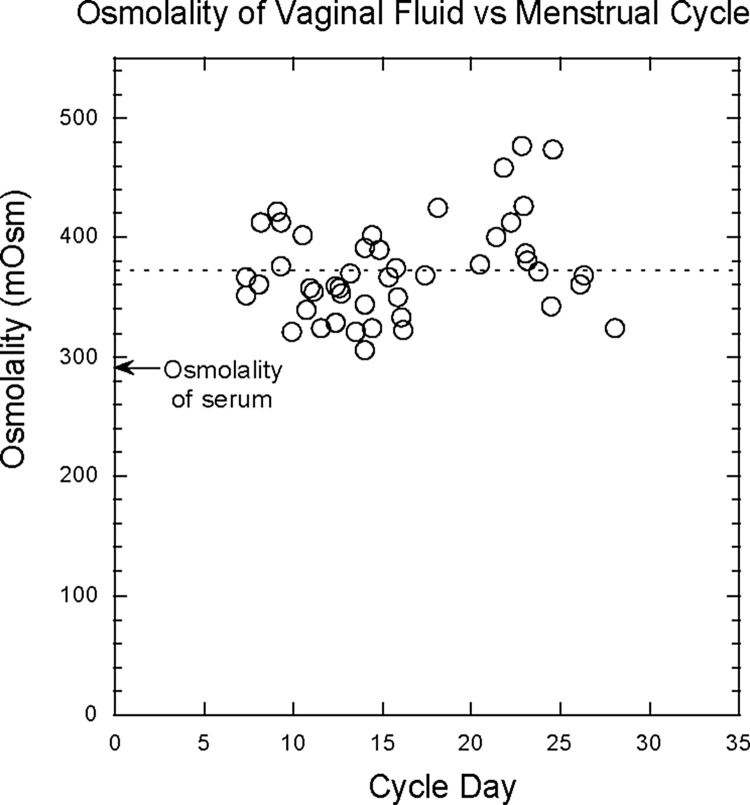
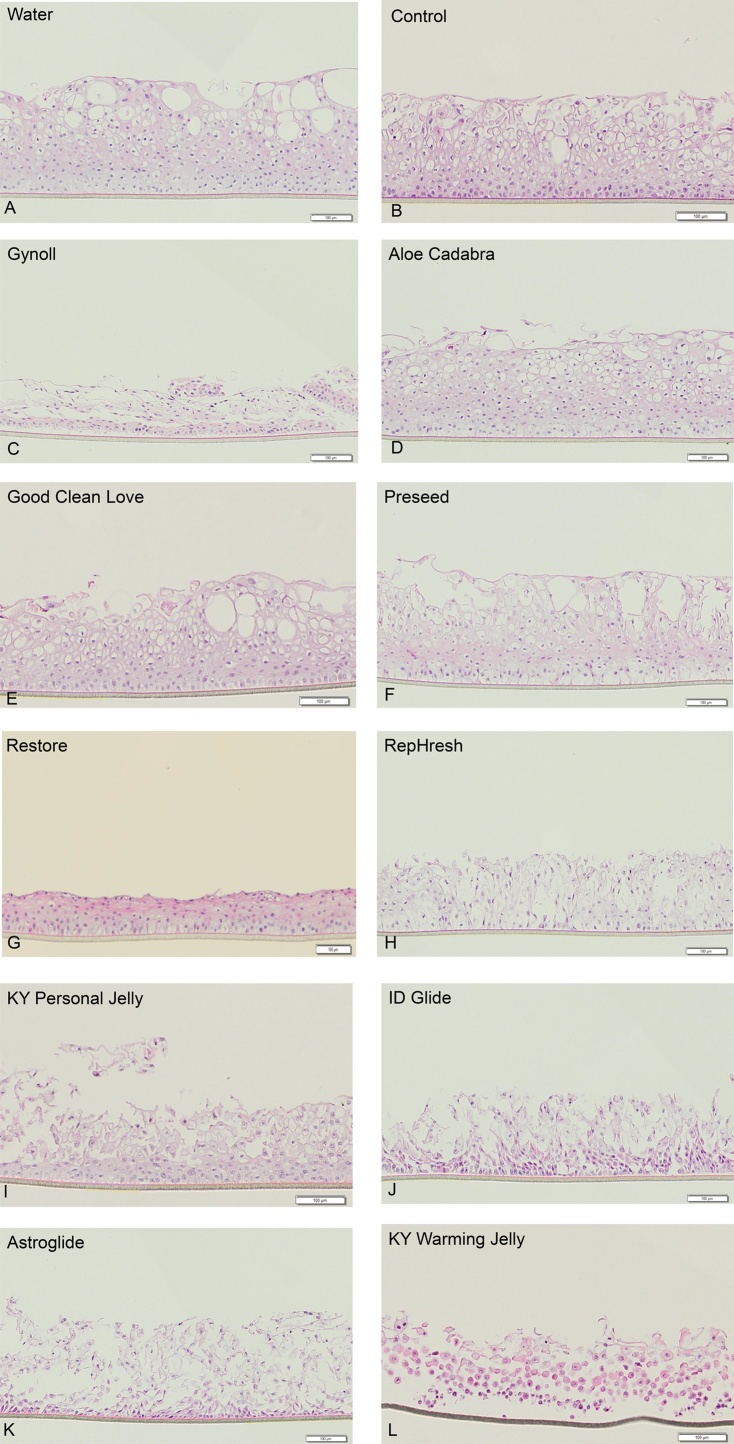
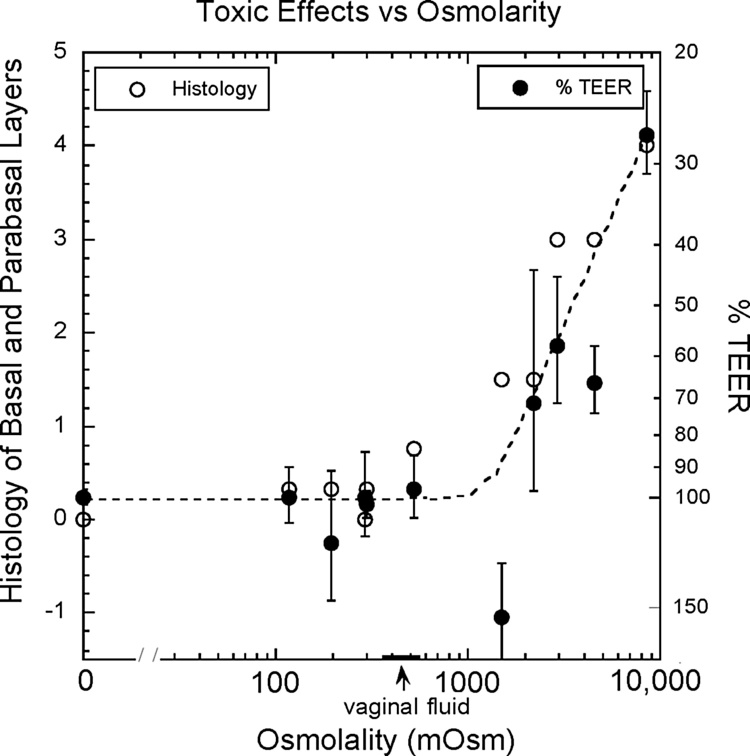
Most of the widely used vaginal lubricants in the U.S. and Europe are strongly hyperosmolal, formulated with high concentrations of glycerol, propylene glycol, polyquaternary compounds or other ingredients that make these lubricants 4 to 30 times the osmolality of healthy vaginal fluid. Hyperosmolal formulations have been shown to cause marked toxicity to human colorectal epithelia in vivo, and significantly increase vaginal transmission of genital herpes infections in the mouse/HSV model. They also cause toxicity to explants of vaginal epithelia, to cultured vaginal epithelial cells, and increase susceptibility to HIV in target cells in cell cultures. Here, we report that the osmolality of healthy vaginal fluid is 370 ± 40 mOsm/Kg in women with Nugent scores 0-3, and that a well-characterized three-dimensional human vaginal epithelium tissue model demonstrated that vaginal lubricants with osmolality greater than 4 times that of vaginal fluid (>1500 mOsm/Kg) markedly reduce epithelial barrier properties and showed damage in tissue structure. Four out of four such lubricants caused disruption in the parabasal and basal layers of cells as observed by histological analysis and reduced barrier integrity as measured by trans-epithelial electrical resistance (TEER). No epithelial damage to these layers was observed for hypo- and iso-osmolal lubricants with osmolality of <400 mOsm/Kg. The results confirm extensive reports of safety concerns of hyperosmolal lubricants and suggest the usefulness of reconstructed in vitro vaginal tissue models for assessing safety of lubricants in the absence of direct clinical tests in humans.
在美国和欧洲,大多数广泛使用的阴道润滑剂具有很强的高渗性,它们是用高浓度的甘油、丙二醇、聚季铵化合物或其他成分配制而成,这些成分使这些润滑剂的渗透压是健康阴道液的4至30倍。高渗制剂已被证明在体内会对人类结肠上皮产生明显毒性,并且在小鼠/单纯疱疹病毒模型中会显著增加生殖器疱疹感染的阴道传播。它们还会对阴道上皮外植体、培养的阴道上皮细胞产生毒性,并增加细胞培养中靶细胞对艾滋病毒的易感性。在此,我们报告,Nugent评分0 - 3的女性健康阴道液的渗透压为370±40 mOsm/Kg,并且一个特征明确的三维人类阴道上皮组织模型表明,渗透压大于阴道液4倍(>1500 mOsm/Kg)的阴道润滑剂会显著降低上皮屏障特性,并显示组织结构受损。通过组织学分析观察到,四种此类润滑剂中有四种导致基底旁层和基底层细胞破坏,通过跨上皮电阻(TEER)测量显示屏障完整性降低。对于渗透压<400 mOsm/Kg的低渗和等渗润滑剂,未观察到对这些层的上皮损伤。这些结果证实了关于高渗润滑剂安全性问题的大量报道,并表明在缺乏人体直接临床试验的情况下,重建的体外阴道组织模型可用于评估润滑剂的安全性。