Kovesdy Csaba P, Naseer Adnan, Sumida Keiichi, Molnar Miklos Z, Potukuchi Praveen K, Thomas Fridtjof, Streja Elani, Heung Michael, Abbott Kevin C, Saran Rajiv, Kalantar-Zadeh Kamyar
Nephrology Section, Memphis VA Medical Center, Memphis, Tennessee, USA.
Division of Nephrology, University of Tennessee Health Science Center, Memphis, Tennessee, USA.
Kidney Int Rep. 2017 Dec 23;3(3):602-609. doi: 10.1016/j.ekir.2017.12.007. eCollection 2018 May.
Abrupt declines in kidney function often occur in patients with advanced chronic kidney disease and may exacerbate the need to initiate dialysis treatment. It is unclear how frequently such events occur in patients transitioning to chronic dialysis therapy, and what outcomes they are associated with.
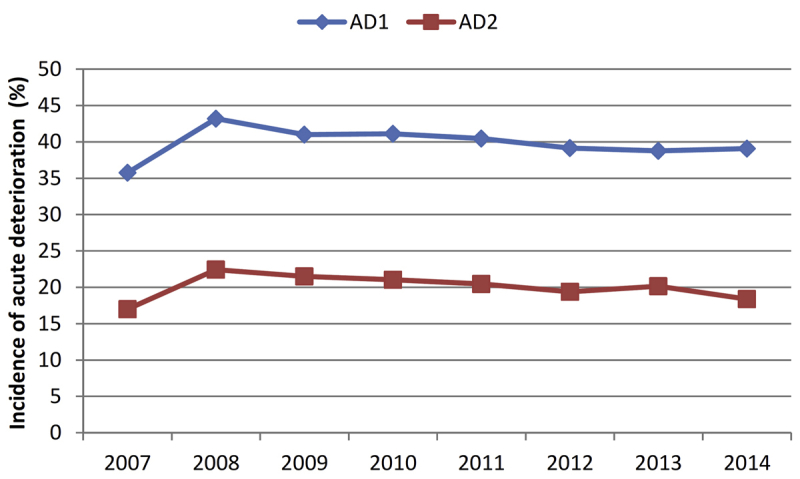
We examined a national cohort of 23,349 US veterans with incident end-stage renal disease (ESRD) and with available pre-ESRD estimated glomerular filtration rate (eGFR) to identify abrupt declines in kidney function, defined as an unexpected >50% decrease in eGFR at the time of chronic dialysis transition. Associations with all-cause mortality and with renal recovery were examined in Cox proportional hazard and competing risk regression models.
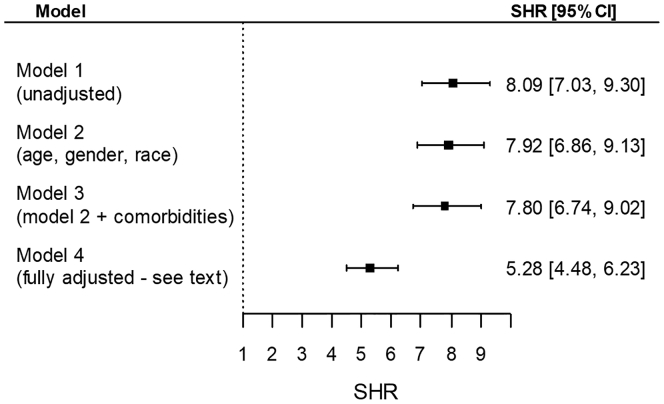
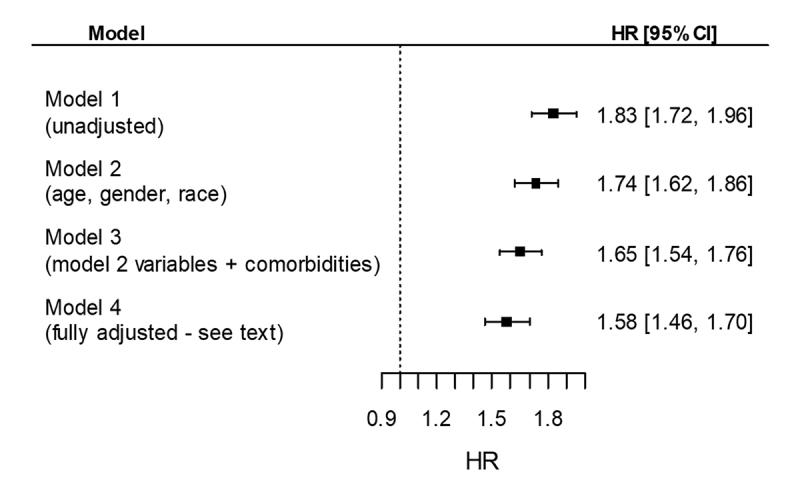
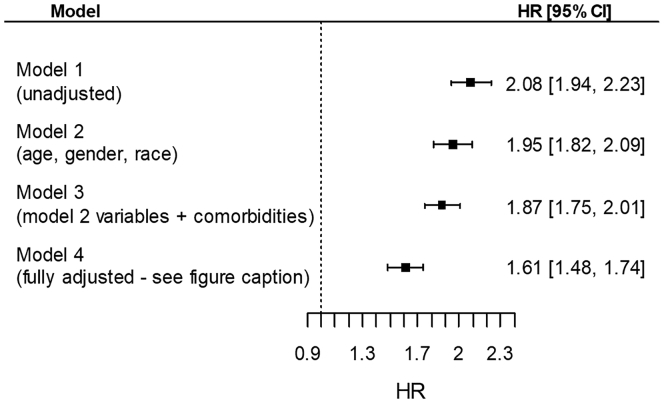
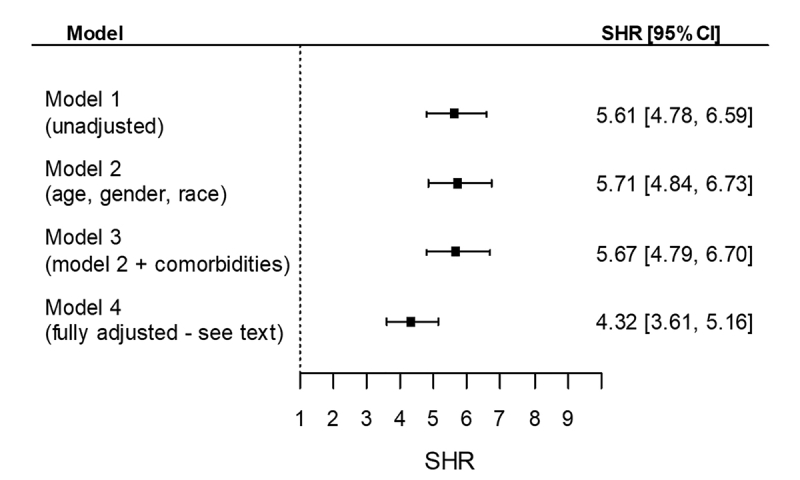
A total of 4804 (21%) patients experienced an abrupt decline in kidney function at dialysis transition. Renal recovery occurred in 586 (12.2%) and 297 (1.6%) patients with and without an abrupt decline, respectively (adjusted subhazard ratio: 4.42; 95% confidence interval [CI]: 3.72-5.27; < 0.001). In the first 6 months after dialysis transition 1178 patients (24.5%) with abrupt decline died (annualized mortality rate 574/1000 patient-years), compared with 2354 deaths (12.7%) in patients without abrupt decline (274 deaths/1000 patient-years). An abrupt decline was associated with 45% higher mortality after multivariable adjustments (hazard ratio: 1.45; 95% CI: 1.33-1.57).
Abrupt declines in kidney function are common in patients transitioning to chronic dialysis, and are associated with higher mortality. Patients with abrupt declines also experience a higher rate of renal recovery; hence, careful attention to residual kidney function is warranted in these patients.
晚期慢性肾脏病患者常出现肾功能突然下降,这可能会加剧启动透析治疗的必要性。目前尚不清楚此类事件在过渡到慢性透析治疗的患者中发生的频率,以及它们与哪些结局相关。
我们研究了一个由23349名美国退伍军人组成的全国队列,这些患者患有新发终末期肾病(ESRD)且有ESRD前的估计肾小球滤过率(eGFR)数据,以确定肾功能的突然下降,定义为在慢性透析过渡时eGFR意外下降>50%。在Cox比例风险模型和竞争风险回归模型中研究了与全因死亡率和肾功能恢复的相关性。
共有4804名(21%)患者在透析过渡时出现肾功能突然下降。分别有586名(12.2%)和297名(1.6%)出现和未出现突然下降的患者肾功能恢复(调整后的亚风险比:4.42;95%置信区间[CI]:3.72 - 5.27;P < 0.001)。在透析过渡后的前6个月,1178名(24.5%)出现突然下降的患者死亡(年化死亡率574/1000患者年),而未出现突然下降的患者中有2354人死亡(12.7%)(274人死亡/1000患者年)。多变量调整后,突然下降与死亡率高45%相关(风险比:1.45;95% CI:1.33 - 1.57)。
肾功能突然下降在过渡到慢性透析的患者中很常见,且与较高的死亡率相关。出现突然下降的患者肾功能恢复率也较高;因此,对这些患者的残余肾功能应予以密切关注。