Matsuura Ryo, Srisawat Nattachai, Claure-Del Granado Rolando, Doi Kent, Yoshida Teruhiko, Nangaku Masaomi, Noiri Eisei
Department of Nephrology and Endocrinology, The University of Tokyo Hospital, Japan.
Division of Nephrology, Department of Medicine, Chulalongkorn University, Thailand.
Kidney Int Rep. 2018 Feb 3;3(3):677-683. doi: 10.1016/j.ekir.2018.01.013. eCollection 2018 May.
The renal angina index (RAI) is determined based on changes in the creatinine and condition scores of patients. The aim of this study is to evaluate the efficacy of the RAI in predicting persistent acute kidney injury (AKI) in Asian intensive care unit (ICU) patients.
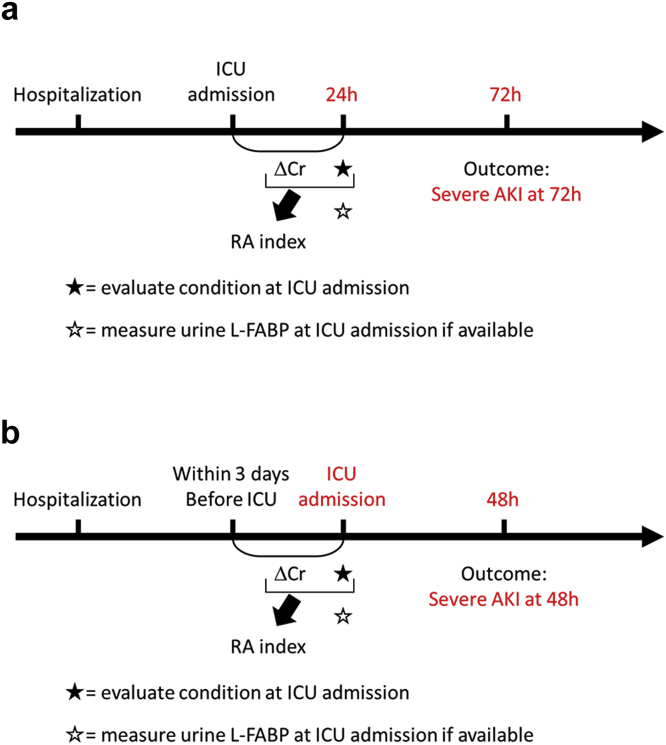
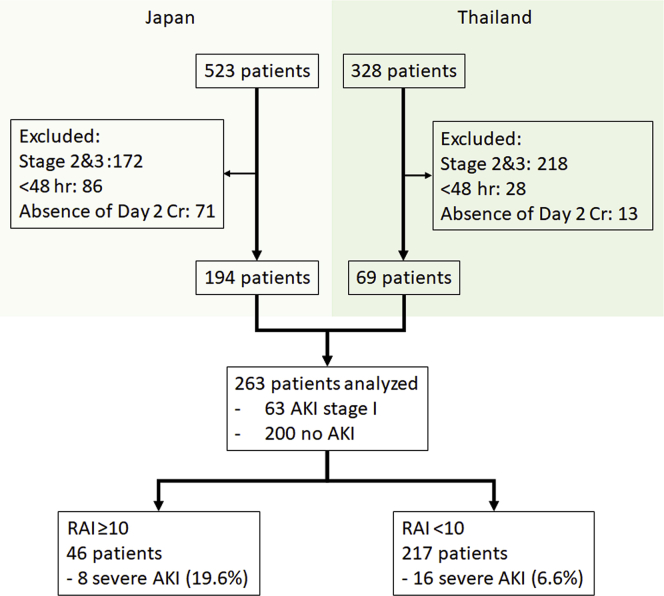
This is a subanalysis of 3 prospective studies conducted in Japan and Thailand. The RAI was calculated for all enrolled patients using the method of Goldstein and colleagues, with a minor modification for adults on day 2. To determine the accuracy of RAI further, we evaluated a subgroup of patients for whom baseline serum creatinine values were available at ICU admission (i.e., those with hospital-acquired AKI). AKI biomarkers were evaluated for their efficacy in improving the performance of RAI. The outcome was defined as AKI stage 2 or 3 over 48 hours.
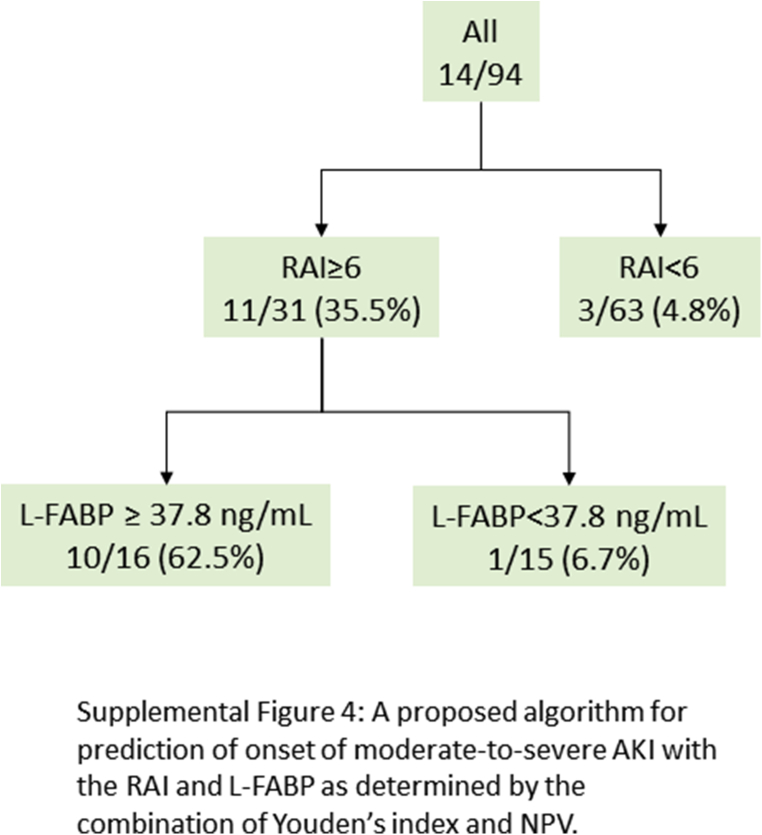
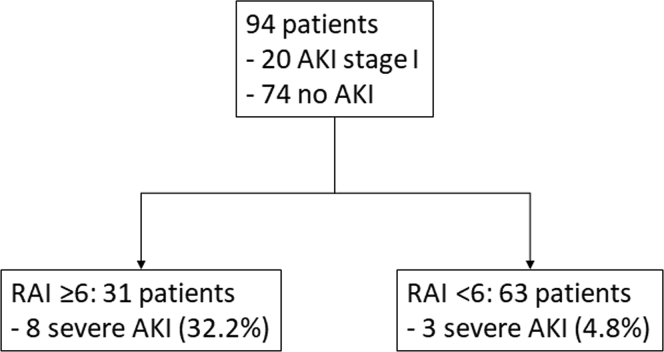
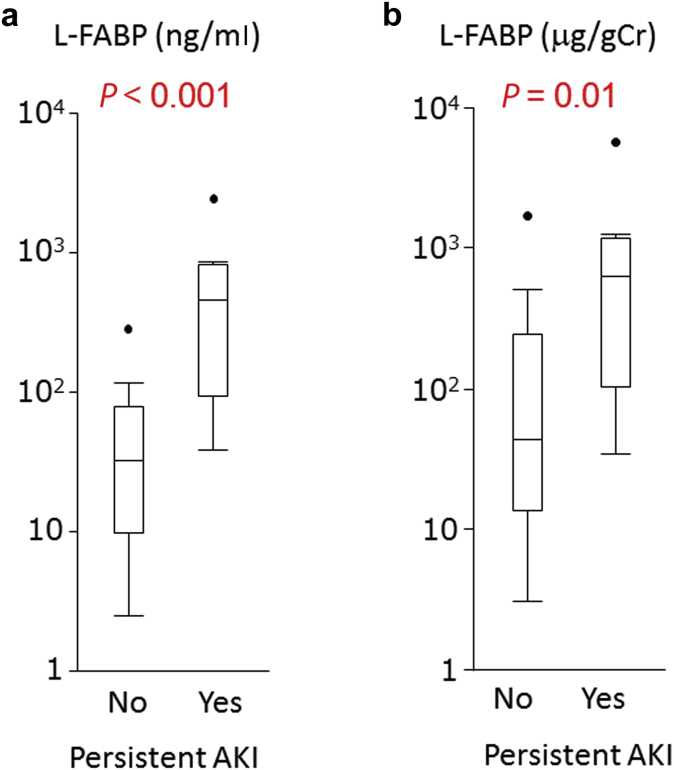
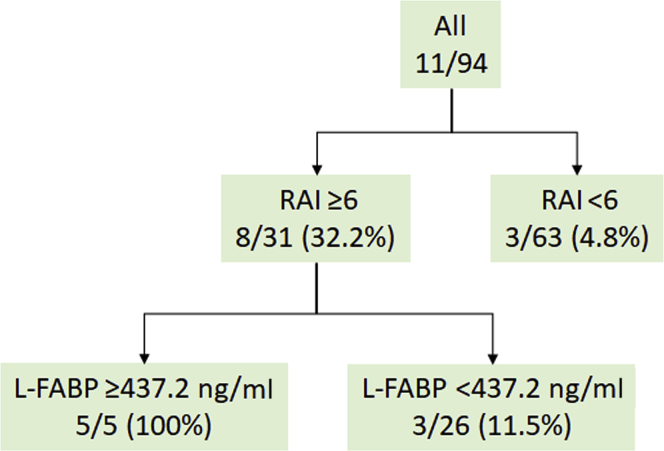
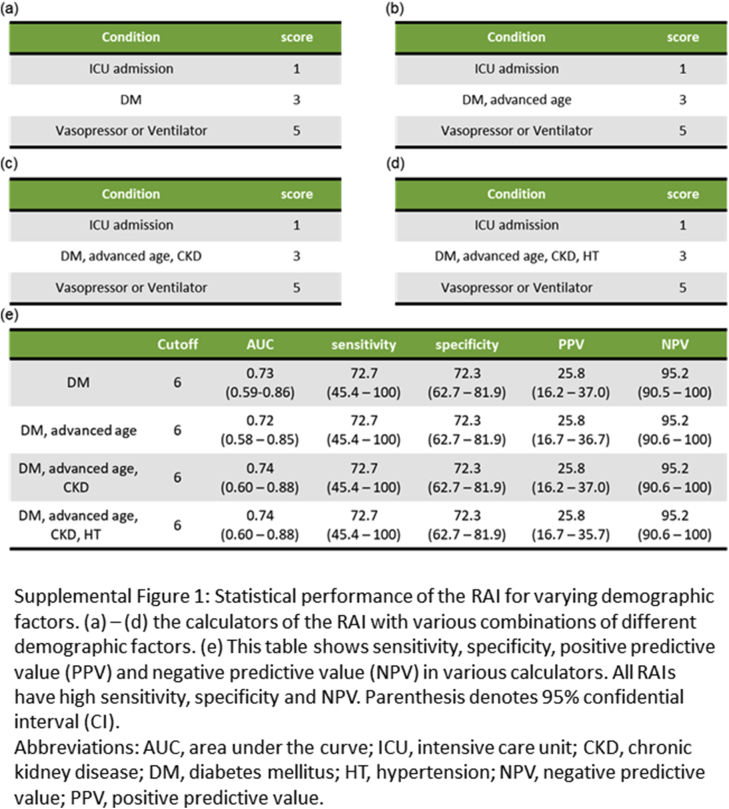
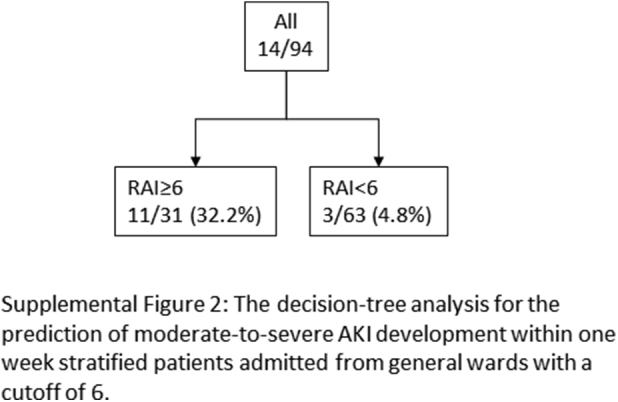
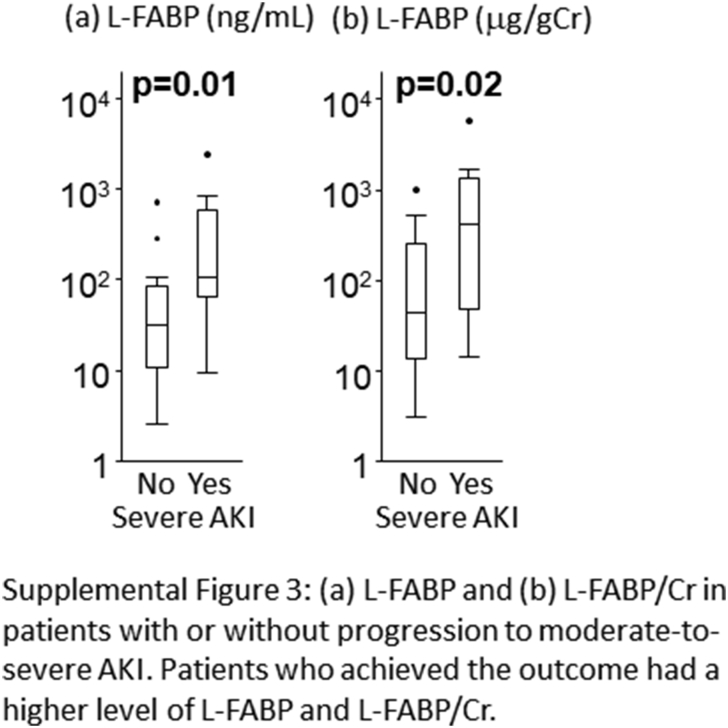
Of the 263 patients analyzed, a total of 22 progressed to stage 2 or 3 AKI over 48 hours. The RAI was associated with an area under the curve (AUC) of 0.63 in receiver-operating characteristics analysis, with a cutoff of 10. In those admitted from general wards, the RAI had good performance, with an AUC of 0.73 and a cutoff of 6. A combination of L-type fatty acid-binding protein with the RAI improved the predictive performance for assessing persistent AKI with an AUC of 0.79.
The RAI may be effective in predicting persistent AKI in adult patients admitted from general wards. Incorporation of AKI biomarkers into the RAI may potentially improve prediction.
肾绞痛指数(RAI)是根据患者肌酐和病情评分的变化来确定的。本研究的目的是评估RAI在预测亚洲重症监护病房(ICU)患者持续性急性肾损伤(AKI)方面的疗效。
这是对在日本和泰国进行的3项前瞻性研究的亚分析。使用Goldstein及其同事的方法为所有入组患者计算RAI,对成人在第2天进行了微小修改。为了进一步确定RAI的准确性,我们评估了一组在ICU入院时可获得基线血清肌酐值的患者亚组(即医院获得性AKI患者)。评估了AKI生物标志物在改善RAI性能方面的疗效。结局定义为48小时内AKI达到2期或3期。
在分析的263例患者中,共有22例在48小时内进展为2期或3期AKI。在受试者工作特征分析中,RAI的曲线下面积(AUC)为0.63,临界值为10。在从普通病房入院的患者中,RAI表现良好,AUC为0.73,临界值为6。L型脂肪酸结合蛋白与RAI联合使用可提高评估持续性AKI的预测性能,AUC为0.79。
RAI可能对预测从普通病房入院的成年患者的持续性AKI有效。将AKI生物标志物纳入RAI可能会潜在地改善预测。