Department of Neurology, Vanderbilt University Medical Center, Nashville, Tennessee.
Department of Neurology, University of Virginia, Charlottesville, Virginia.
Brain Behav. 2018 Jul;8(7):e01008. doi: 10.1002/brb3.1008. Epub 2018 Jun 1.
Dopamine therapy in Parkinson disease (PD) can have differential effects on inhibitory action control, or the ability to inhibit reflexive or impulsive actions. Dopamine agonist (DAAg) medications, which preferentially target D2 and D3 receptors, can either improve or worsen control of impulsive actions in patients with PD. We have reported that the direction of this effect depends on baseline levels of performance on inhibitory control tasks. This observation suggests that there may exist certain biologic determinants that contribute to these patient-specific differences. We hypothesized that one important factor might be functional polymorphisms in D2-like receptor genes.
The goal of this study was to determine whether the direction of DAAg effects on inhibitory control depends on functional polymorphisms in the DRD2 and DRD3 genes.
Twenty-eight patients with PD were genotyped for known functional polymorphisms in DRD2 (rs6277 and rs1800497) and DRD3 (rs6280) receptors. These patients then completed the Simon conflict task both on and off DAAg therapy in a counterbalanced manner.
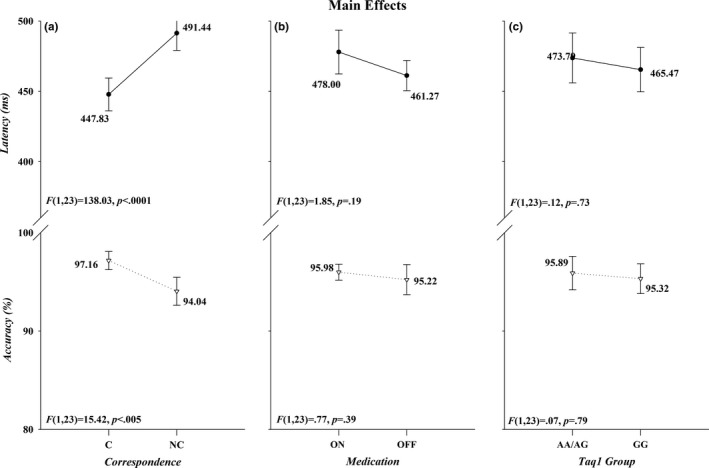
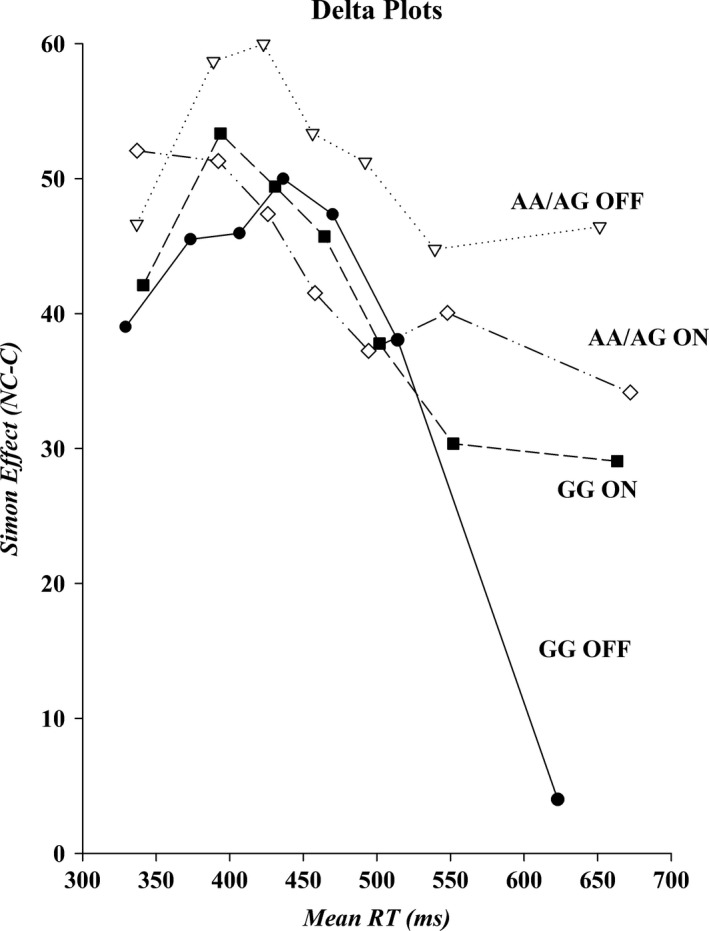
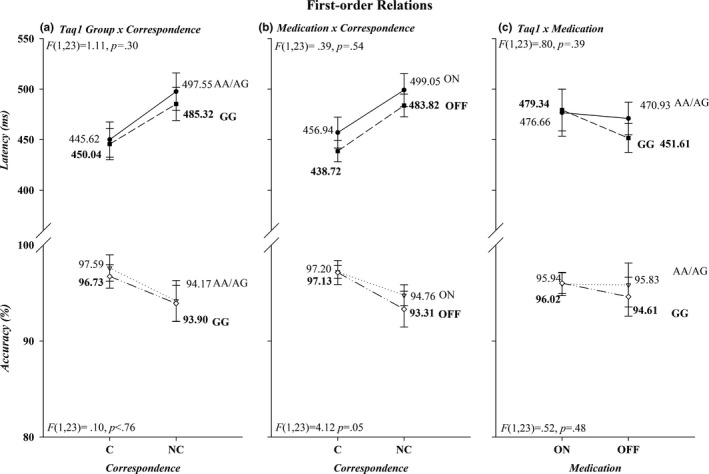
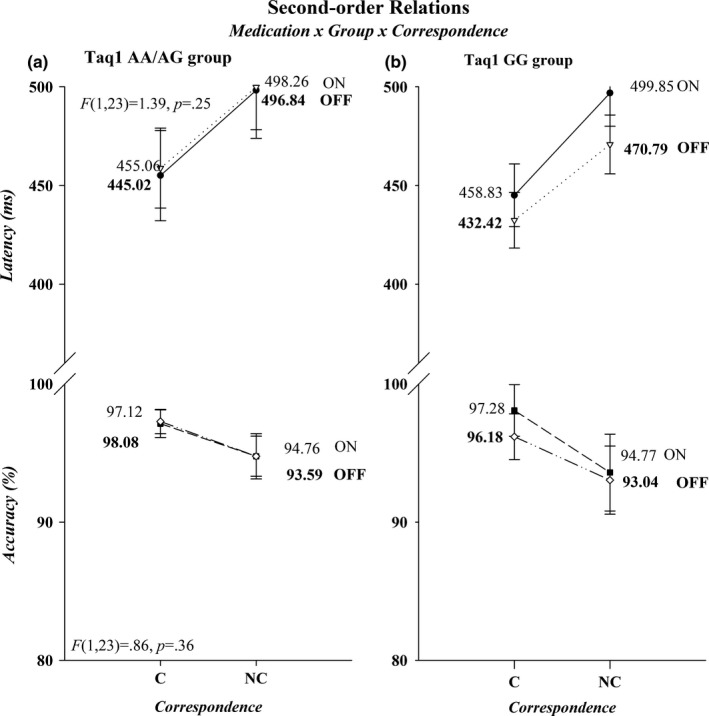
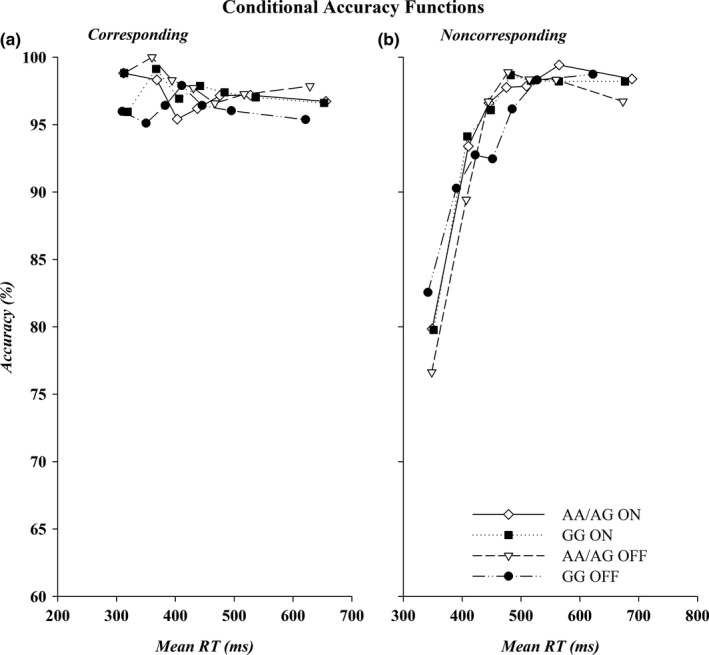
We found that patients with the rs1800497 Taq1A (A1) polymorphism (A1/A1 or A1/A2: 11 subjects) showed improved proficiency to suppress impulsive actions when on DAAg; conversely, patients with the A2/A2 allele (14 patients) became less proficient at suppressing incorrect response information on DAAg therapy (Group × Medication, F(1, 23) = 5.65, p < 0.05). Polymorphisms in rs6277 and rs6280 were not associated with a differential medication response.
These results suggest that certain DRD polymorphisms may determine the direction of DAAg effects on critical cognitive control processes impaired in PD. Our findings have implications for understanding pharmacogenomics interactions on a larger scale and the role these may play in the wide variability of treatment effects seen in the PD population.
帕金森病(PD)的多巴胺治疗可能对抑制动作控制产生不同的影响,即抑制反射或冲动动作的能力。多巴胺激动剂(DAAg)药物优先靶向 D2 和 D3 受体,可改善或恶化 PD 患者冲动动作的控制。我们已经报告说,这种效应的方向取决于抑制控制任务的基线表现水平。这一观察结果表明,可能存在某些生物决定因素导致这些患者特异性差异。我们假设一个重要因素可能是 D2 样受体基因的功能多态性。
本研究旨在确定 DAAg 对抑制控制的影响方向是否取决于 DRD2 和 DRD3 基因的功能多态性。
对 28 名 PD 患者进行 DRD2(rs6277 和 rs1800497)和 DRD3(rs6280)受体的已知功能多态性基因分型。然后,这些患者以平衡的方式在 DAAg 治疗和非 DAAg 治疗下完成 Simon 冲突任务。
我们发现,携带 rs1800497 Taq1A(A1)多态性(A1/A1 或 A1/A2:11 名受试者)的患者在使用 DAAg 时抑制冲动动作的能力提高;相反,携带 A2/A2 等位基因的患者(14 名患者)在 DAAg 治疗时抑制不正确反应信息的能力下降(组×药物,F(1,23)=5.65,p<0.05)。rs6277 和 rs6280 多态性与药物反应的差异无关。
这些结果表明,某些 DRD 多态性可能决定 DAAg 对 PD 中受损的关键认知控制过程的影响方向。我们的研究结果对理解更大规模的药物基因组学相互作用以及这些相互作用在 PD 人群中观察到的治疗效果广泛变化中的作用具有重要意义。