School of Psychology, University of Sussex, Brighton, East Sussex, United Kingdom.
School of Psychology, University of Surrey, Guildford, Surrey, United Kingdom.
PLoS One. 2018 Jun 1;13(6):e0198312. doi: 10.1371/journal.pone.0198312. eCollection 2018.
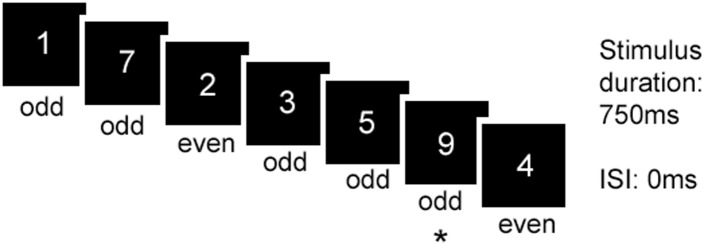
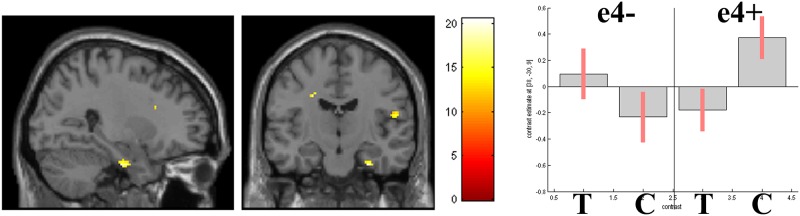
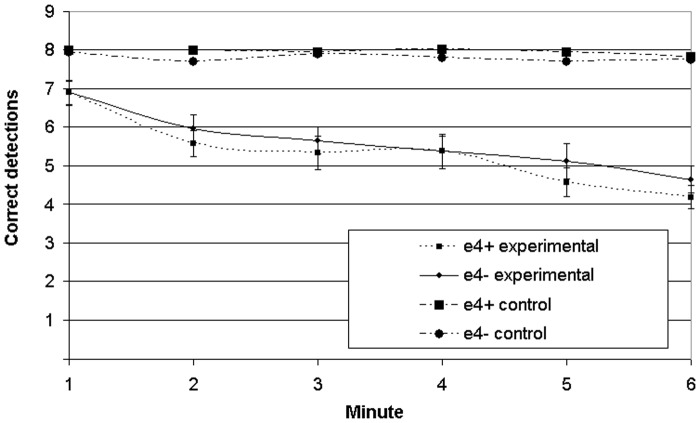
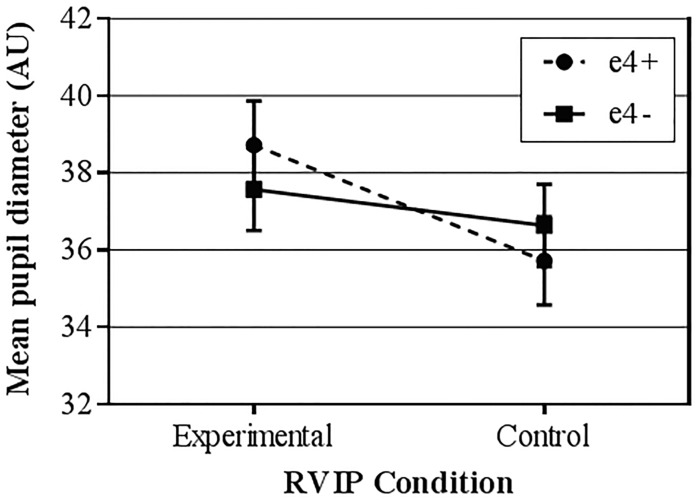
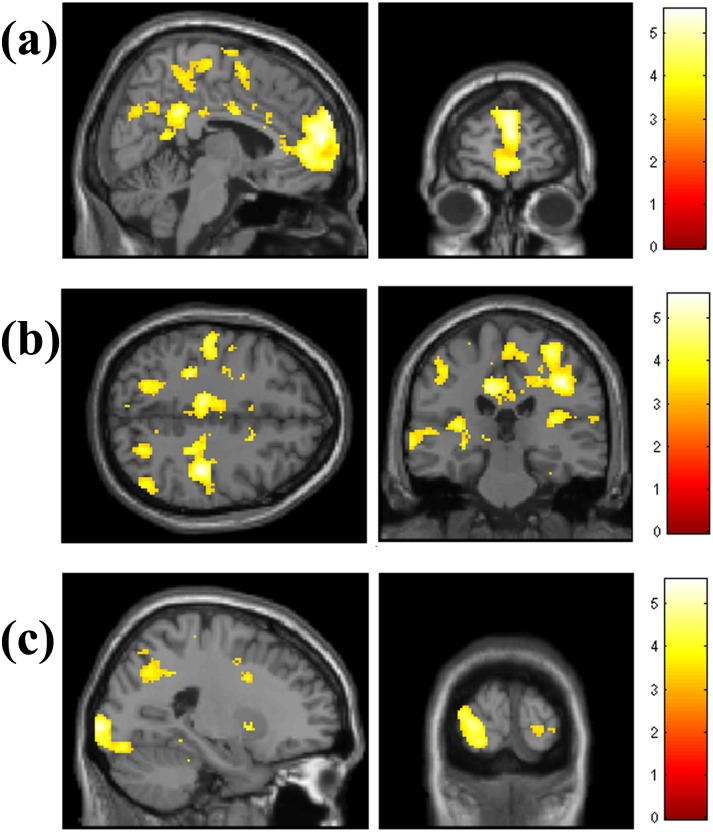
In this study we investigated effects of the APOE ε4 allele (which confers an enhanced risk of poorer cognitive ageing, and Alzheimer's Disease) on sustained attention (vigilance) performance in young adults using the Rapid Visual Information Processing (RVIP) task and event-related fMRI. Previous fMRI work with this task has used block designs: this study is the first to image an extended (6-minute) RVIP task. Participants were 26 carriers of the APOE ε4 allele, and 26 non carriers (aged 18-28). Pupil diameter was measured throughout, as an index of cognitive effort. We compared activity to RVIP task hits to hits on a control task (with similar visual parameters and response requirements but no working memory load): this contrast showed activity in medial frontal, inferior and superior parietal, temporal and visual cortices, consistent with previous work, demonstrating that meaningful neural data can be extracted from the RVIP task over an extended interval and using an event-related design. Behavioural performance was not affected by genotype; however, a genotype by condition (experimental task/control task) interaction on pupil diameter suggested that ε4 carriers deployed more effort to the experimental compared to the control task. fMRI results showed a condition by genotype interaction in the right hippocampal formation: only ε4 carriers showed downregulation of this region to experimental task hits versus control task hits. Experimental task beta values were correlated against hit rate: parietal correlations were seen in ε4 carriers only, frontal correlations in non-carriers only. The data indicate that, in the absence of behavioural differences, young adult ε4 carriers already show a different linkage between functional brain activity and behaviour, as well as aberrant hippocampal recruitment patterns. This may have relevance for genotype differences in cognitive ageing trajectories.
在这项研究中,我们使用快速视觉信息处理(RVIP)任务和事件相关 fMRI 研究了 APOE ε4 等位基因(增加认知老化和阿尔茨海默病风险)对年轻成年人持续注意力(警觉)表现的影响。以前使用此任务的 fMRI 工作使用了块设计:这项研究首次对扩展(6 分钟)RVIP 任务进行成像。参与者包括 26 名 APOE ε4 等位基因携带者和 26 名非携带者(年龄在 18-28 岁之间)。在整个过程中测量了瞳孔直径,作为认知努力的指标。我们将 RVIP 任务的反应与控制任务的反应进行了比较(具有相似的视觉参数和反应要求,但没有工作记忆负荷):这种对比显示了内侧额叶、下顶叶和上顶叶、颞叶和视觉皮层的活动,与之前的工作一致,证明可以从 RVIP 任务中提取出有意义的神经数据在较长的时间间隔内使用事件相关设计。行为表现不受基因型影响;然而,瞳孔直径的基因型与条件(实验任务/对照任务)相互作用表明,与对照任务相比,ε4 携带者在实验任务中投入更多的努力。fMRI 结果显示右海马结构存在条件与基因型的相互作用:只有 ε4 携带者在实验任务与对照任务的反应中显示出该区域的下调。实验任务的β值与命中率相关:仅在 ε4 携带者中观察到顶叶相关性,而非携带者中仅观察到额叶相关性。这些数据表明,在没有行为差异的情况下,年轻的成年 ε4 携带者已经显示出功能性大脑活动与行为之间的不同联系,以及异常的海马招募模式。这可能与认知老化轨迹中的基因型差异有关。