Arfat Yasir, Basra Muhammad Asim R, Shahzad Muhammad, Majeed Kashif, Mahmood Nasir, Munir Hina
Key Laboratory of Resource Biology and Biotechnology in Western China (College of Life Sciences, Northwest University), Ministry of Education, Xi'an 710069, China; Department of Pharmacology, University of Health Sciences, Lahore, Pakistan.
Institute of Chemistry, University of the Punjab, Lahore, Pakistan.
Mol Ther Nucleic Acids. 2018 Jun 1;11:323-336. doi: 10.1016/j.omtn.2017.11.009. Epub 2017 Nov 24.
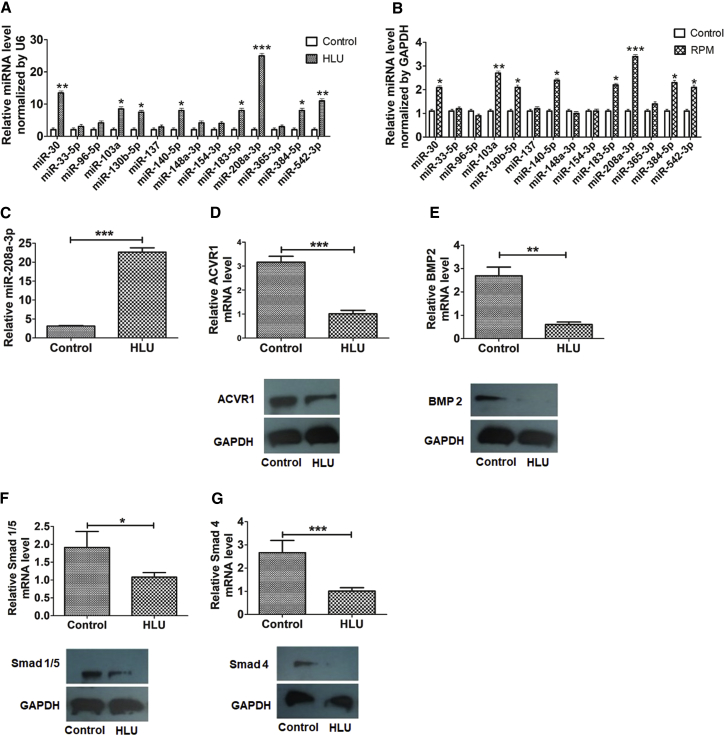
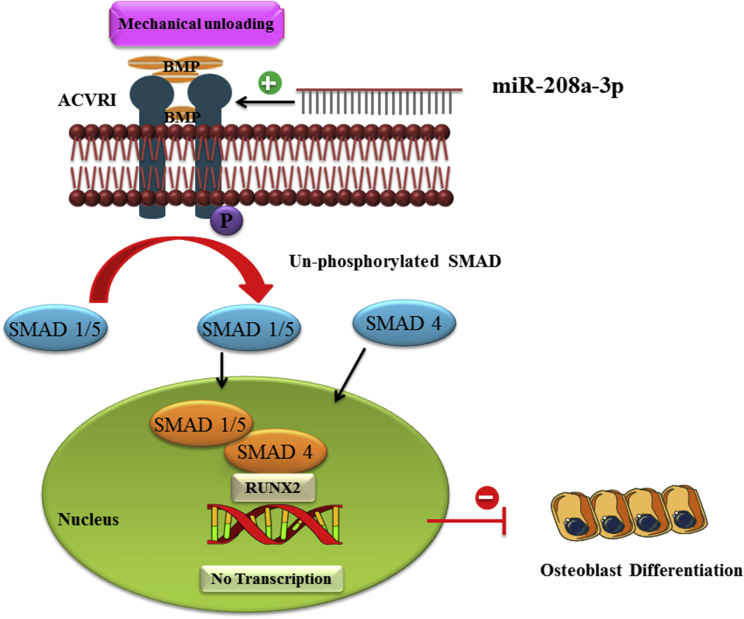
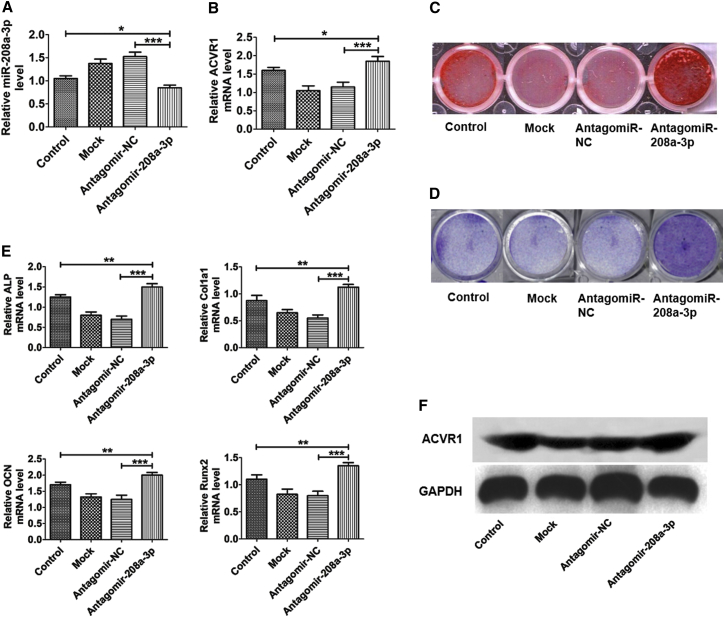
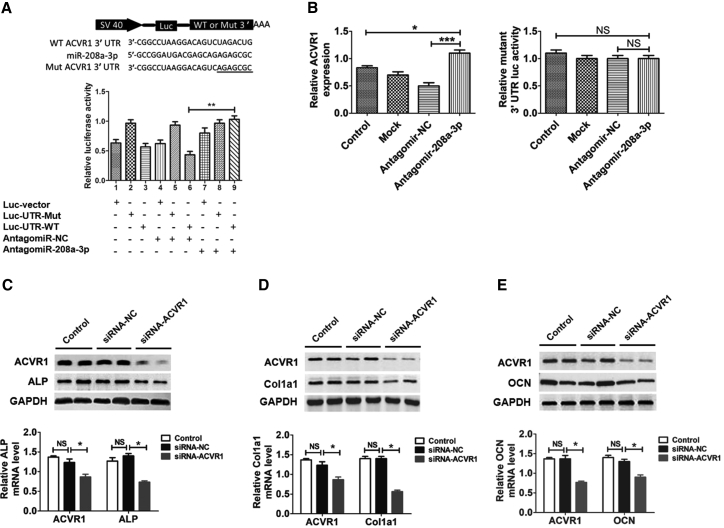
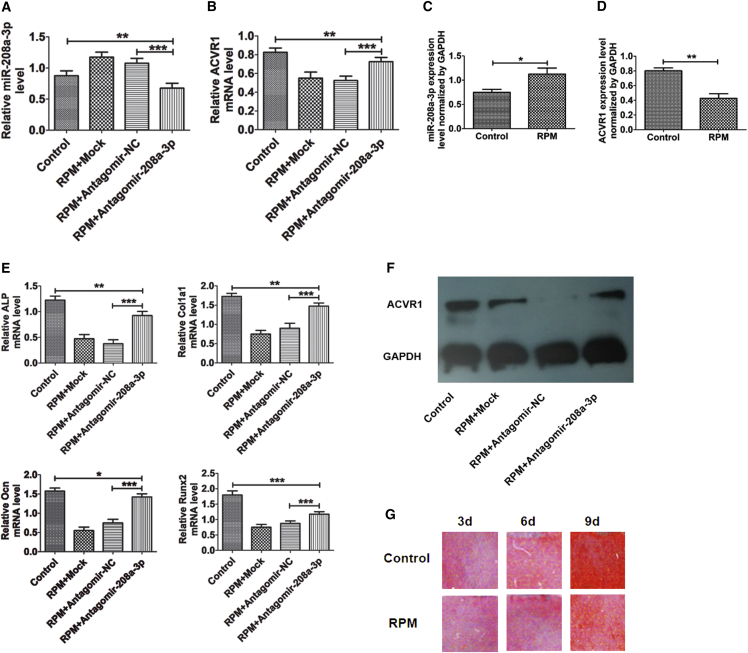
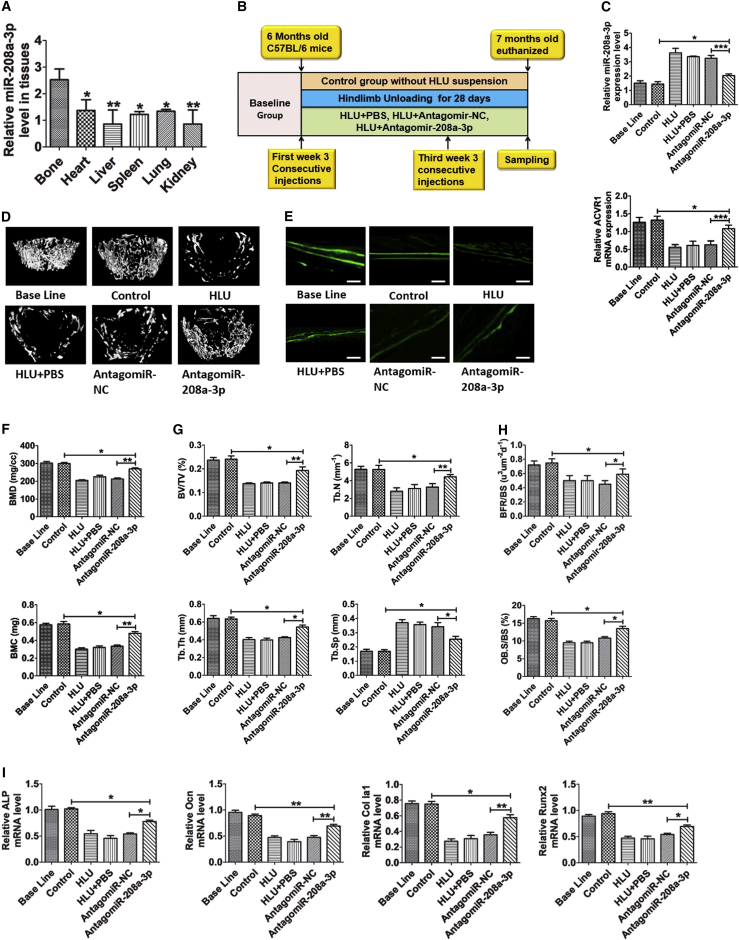
Emerging evidence indicates that many microRNAs (miRNAs) are indispensable regulators of osteoblast differentiation and bone formation. However, the role of miRNAs in mechanotransduction of osteoblasts remains to be elucidated. This study aimed to identify a mechanosensitive miRNA that regulates Activin A receptor type I (ACVR1)-induced osteogenic differentiation. After 4 weeks of hindlimb unloading (HLU) suspension of 6-month-old male C57BL/6J mice, femurs and tibias were harvested to extract total bone RNAs. Elevated levels of miR-208a-3p correlated with a lower degree of bone formation in whole-bone samples of HLU mice. However, in vitro overexpression of miR-208a-3p inhibited osteoblast differentiation, whereas silencing of miR-208a-3p by antagomiR-208a-3p promoted expression of osteoblast activity, bone formation marker genes, and matrix mineralization under mechanical unloading condition. Bioinformatics analysis and a luciferase assay revealed that ACVR1 is a target gene of miR-208a-3p that negatively regulates osteoblast differentiation under mechanical unloading environment. Further, this study also demonstrates that in vivo pre-treatment with antagomiR-208a-3p led to an increase in bone formation and trabecular microarchitecture and partly rescued the bone loss caused by mechanical unloading. Collectively, these results suggest that in vivo, inhibition of miRNA-208a-3p by antagomiR-208a-3p may be a potential therapeutic strategy for ameliorating bone loss.
新出现的证据表明,许多微小RNA(miRNA)是成骨细胞分化和骨形成不可或缺的调节因子。然而,miRNA在成骨细胞机械转导中的作用仍有待阐明。本研究旨在鉴定一种调节激活素A受体I型(ACVR1)诱导的成骨分化的机械敏感miRNA。对6月龄雄性C57BL/6J小鼠进行后肢卸载(HLU)悬吊4周后,采集股骨和胫骨以提取全骨RNA。HLU小鼠全骨样本中miR-208a-3p水平升高与骨形成程度降低相关。然而,体外过表达miR-208a-3p抑制成骨细胞分化,而抗miR-208a-3p沉默miR-208a-3p则在机械卸载条件下促进成骨细胞活性、骨形成标记基因的表达和基质矿化。生物信息学分析和荧光素酶测定表明,ACVR1是miR-208a-3p的靶基因,在机械卸载环境下负向调节成骨细胞分化。此外,本研究还表明,体内用抗miR-208a-3p预处理可导致骨形成增加和小梁微结构改善,并部分挽救机械卸载引起的骨质流失。总的来说,这些结果表明,在体内,抗miR-208a-3p抑制miRNA-208a-3p可能是改善骨质流失的潜在治疗策略。