Callegari Elisa, D'Abundo Lucilla, Guerriero Paola, Simioni Carolina, Elamin Bahaeldin K, Russo Marta, Cani Alice, Bassi Cristian, Zagatti Barbara, Giacomelli Luciano, Blandamura Stella, Moshiri Farzaneh, Ultimo Simona, Frassoldati Antonio, Altavilla Giuseppe, Gramantieri Laura, Neri Luca Maria, Sabbioni Silvia, Negrini Massimo
Department of Morphology, Surgery and Experimental Medicine, University of Ferrara, 44121 Ferrara, Italy.
Department of Morphology, Surgery and Experimental Medicine, University of Ferrara, 44121 Ferrara, Italy.
Mol Ther Nucleic Acids. 2018 Jun 1;11:485-493. doi: 10.1016/j.omtn.2018.04.002. Epub 2018 Apr 12.
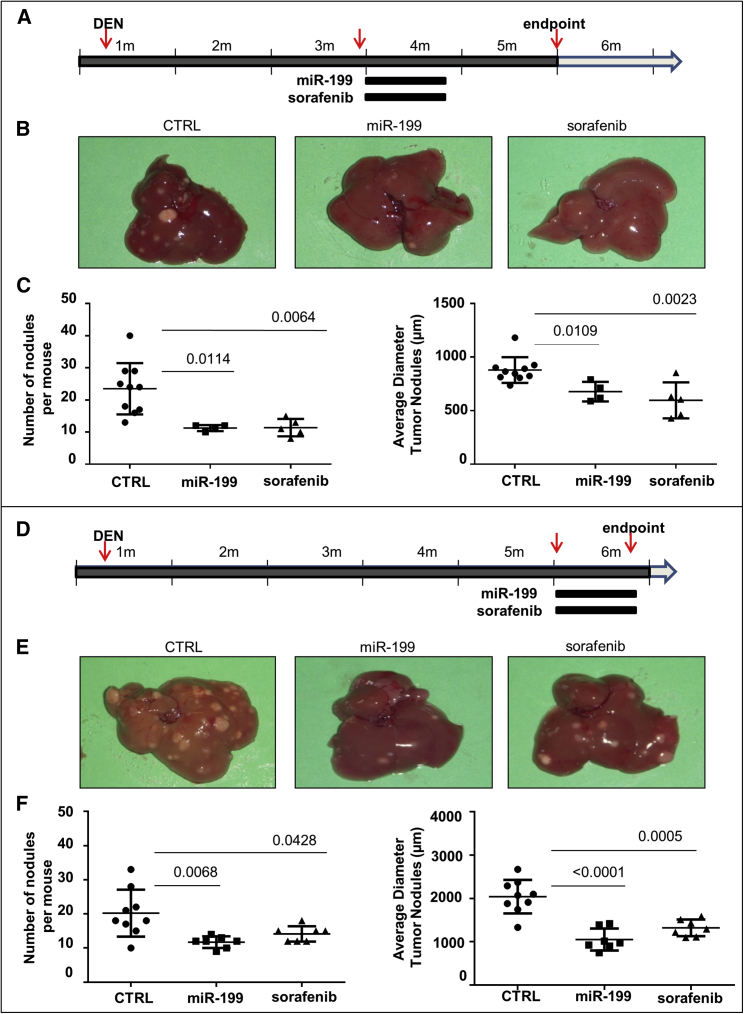
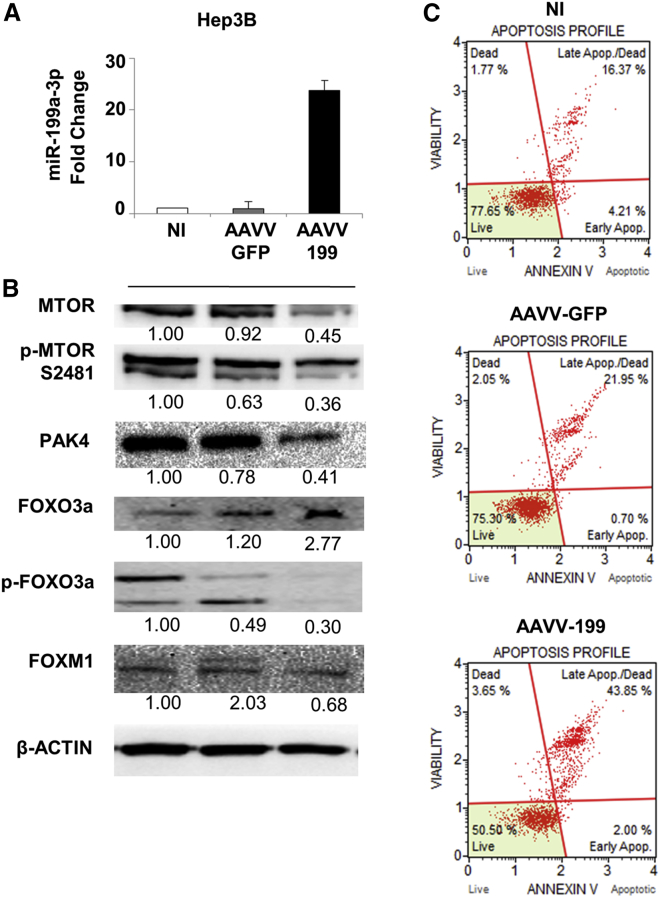
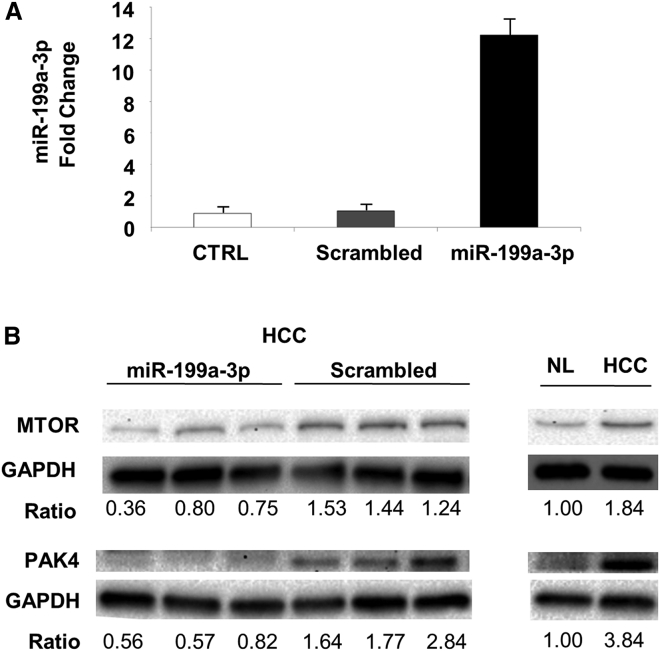
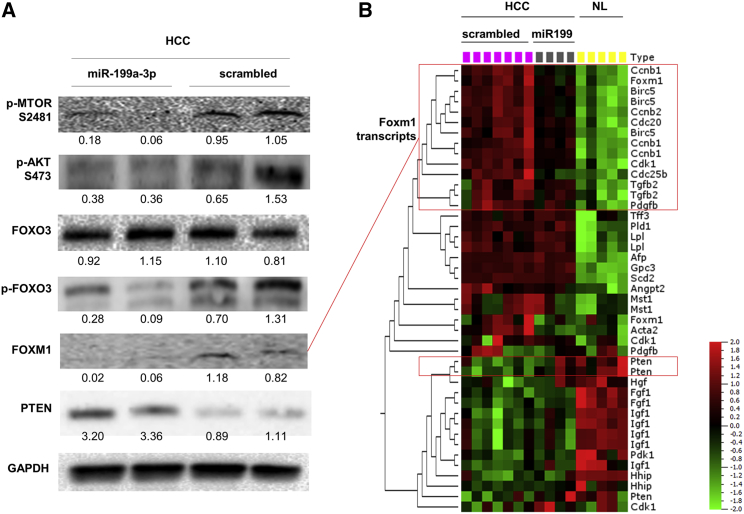
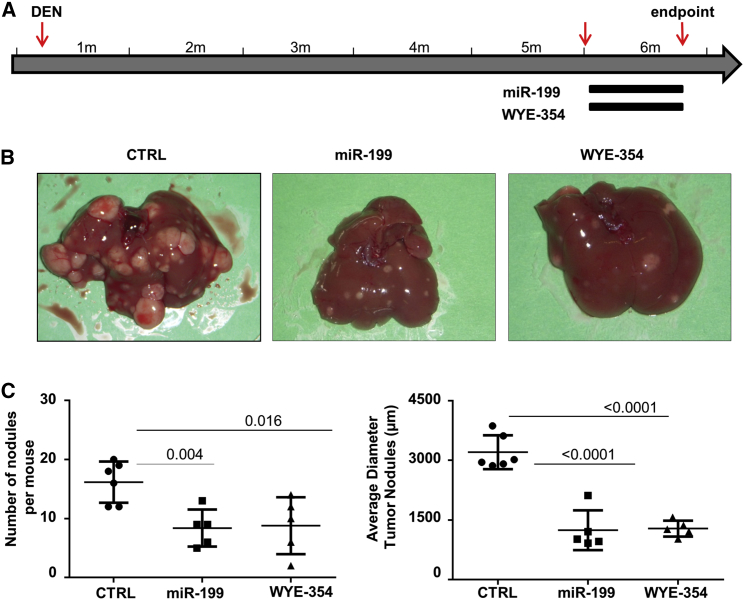
Hepatocellular carcinoma (HCC) is the second leading cause of cancer-related death worldwide. Prognosis is poor, and therapeutic options are limited. MicroRNAs (miRNAs) have emerged as potential therapeutic molecules against cancer. Here, we investigated the therapeutic efficacy of miR-199a-3p, an miRNA highly expressed in normal liver and downregulated in virtually all HCCs. The therapeutic value of miR-199a-3p mimic molecules was assayed in the TG221 mouse, a transgenic model highly predisposed to the development of liver cancer. Administration of miR-199a-3p mimics in the TG221 transgenic mouse showing liver cancer led to a significant reduction of number and size of tumor nodules compared to control animals. In vivo delivery confirmed protein downregulation of the miR-199a-3p direct targets, mechanistic target of rapamycin (MTOR) and p21 activated kinase 4 (PAK4), ultimately leading to the repression of FOXM1. Remarkably, the anti-tumor activity of miR-199a-3p mimics was comparable to that obtained with sorafenib. These results suggested that miR-199a-3p may be considered a promising HCC therapeutic option.
肝细胞癌(HCC)是全球癌症相关死亡的第二大主要原因。预后较差,治疗选择有限。微小RNA(miRNA)已成为对抗癌症的潜在治疗分子。在此,我们研究了miR-199a-3p的治疗效果,miR-199a-3p是一种在正常肝脏中高表达而在几乎所有肝癌中下调的miRNA。在TG221小鼠(一种极易发生肝癌的转基因模型)中检测了miR-199a-3p模拟分子的治疗价值。在出现肝癌的TG221转基因小鼠中给予miR-199a-3 p模拟物,与对照动物相比,肿瘤结节的数量和大小显著减少。体内递送证实了miR-199a-3p直接靶点雷帕霉素机制靶点(MTOR)和p21激活激酶4(PAK4)的蛋白下调,最终导致FOXM1的抑制。值得注意的是,miR-199a-3p模拟物的抗肿瘤活性与索拉非尼相当。这些结果表明,miR-199a-3p可能被认为是一种有前景的肝癌治疗选择。