Arnold Amy E, Malek-Adamian Elise, Le Phuong U, Meng Anika, Martínez-Montero Saúl, Petrecca Kevin, Damha Masad J, Shoichet Molly S
Department of Chemistry, University of Toronto, 80 St. George Street, Toronto, ON M5S 3H6, Canada.
Department of Chemistry, McGill University, 801 Sherbrooke Street West, Montreal, QC H3A 0B8, Canada.
Mol Ther Nucleic Acids. 2018 Jun 1;11:518-527. doi: 10.1016/j.omtn.2018.04.004. Epub 2018 Apr 19.
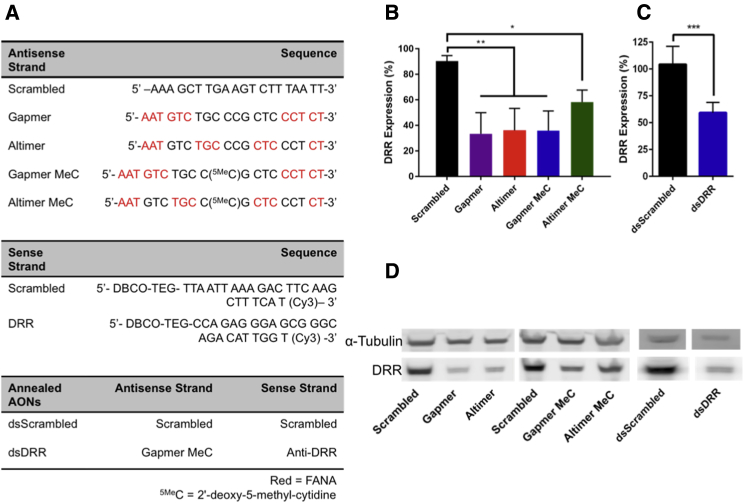
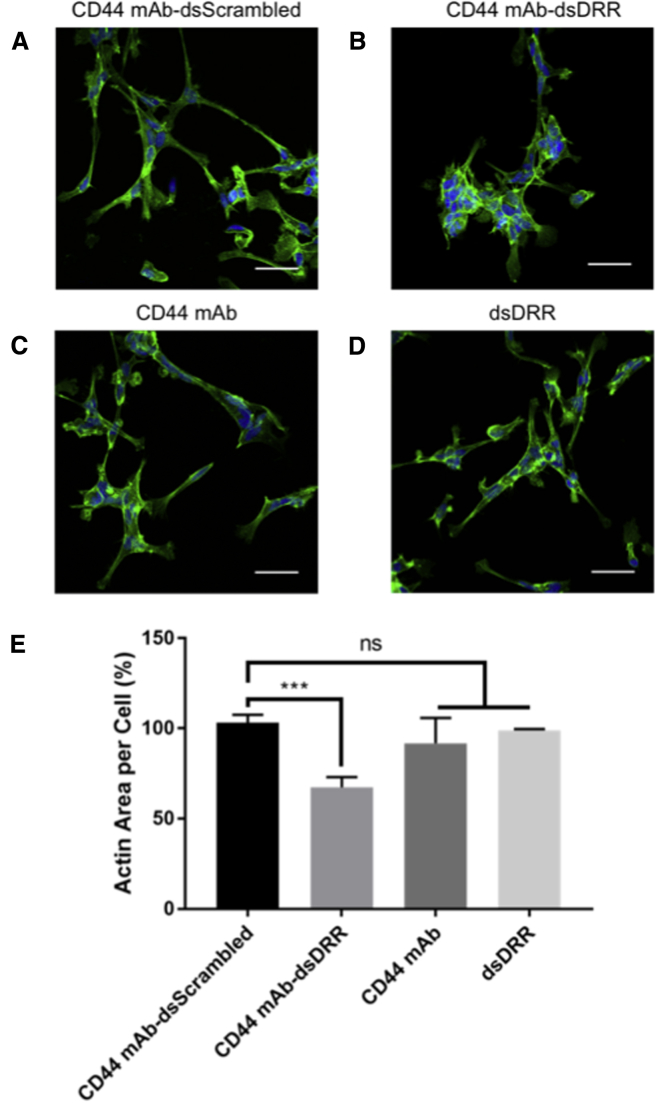
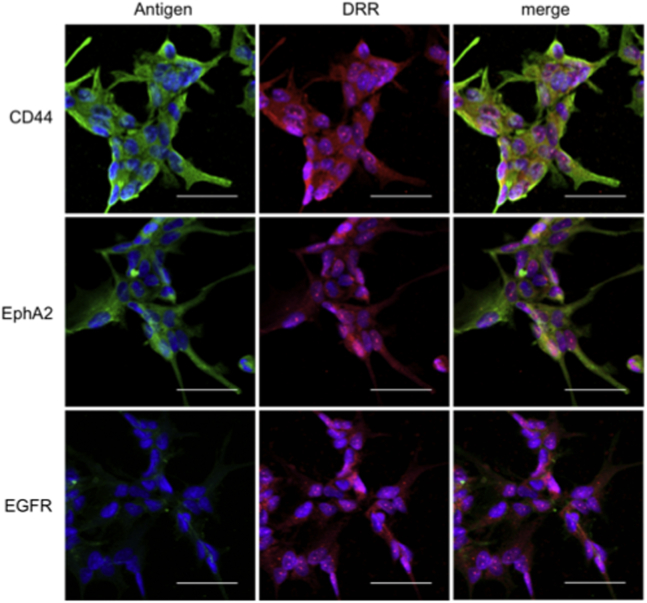
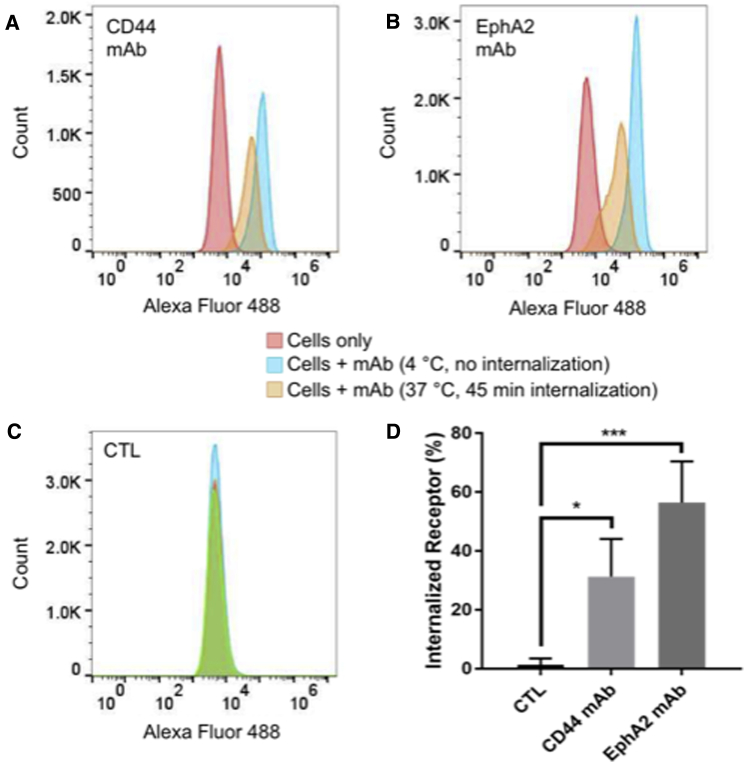
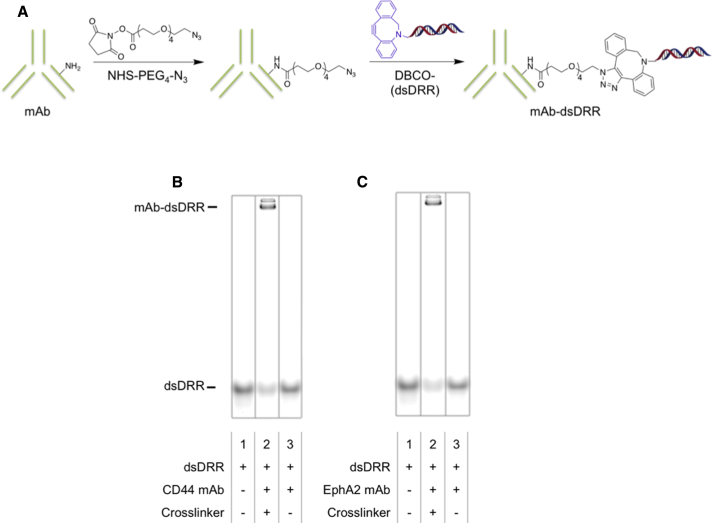
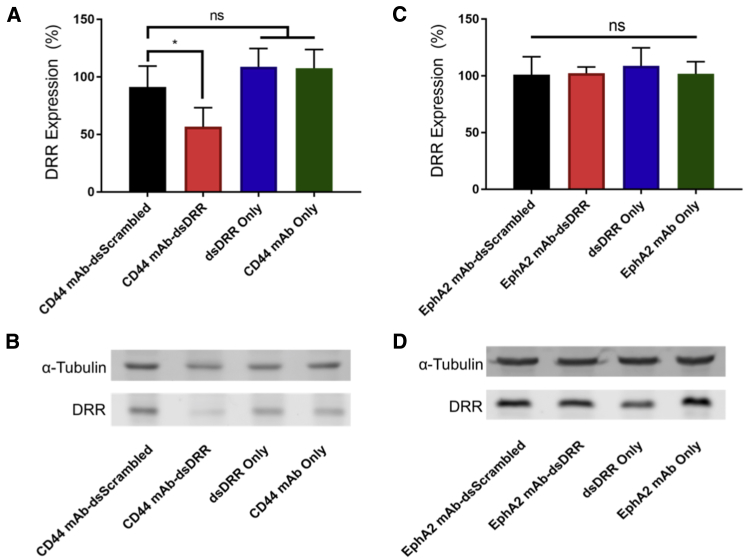
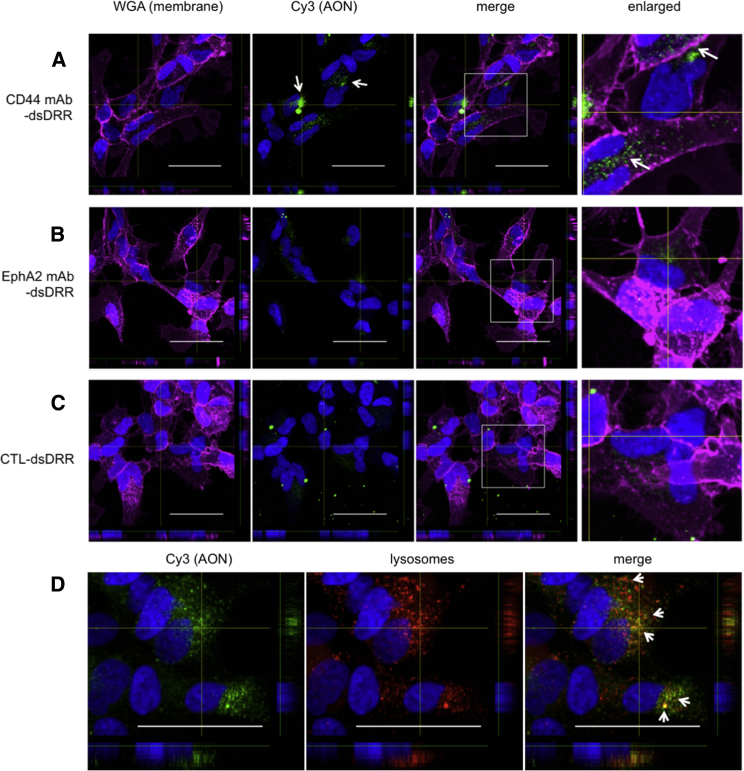
Glioblastoma stem cells (GSCs) are invasive, treatment-resistant brain cancer cells that express downregulated in renal cell carcinoma (DRR), also called FAM107A, a genetic driver of GSC invasion. We developed antibody-antisense oligonucleotide (AON) conjugates to target and reduce DRR/FAM107A expression. Specifically, we used antibodies against antigens expressed on the GSCs, such as CD44 and EphA2, conjugated to chemically modified AONs against DRR/FAM107A, which were designed as chimeras of DNA and 2'-deoxy-2'-fluoro-beta-D-arabinonucleic acid (FANA) for increased nuclease stability and mRNA affinity. We demonstrate that these therapeutic conjugates successfully internalize, accumulate, and reduce DRR/FAM107A expression in patient-derived GSCs. This is the first example of an antibody-antisense strategy against cancer stem cells.
胶质母细胞瘤干细胞(GSCs)是具有侵袭性、对治疗耐药的脑癌细胞,其表达肾细胞癌中下调的蛋白(DRR),也称为FAM107A,它是GSC侵袭的一个基因驱动因素。我们开发了抗体-反义寡核苷酸(AON)偶联物,以靶向并降低DRR/FAM107A的表达。具体而言,我们使用针对GSCs上表达的抗原(如CD44和EphA2)的抗体,将其与针对DRR/FAM107A的化学修饰AON偶联,这些AON被设计为DNA和2'-脱氧-2'-氟-β-D-阿拉伯核酸(FANA)的嵌合体,以提高核酸酶稳定性和mRNA亲和力。我们证明,这些治疗性偶联物成功内化、积累并降低了患者来源的GSCs中DRR/FAM107A的表达。这是针对癌症干细胞的抗体-反义策略的首个实例。