Fennelly Orna, Blake Catherine, FitzGerald Oliver, Breen Roisin, Ashton Jennifer, Brennan Aisling, Caffrey Aoife, Desmeules François, Cunningham Caitriona
School of Public Health, Physiotherapy and Sports Science, University College Dublin, Dublin, Ireland.
Department of Rheumatology, St. Vincent's University Hospital, Dublin, Ireland.
BMC Musculoskelet Disord. 2018 Jun 1;19(1):181. doi: 10.1186/s12891-018-2106-7.
Many people with musculoskeletal (MSK) disorders wait several months or years for Consultant Doctor appointments, despite often not requiring medical or surgical interventions. To allow earlier patient access to orthopaedic and rheumatology services in Ireland, Advanced Practice Physiotherapists (APPs) were introduced at 16 major acute hospitals. This study performed the first national evaluation of APP triage services.
Throughout 2014, APPs (n = 22) entered clinical data on a national database. Analysis of these data using descriptive statistics determined patient wait times, Consultant Doctor involvement in clinical decisions, and patient clinical outcomes. Chi square tests were used to compare patient clinical outcomes across orthopaedic and rheumatology clinics. A pilot study at one site identified re-referral rates to orthopaedic/rheumatology services of patients managed by the APPs.
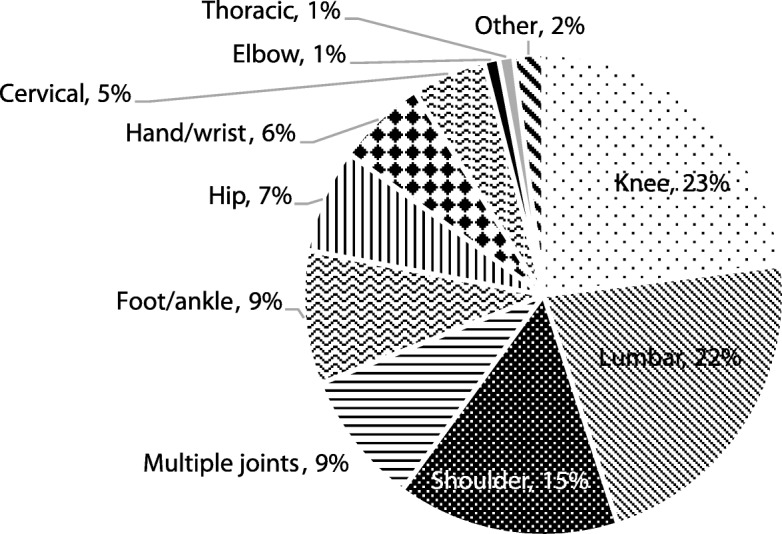
In one year, 13,981 new patients accessed specialist orthopaedic and rheumatology consultations via the APP. Median wait time for an appointment was 5.6 months. Patients most commonly presented with knee (23%), lower back (22%) and shoulder (15%) disorders. APPs made autonomous clinical decisions regarding patient management at 77% of appointments, and managed patient care pathways without onward referral to Consultant Doctors in more than 80% of cases. Other onward clinical pathways recommended by APPs were: physiotherapy referrals (42%); clinical investigations (29%); injections administered (4%); and surgical listing (2%). Of those managed by the APP, the pilot study identified that only 6.5% of patients were re-referred within one year.
This national evaluation of APP services demonstrated that the majority of patients assessed by an APP did not require onward referral for a Consultant Doctor appointment. Therefore, patients gained earlier access to orthopaedic and rheumatology consultations in secondary care, with most patients conservatively managed.
许多肌肉骨骼疾病患者要等待数月甚至数年才能预约到专科医生,尽管他们往往不需要药物或手术治疗。为了让爱尔兰的患者能更早获得骨科和风湿病服务,16家大型急症医院引入了高级执业物理治疗师(APP)。本研究首次对APP分诊服务进行了全国性评估。
在2014年全年,22名APP将临床数据录入国家数据库。使用描述性统计分析这些数据,以确定患者的等待时间、专科医生参与临床决策的情况以及患者的临床结局。采用卡方检验比较骨科和风湿病诊所患者的临床结局。在一个地点进行的试点研究确定了由APP管理的患者再次转诊至骨科/风湿病服务的比例。
在一年时间里,13981名新患者通过APP获得了专科骨科和风湿病会诊。预约的中位等待时间为5.6个月。患者最常见的症状是膝盖疾病(23%)、下背部疾病(22%)和肩部疾病(15%)。在77%的预约中,APP对患者管理做出了自主临床决策,并且在超过80%的病例中,无需进一步转诊给专科医生即可管理患者的护理路径。APP推荐的其他后续临床路径包括:转介至物理治疗(42%);临床检查(29%);注射治疗(4%);以及安排手术(2%)。在由APP管理的患者中,试点研究发现只有6.5%的患者在一年内被再次转诊。
这项对APP服务的全国性评估表明,大多数由APP评估的患者不需要进一步转诊预约专科医生。因此,患者能够在二级医疗中更早地获得骨科和风湿病会诊,且大多数患者得到了保守治疗。