Moriwaki Kazumasa, Ayani Yusuke, Kuwabara Hiroko, Terada Tetsuya, Kawata Ryo, Asahi Michio
Department of Pharmacology, Faculty of Medicine, Osaka Medical College, Takatsuki, Osaka 569-8686, Japan.
Department of Otolaryngology-Head and Neck Surgery, Faculty of Medicine, Osaka Medical College, Osaka 569-8686, Japan.
Oncotarget. 2018 May 18;9(38):25225-25243. doi: 10.18632/oncotarget.25396.
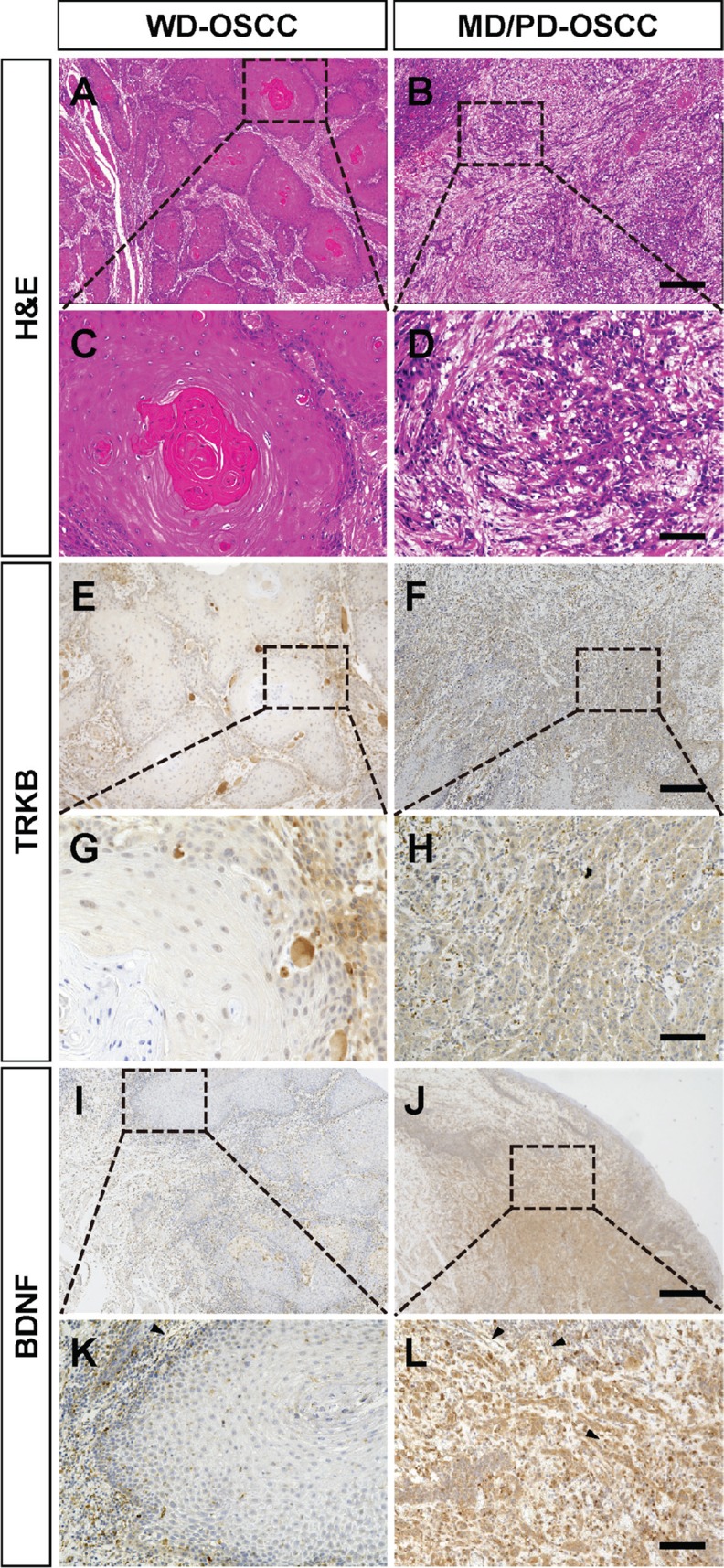
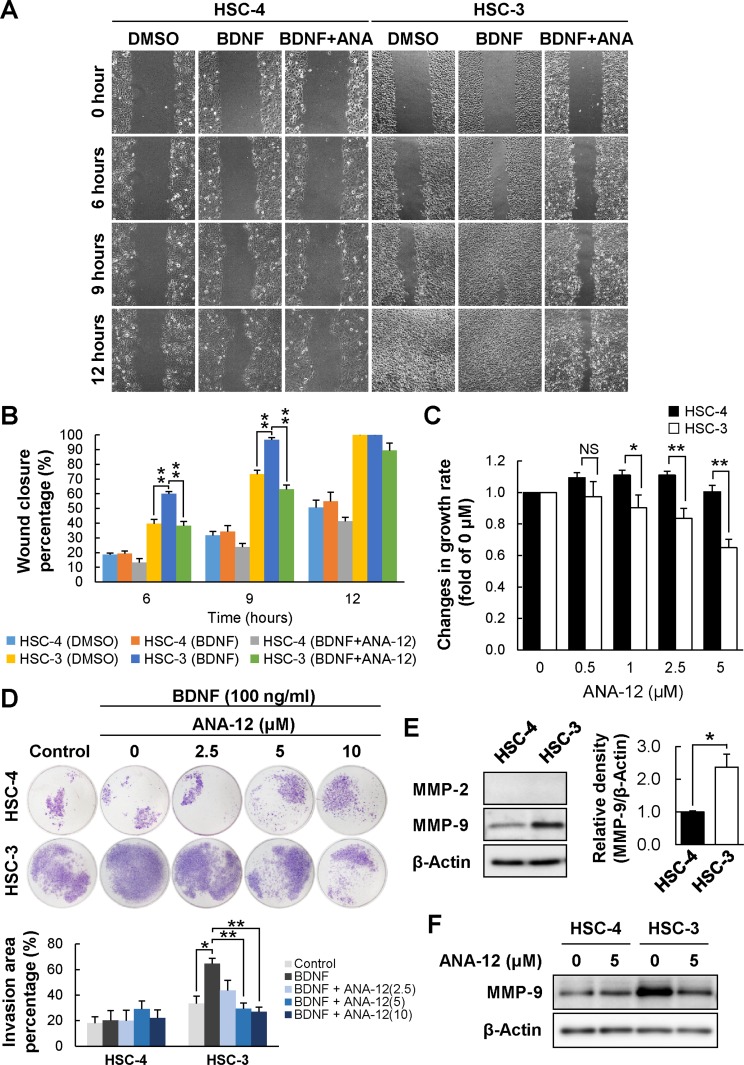
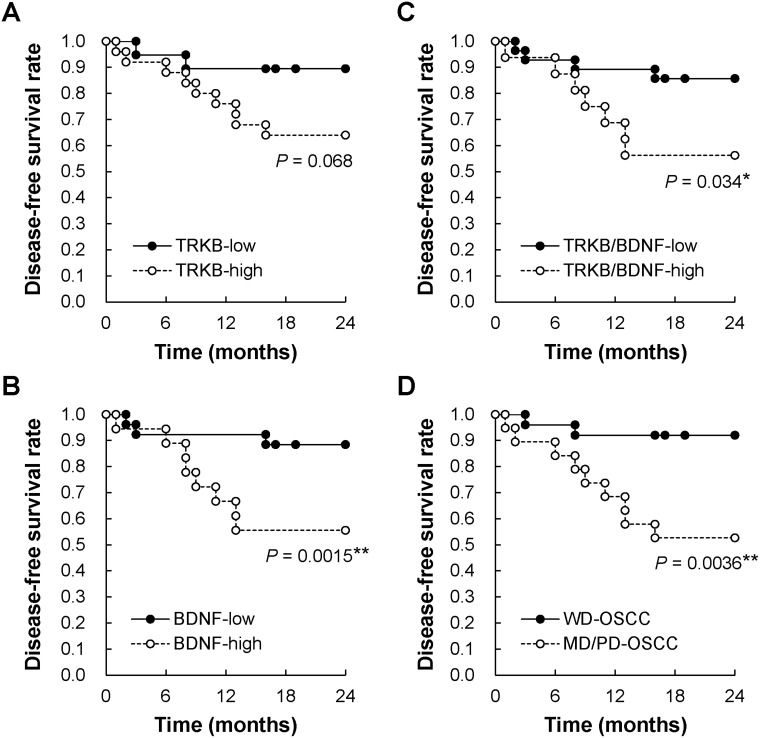
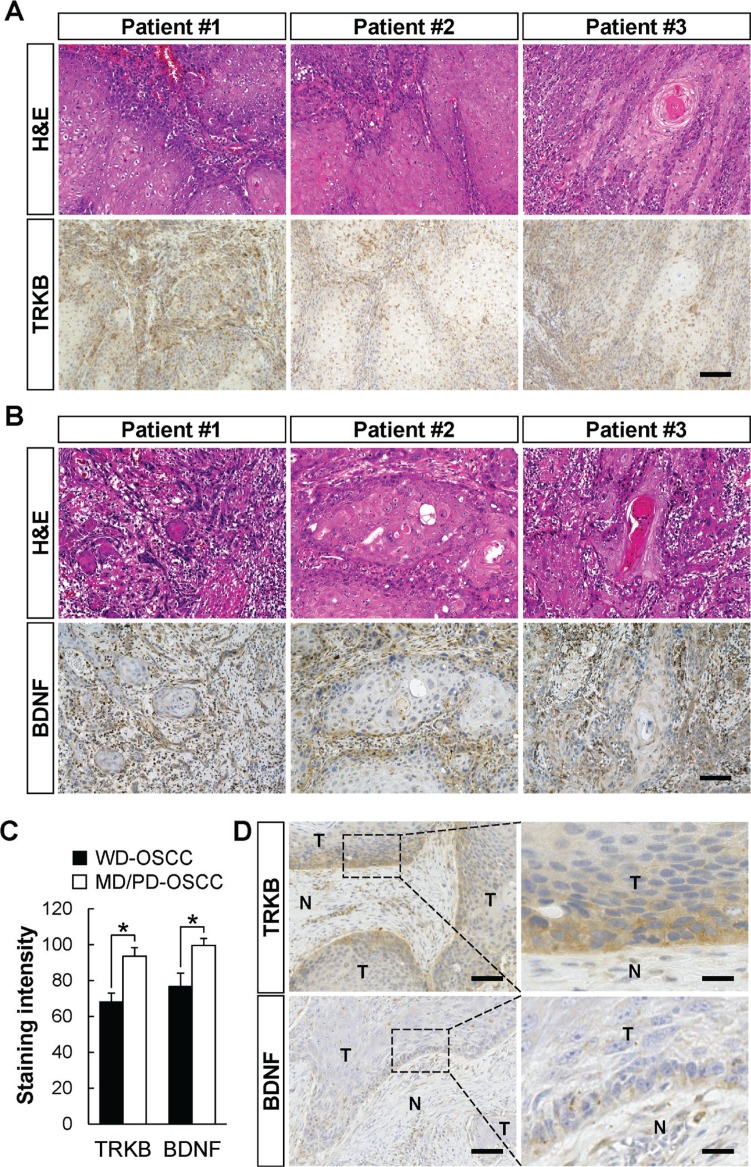
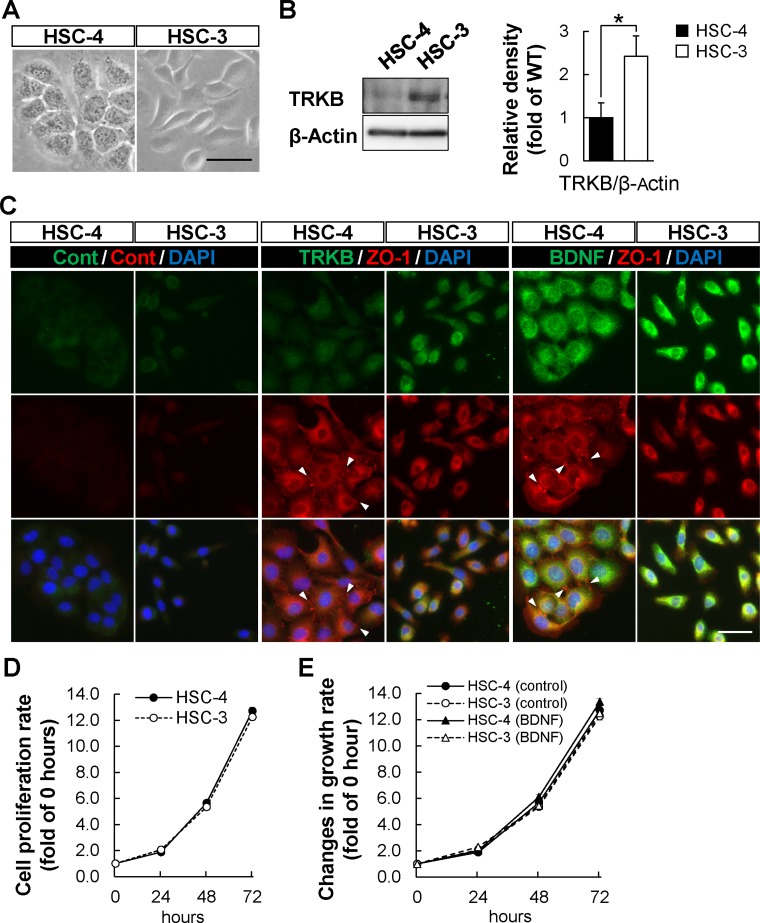
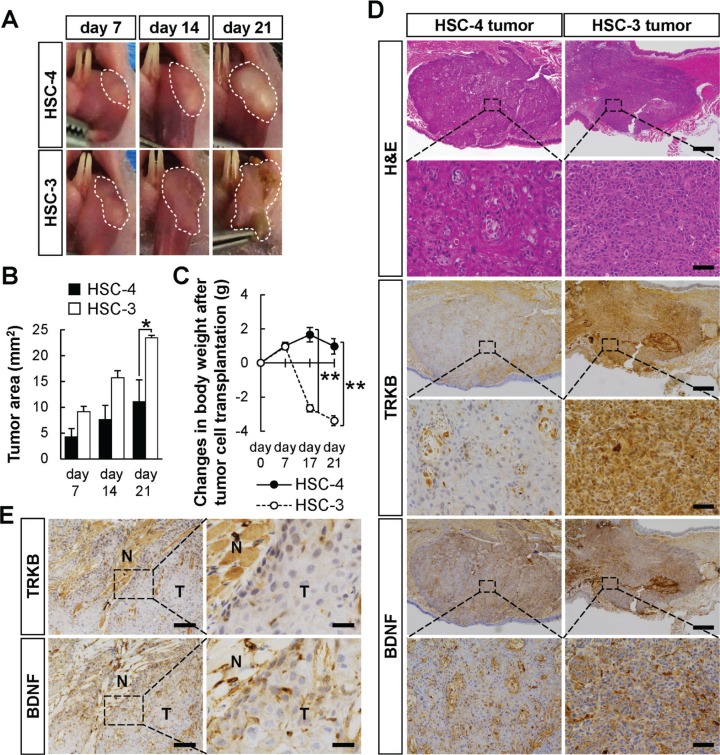
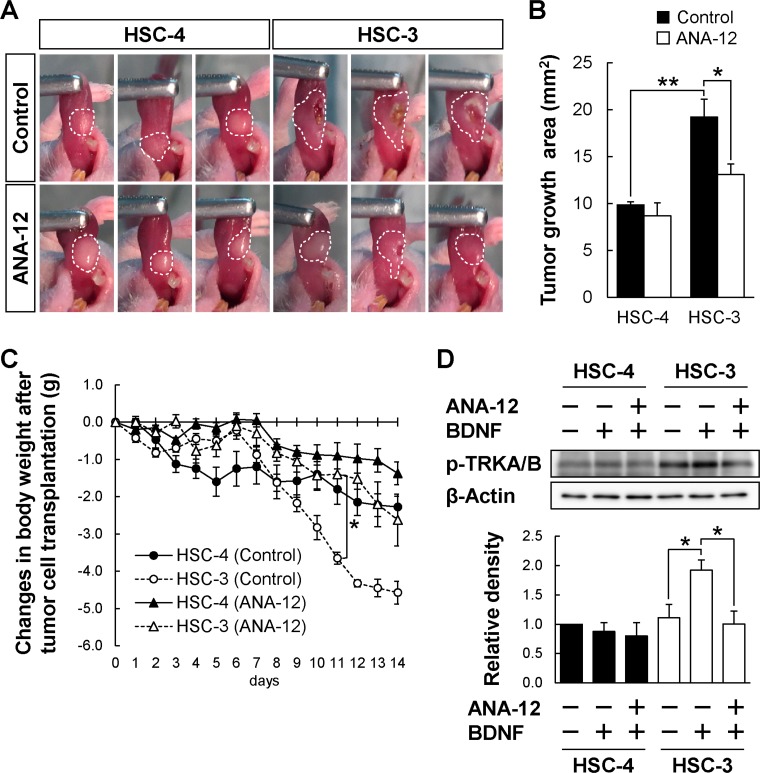
It has been reported that one of the neurotrophin receptors, tropomyosin receptor kinase B (TRKB), is frequently overexpressed in various tumor tissues including oral squamous cell carcinoma (OSCC), and that its upregulation promotes tumor progression in human cancers. However, the correlation between TRKB overexpression and clinicopathological characteristics is not fully elucidated. Here, we present the correlation between the expression levels of TRKB and/or its secreted ligand, brain-derived neurotrophic factor (BDNF), and clinicopathological characteristics, especially regarding tumor differentiation, tissue invasion, and disease-free survival in patients with OSCC. The results obtained through immunohistochemical analysis of human OSCC tumor specimens showed that the expression levels of TRKB and/or BDNF, were significantly higher in moderately and poorly differentiated OSCC (MD/PD-OSCC) tumor cells than in well differentiated cells (WD-OSCC). Moreover, the OSCC tumors highly expressing TRKB and/or BDNF exhibited promotion in tissue invasion and reduction in disease-free survival in the patients. In an orthotopic transplantation mouse model of human OSCC cell lines, administration of a TRKB-specific inhibitor significantly suppressed the tumor growth and invasion in PD-OSCC-derived tumor cells, but not in WD-OSCC-derived tumor cells. Moreover, the TRKB inhibitor selectively blocked BDNF-induced tumor cell proliferation and migration accompanied with the suppression of TRKB phosphorylation in PD-OSCC but not in WD-OSCC . Taken together, these data suggest that the BDNF/TRKB signaling pathway may regulate tumor progression in poorly differentiated OSCC. Expression levels of signal molecules may be an accurate prognosis marker for tumor aggressiveness, and the molecules may be an attractive target for new OSCC therapies.
据报道,神经营养因子受体之一,原肌球蛋白受体激酶B(TRKB),在包括口腔鳞状细胞癌(OSCC)在内的各种肿瘤组织中经常过度表达,并且其上调促进人类癌症中的肿瘤进展。然而,TRKB过表达与临床病理特征之间的相关性尚未完全阐明。在此,我们呈现TRKB及其分泌配体脑源性神经营养因子(BDNF)的表达水平与临床病理特征之间的相关性,特别是关于OSCC患者的肿瘤分化、组织侵袭和无病生存期。通过对人类OSCC肿瘤标本进行免疫组织化学分析获得的结果表明,TRKB和/或BDNF的表达水平在中分化和低分化OSCC(MD/PD-OSCC)肿瘤细胞中显著高于高分化细胞(WD-OSCC)。此外,高表达TRKB和/或BDNF的OSCC肿瘤在患者中表现出组织侵袭增加和无病生存期缩短。在人类OSCC细胞系的原位移植小鼠模型中,给予TRKB特异性抑制剂可显著抑制PD-OSCC来源的肿瘤细胞中的肿瘤生长和侵袭,但对WD-OSCC来源的肿瘤细胞无效。此外,TRKB抑制剂选择性地阻断BDNF诱导的肿瘤细胞增殖和迁移,并伴随PD-OSCC中TRKB磷酸化的抑制,但对WD-OSCC无效。综上所述,这些数据表明BDNF/TRKB信号通路可能调节低分化OSCC中的肿瘤进展。信号分子的表达水平可能是肿瘤侵袭性的准确预后标志物,并且这些分子可能是OSCC新疗法的有吸引力的靶点。