Alonso-Pérez Ana, Franco-Trepat Eloi, Guillán-Fresco María, Jorge-Mora Alberto, López Verónica, Pino Jesús, Gualillo Oreste, Gómez Rodolfo
Musculoskeletal Pathology Group, Laboratory 18, Institute IDIS, Servicio Galego de Saúde, Santiago de Compostela, Spain.
Division of Traumatology, Santiago University Clinical Hospital, Santiago de Compostela, Spain.
Front Physiol. 2018 May 8;9:504. doi: 10.3389/fphys.2018.00504. eCollection 2018.
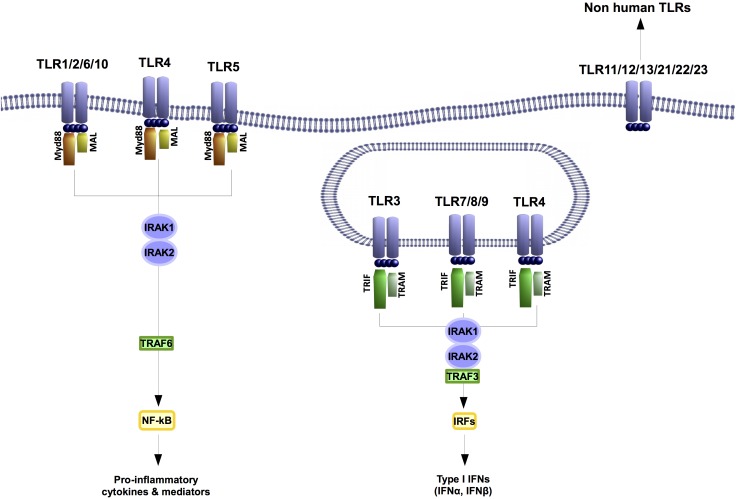
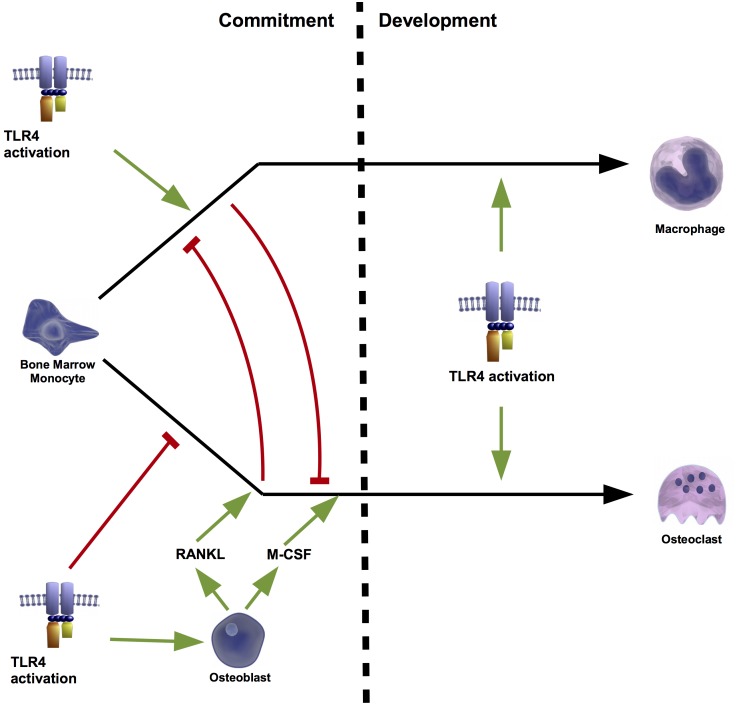
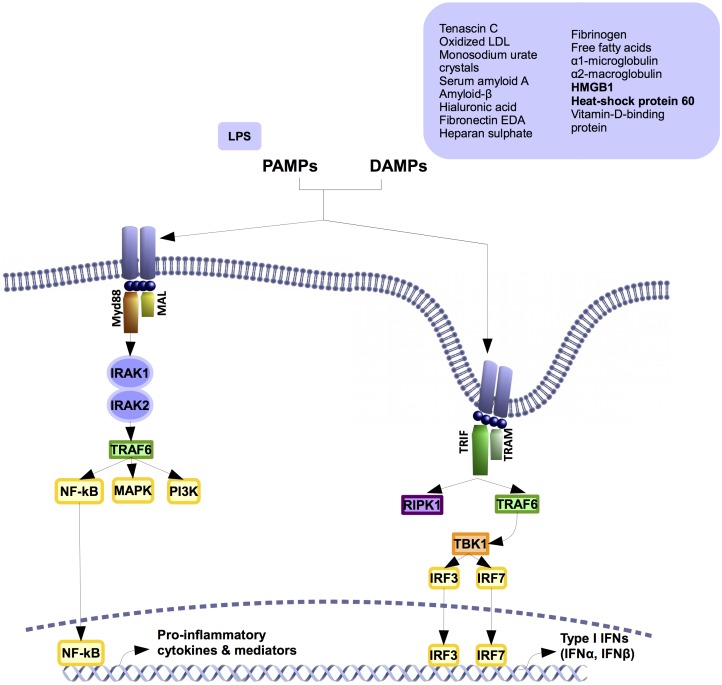
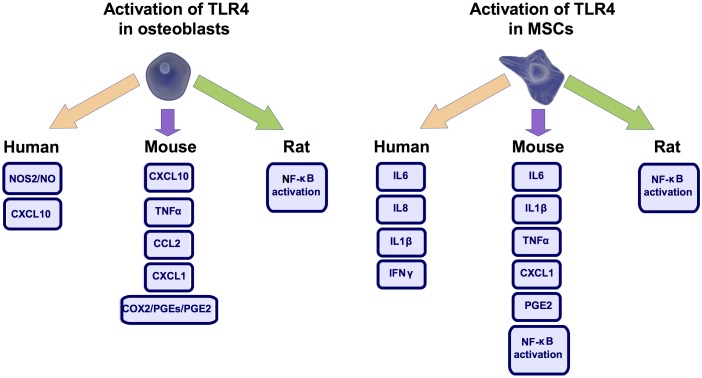
Inflammation is a process whose main function is to fight against invading pathogens or foreign agents. Nonetheless, it is widely accepted that inflammation takes part in multiple processes in a physiological or pathophysiological context. Among these processes the inflammation has been closely related to bone metabolism. It is well-known that in systemic inflammatory diseases such as rheumatoid arthritis the inflammatory environment contributes to the reduction of the bone mineral density. This has been further evidenced in different animals models of osteoporosis where the deletion of key inflammatory molecules dramatically reduced the bone loss. On the contrary, it is also well-known that certain degree of inflammation is required to allow bone fractures healing. In fact, excessive use of anti-inflammatory drugs inhibits bone fracture consolidation. The innate immune responses (IIRs) contribute to the development and maintenance of the inflammation. These responses have been observed in cells of the musculoskeletal system. Chondrocytes and osteoblasts are equipped with the molecular repertoire necessary to setting up these IIR, including the expression of several toll-like receptors. Specifically, toll-like receptor 4 (TLR4) activation in mesenchymal stem cells, osteoblasts, and osteocytes has been involved in catabolic and anabolic process. Accordingly, in this review we have summarized the current knowledge about the physiology of TLR4, including its signaling, and its endogenous agonists. In addition we have focused on its role on osteoblast metabolism and function.
炎症是一个主要功能为对抗入侵病原体或外来物质的过程。尽管如此,人们普遍认为炎症在生理或病理生理背景下参与多个过程。在这些过程中,炎症与骨代谢密切相关。众所周知,在类风湿关节炎等全身性炎症疾病中,炎症环境会导致骨矿物质密度降低。这在不同的骨质疏松动物模型中得到了进一步证实,在这些模型中,关键炎症分子的缺失显著减少了骨质流失。相反,众所周知,骨折愈合需要一定程度的炎症。事实上,过度使用抗炎药物会抑制骨折愈合。固有免疫反应(IIRs)有助于炎症的发生和维持。这些反应已在肌肉骨骼系统的细胞中观察到。软骨细胞和成骨细胞具备启动这些固有免疫反应所需的分子机制,包括几种Toll样受体的表达。具体而言,间充质干细胞、成骨细胞和骨细胞中的Toll样受体4(TLR4)激活参与了分解代谢和合成代谢过程。因此,在本综述中,我们总结了目前关于TLR4生理学的知识,包括其信号传导及其内源性激动剂。此外,我们还重点关注了其在成骨细胞代谢和功能中的作用。