Wang Liye, Wang Rongliang, Chen Zhigang, Zhao Haiping, Luo Yumin
Cerebrovascular Diseases Research Institute, Xuanwu Hospital, Capital Medical University, Beijing, China.
Dongfang Hospital, Beijing University of Chinese Medicine, Beijing, China.
Front Physiol. 2018 May 15;9:529. doi: 10.3389/fphys.2018.00529. eCollection 2018.
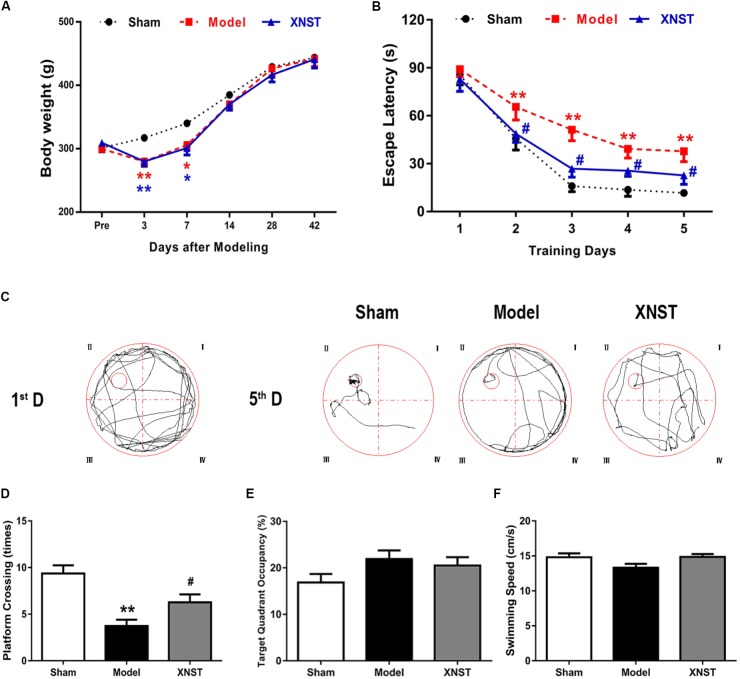
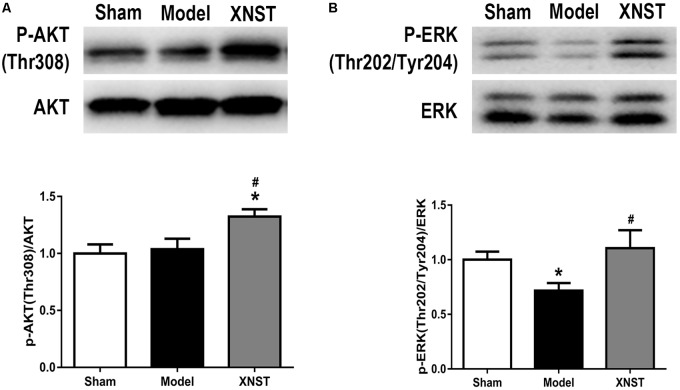
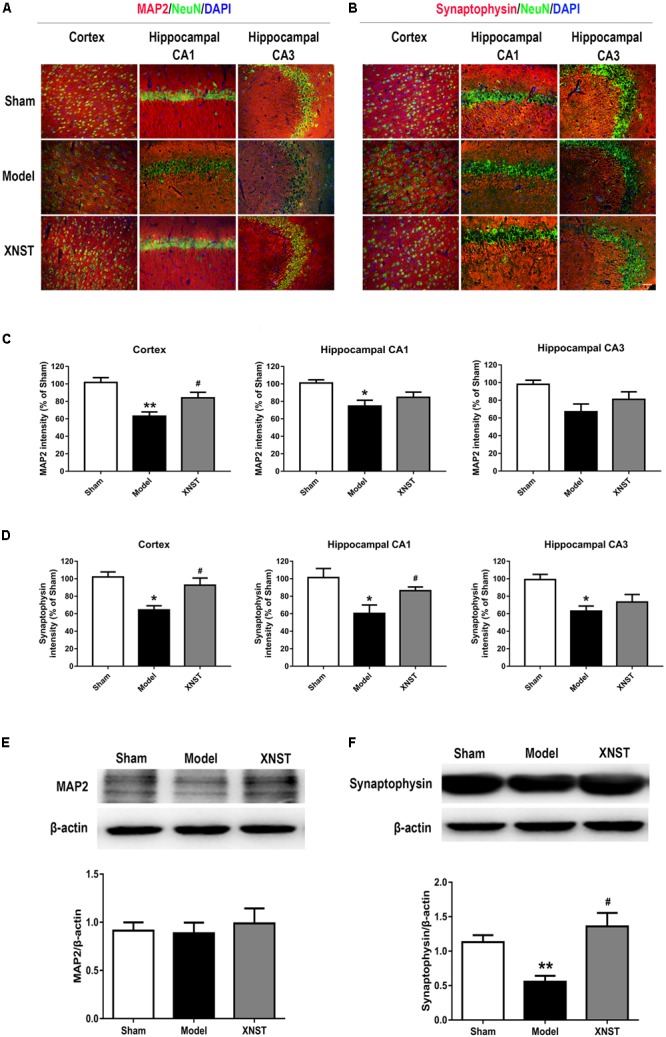
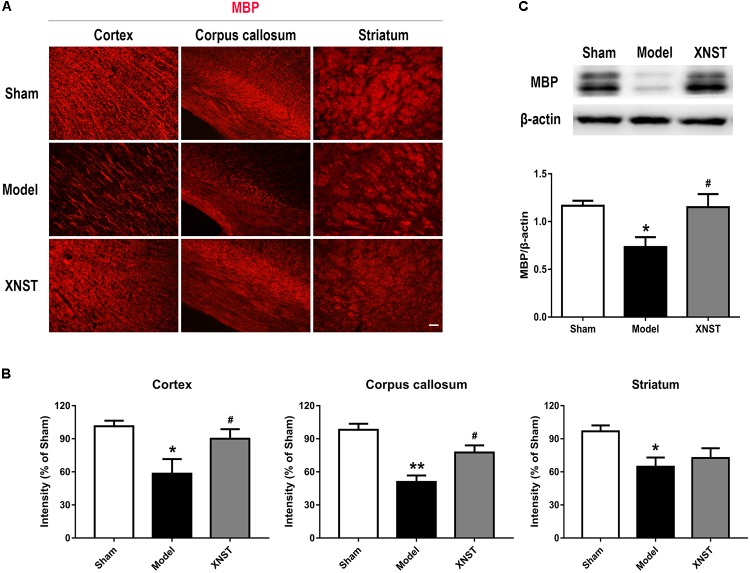
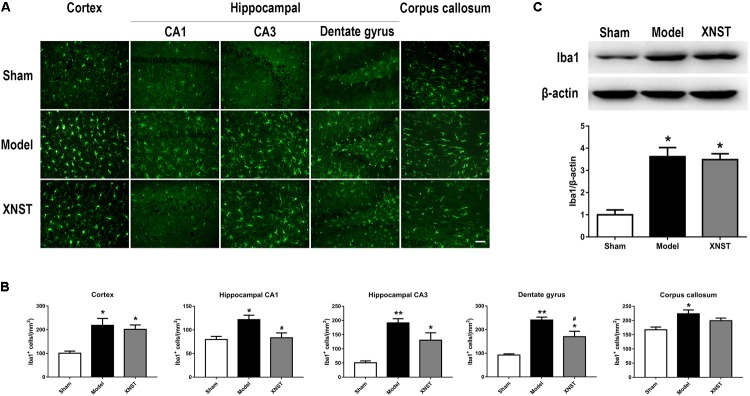
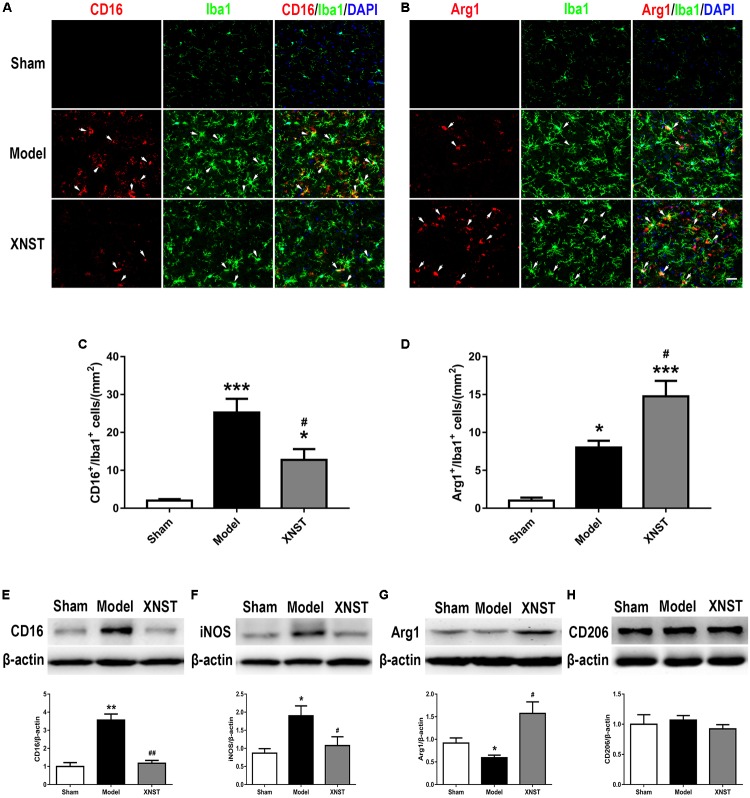
Xinnao shutong (XNST) capsules have been clinically used in China to treat cerebrovascular diseases. Previous studies have demonstrated that XNST has significant neuroprotective effects against acute cerebral ischemic stroke. The present study investigated the effects and mechanisms of XNST treatment following chronic cerebral hypoperfusion. Thirty-six adult male Sprague-Dawley rats were treated with XNST or vehicle following permanent bilateral common carotid artery (BCCA) ligation. Body weight was recorded on days 0, 3, 7, 14, 28, and 42 post-surgery. The Morris water maze (MWM) test was used to assess cognitive function in rats. Immunofluorescent staining and western blot were used to assess the severity of neuronal plasticity, white matter injury, and the numbers and/or phenotypic changes incurred to microglia. Protein levels of p-AKT (Thr308) and p-ERK (Thr202/Tyr204) were detected 42 days after BCCA ligation was performed. The results indicate that XNST treatment significantly reduced escape latency, decreased the frequency of platform crossing compared to the vehicle group. Synaptophysin, protein levels improved and white matter injury ameliorated following XNST treatment. Meanwhile, XNST reduced the number of M1 microglia and increased the number of M2 microglia. Furthermore, p-AKT (Thr308) and p-ERK (Thr202/Tyr204) levels were increased 42 days following BCCA ligation. In summary, our results suggest that XNST mitigates memory impairments by restoration of neuronal plasticity and by modulation of microglial polarization following chronic cerebral hypoperfusion in rats.
醒脑舒通(XNST)胶囊在中国已被临床用于治疗脑血管疾病。先前的研究表明,XNST对急性脑缺血性中风具有显著的神经保护作用。本研究调查了XNST治疗慢性脑灌注不足后的效果及机制。36只成年雄性Sprague-Dawley大鼠在永久性双侧颈总动脉(BCCA)结扎后接受XNST或赋形剂治疗。在手术后第0、3、7、14、28和42天记录体重。采用莫里斯水迷宫(MWM)试验评估大鼠的认知功能。免疫荧光染色和蛋白质印迹法用于评估神经元可塑性、白质损伤的严重程度以及小胶质细胞数量和/或表型变化。在进行BCCA结扎42天后检测p-AKT(Thr308)和p-ERK(Thr202/Tyr204)的蛋白水平。结果表明,与赋形剂组相比,XNST治疗显著缩短了逃避潜伏期,减少了穿越平台的频率。XNST治疗后,突触素蛋白水平提高,白质损伤改善。同时,XNST减少了M1小胶质细胞的数量,增加了M2小胶质细胞的数量。此外,在BCCA结扎42天后,p-AKT(Thr308)和p-ERK(Thr202/Tyr204)水平升高。总之,我们的结果表明,XNST通过恢复神经元可塑性和调节大鼠慢性脑灌注不足后的小胶质细胞极化来减轻记忆障碍。