Fazakas Csilla, Nagaraj Chandran, Zabini Diana, Végh Attila G, Marsh Leigh M, Wilhelm Imola, Krizbai István A, Olschewski Horst, Olschewski Andrea, Bálint Zoltán
Ludwig Boltzmann Institute for Lung Vascular Research, Graz, Austria.
Institute of Biophysics, Biological Research Centre, Hungarian Academy of Sciences, Szeged, Hungary.
Front Physiol. 2018 May 15;9:537. doi: 10.3389/fphys.2018.00537. eCollection 2018.
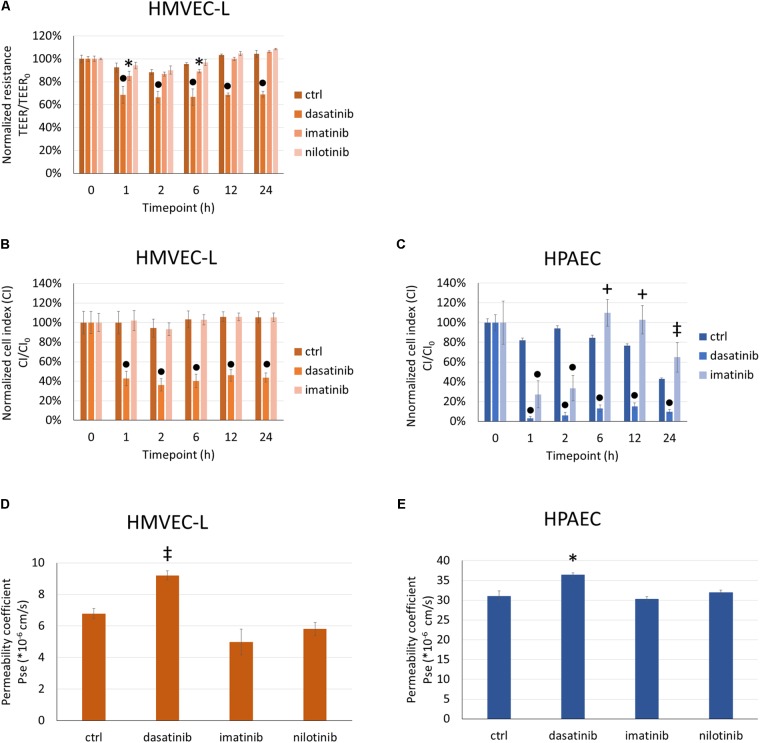
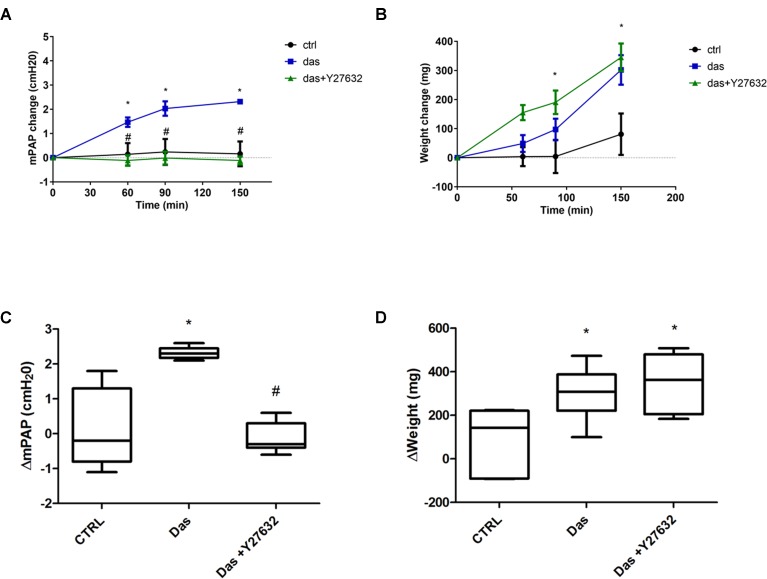
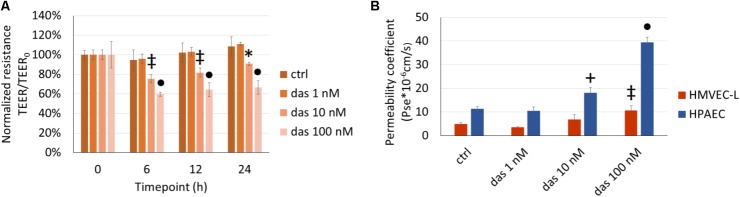
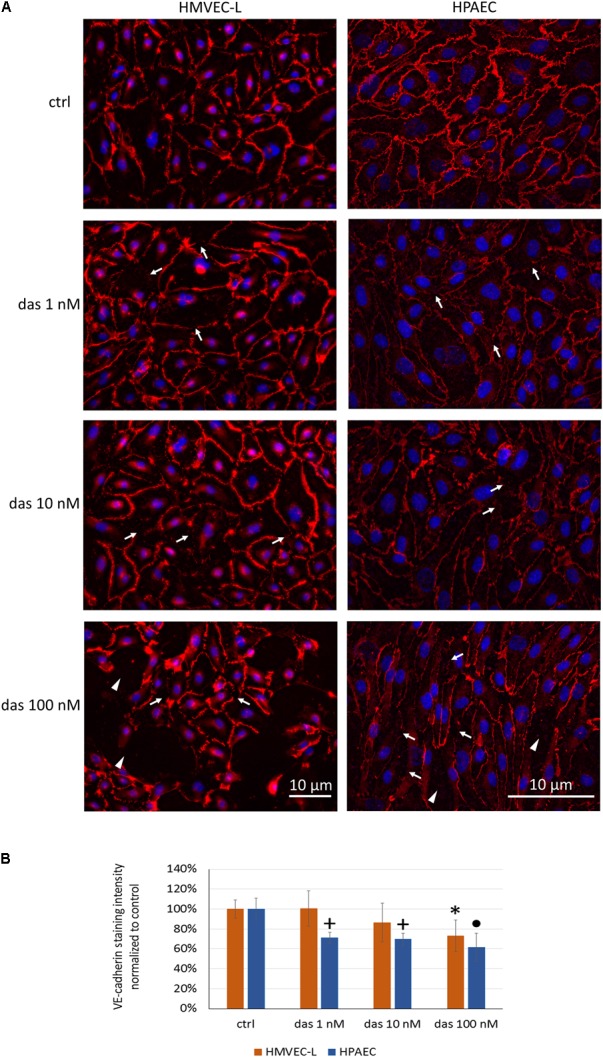
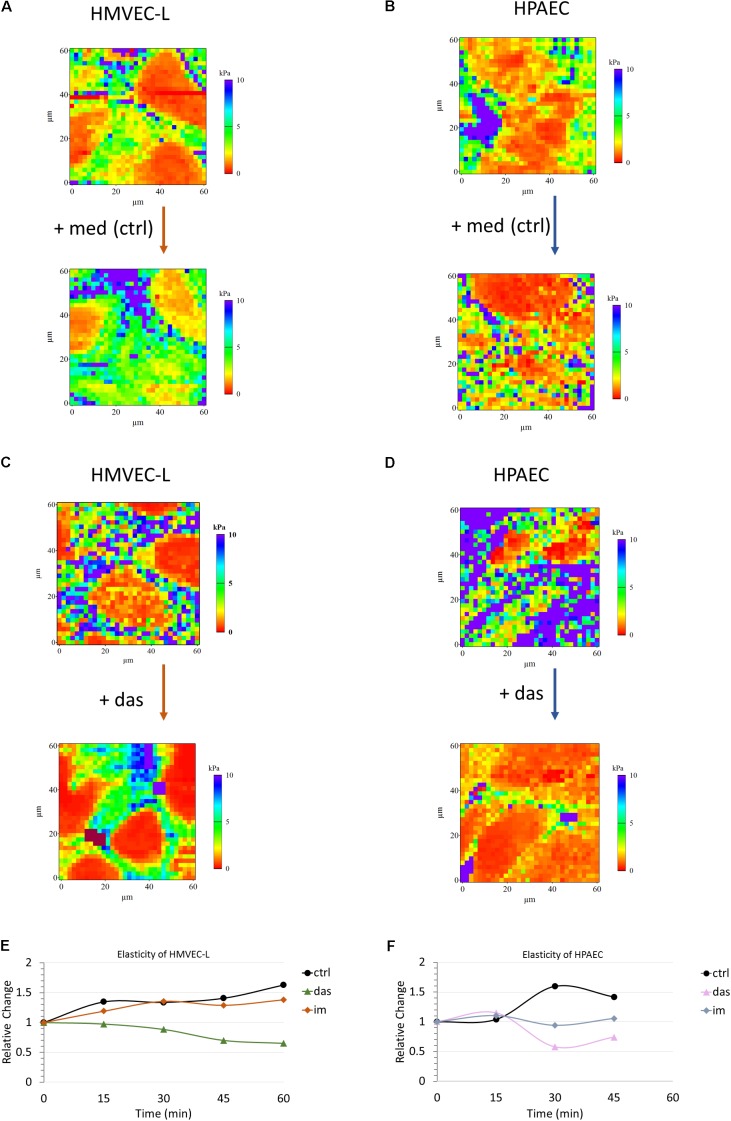
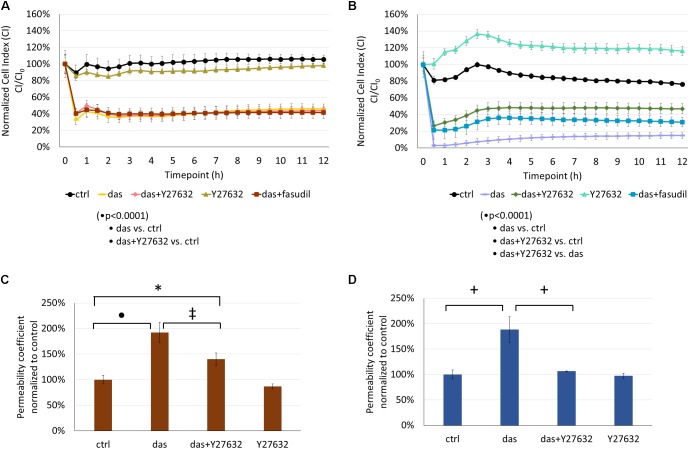
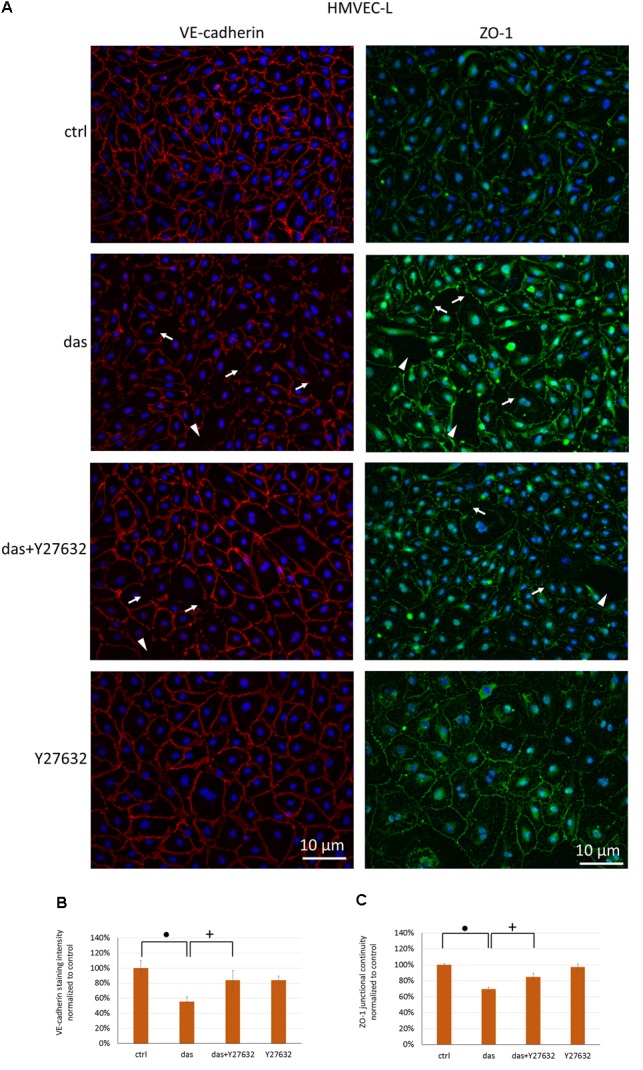
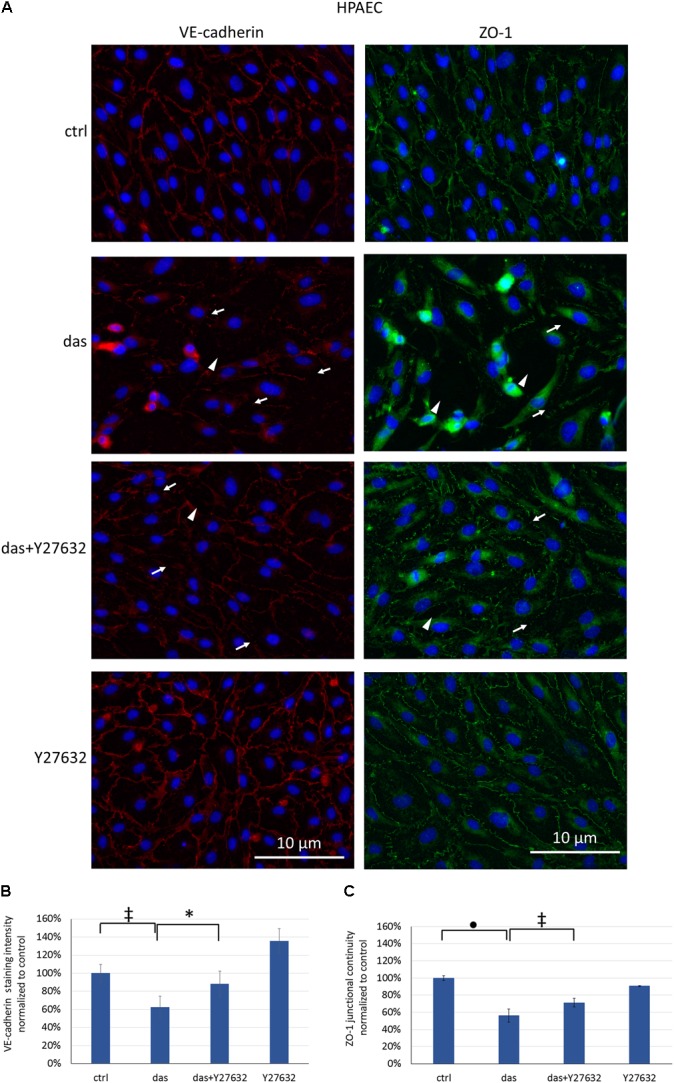
The multi-kinase inhibitor dasatinib is used for treatment of imatinib-resistant chronic myeloid leukemia, but is prone to induce microvascular dysfunction. In lung this can manifest as capillary leakage with pleural effusion, pulmonary edema or even pulmonary arterial hypertension. To understand how dasatinib causes endothelial dysfunction we examined the effects of clinically relevant concentrations of dasatinib on both human pulmonary arterial macro- and microvascular endothelial cells (ECs). The effects of dasatinib was compared to imatinib and nilotinib, two other clinically used BCR/Abl kinase inhibitors that do not inhibit Src. Real three-dimensional morphology and high resolution stiffness mapping revealed softening of both macro- and microvascular ECs upon dasatinib treatment, which was not observed in response to imatinib. In a dose-dependent manner, dasatinib decreased transendothelial electrical resistance/impedance and caused a permeability increase as well as disruption of tight adherens junctions in both cell types. In isolated perfused and ventilated rat lungs, dasatinib increased mean pulmonary arterial pressure, which was accompanied by a gain in lung weight. The Rho-kinase inhibitor Y27632 partly reversed the dasatinib-induced changes and , presumably by acting downstream of Src. Co-administration of the Rho-kinase inhibitor Y27632 completely blunted the increased pulmonary pressure in response to dasatinib. In conclusion, a dasatinib-induced permeability increase in human pulmonary arterial macro- and microvascular ECs might explain many of the adverse effects of dasatinib in patients. Rho-kinase inhibition might be suitable to ameliorate these effects.
多激酶抑制剂达沙替尼用于治疗对伊马替尼耐药的慢性髓性白血病,但容易诱发微血管功能障碍。在肺部,这可表现为伴有胸腔积液、肺水肿甚至肺动脉高压的毛细血管渗漏。为了解达沙替尼如何导致内皮功能障碍,我们研究了临床相关浓度的达沙替尼对人肺动脉大血管和微血管内皮细胞(ECs)的影响。将达沙替尼的作用与伊马替尼和尼洛替尼进行了比较,后两者是另外两种临床上使用的不抑制Src的BCR/Abl激酶抑制剂。真实的三维形态和高分辨率硬度图谱显示,达沙替尼处理后大血管和微血管ECs均出现软化,而伊马替尼处理则未观察到这种现象。达沙替尼以剂量依赖的方式降低跨内皮电阻/阻抗,导致两种细胞类型的通透性增加以及紧密黏附连接的破坏。在离体灌注和通气的大鼠肺中,达沙替尼增加平均肺动脉压,同时伴有肺重量增加。Rho激酶抑制剂Y27632部分逆转了达沙替尼诱导的变化,推测是通过作用于Src的下游。联合给予Rho激酶抑制剂Y27632完全消除了达沙替尼引起的肺动脉压升高。总之,达沙替尼诱导的人肺动脉大血管和微血管ECs通透性增加可能解释了达沙替尼在患者中的许多不良反应。抑制Rho激酶可能适合改善这些影响。