Dasgupta Swapan K, Le Anhquyen, Vijayan K Vinod, Thiagarajan Perumal
Center for Translational Research on Inflammatory Diseases (CTRID), Michael E. DeBakey Veterans Affairs Medical Center, Department of Pathology, Baylor College of Medicine, Houston, Texas.
Center for Translational Research on Inflammatory Diseases (CTRID), Michael E. DeBakey Veterans Affairs Medical Center, Department of Medicine, Baylor College of Medicine, Houston, Texas.
Cancer Med. 2017 Apr;6(4):809-818. doi: 10.1002/cam4.1019. Epub 2017 Mar 18.
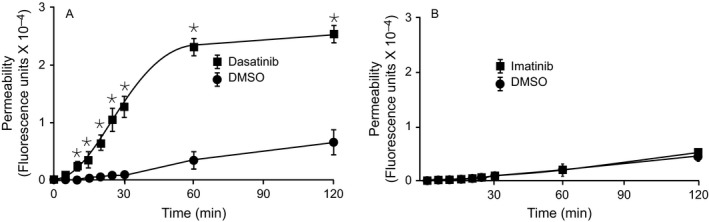
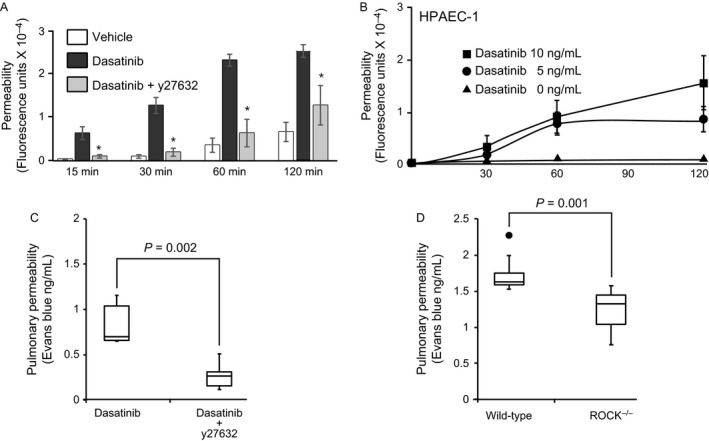
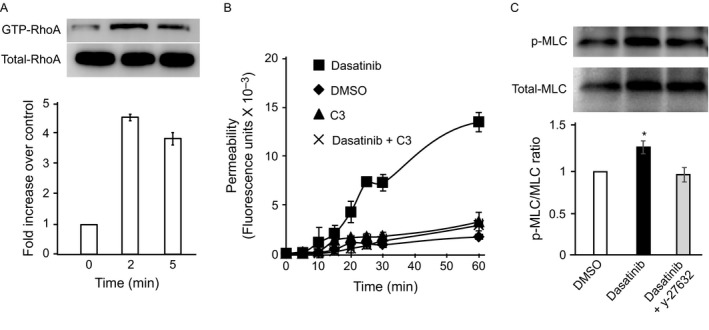
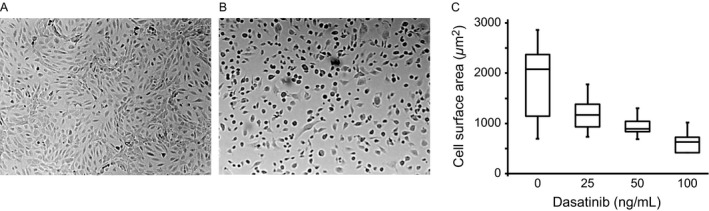
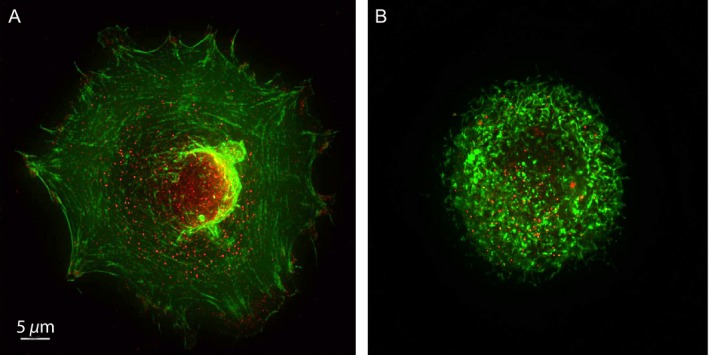
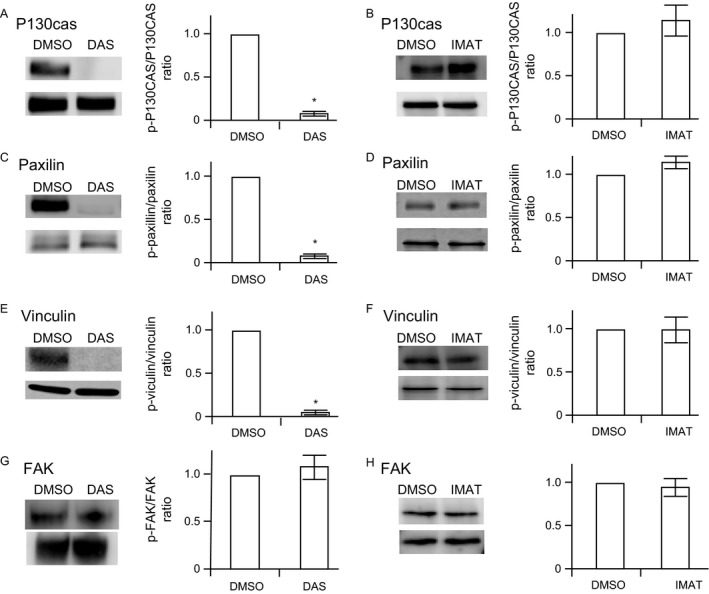
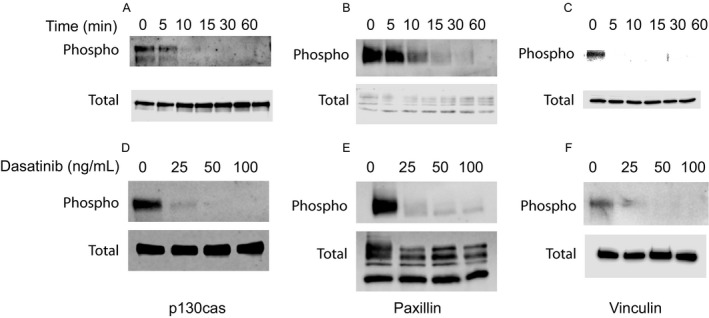
Treatment with dasatinib, a tyrosine kinase inhibitor, is associated with edema, pleural effusion, and pulmonary edema. We investigated the effect of dasatinib on the barrier function of human microvascular endothelial cells-1 (HMEC-1) in vitro and in vivo. The permeability of HMEC-1 to fluorescein isothiocyante (FITC)-dextran increased in Transwell chambers within 5 min following the addition of therapeutic concentrations of dasatinib. The change in permeability was associated with increased activation of RhoA GTPase and its effector Rho-associated coiled-coil kinase 1(ROCK1). RhoA inhibitor C3 transferase almost completely inhibited dasatinib-induced increase in permeability. Under similar conditions, imatinib had no effect on permeability or activation of RhoA. Since integrin-induced cell spreading suppresses RhoA activation, we examined the effect of dasatinib on cell spreading on fibronectin substrate. Dasatinib impaired endothelial cell spreading in a concentration-dependent manner and induced disorganization of actin fibers. Tyrosine kinases play an essential role in transmitting signals from integrins to RhoA and we examined tyrosine phosphorylation of several cytoskeletal proteins. Dasatinib markedly inhibited tyrosine phosphorylation of p130 Crk-associated substrate (p130cas), paxillin and vinculin. These results suggest that the inhibition of tyrosine phosphorylation of the focal adhesion plaque components by dasatinib may alter the assembly of actin fibers resulting in the activation of RhoA/ROCK pathway. Consistent with these findings, dasatinib-induced increase in the permeability was blocked by ROCK inhibitor y27632. In vivo administration of y27632, significantly inhibited the dasatinib-induced extravasation of Evans blue in mice and dasatinib-induced increase in microvascular permeability was attenuated in ROCK1-deficient mice. These findings suggest that ROCK inhibitors could serve as therapeutic modalities to ameliorate the dasatinib-induced pulmonary changes.
酪氨酸激酶抑制剂达沙替尼治疗与水肿、胸腔积液和肺水肿相关。我们在体外和体内研究了达沙替尼对人微血管内皮细胞-1(HMEC-1)屏障功能的影响。在加入治疗浓度的达沙替尼后5分钟内,Transwell小室中HMEC-1对异硫氰酸荧光素(FITC)-葡聚糖的通透性增加。通透性的变化与RhoA GTP酶及其效应物Rho相关卷曲螺旋激酶1(ROCK1)的激活增加有关。RhoA抑制剂C3转移酶几乎完全抑制了达沙替尼诱导的通透性增加。在类似条件下,伊马替尼对通透性或RhoA激活没有影响。由于整合素诱导的细胞铺展抑制RhoA激活,我们研究了达沙替尼对纤连蛋白底物上细胞铺展的影响。达沙替尼以浓度依赖的方式损害内皮细胞铺展并诱导肌动蛋白纤维紊乱。酪氨酸激酶在将信号从整合素传递到RhoA中起重要作用,我们研究了几种细胞骨架蛋白的酪氨酸磷酸化。达沙替尼显著抑制p130 Crk相关底物(p130cas)、桩蛋白和纽蛋白的酪氨酸磷酸化。这些结果表明,达沙替尼对粘着斑成分酪氨酸磷酸化的抑制可能改变肌动蛋白纤维的组装,导致RhoA/ROCK途径激活。与这些发现一致,达沙替尼诱导的通透性增加被ROCK抑制剂y27632阻断。在体内给予y27632可显著抑制达沙替尼诱导的小鼠伊文思蓝外渗,并且在ROCK1缺陷小鼠中达沙替尼诱导的微血管通透性增加减弱。这些发现表明,ROCK抑制剂可作为改善达沙替尼诱导的肺部变化的治疗方式。