Chen Juan, Wang Peifang, Wang Chao, Wang Xun, Miao Lingzhan, Liu Sheng, Yuan Qiusheng
Key Laboratory of Integrated Regulation and Resource Department on Shallow Lakes, Ministry of Education, College of Environment, Hohai University, Nanjing, China.
Front Microbiol. 2018 May 16;9:999. doi: 10.3389/fmicb.2018.00999. eCollection 2018.
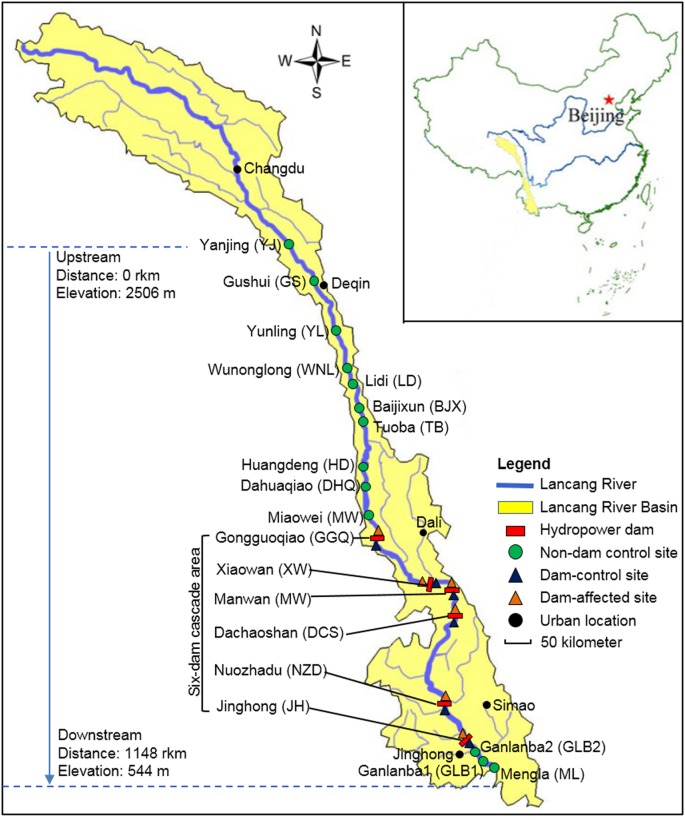
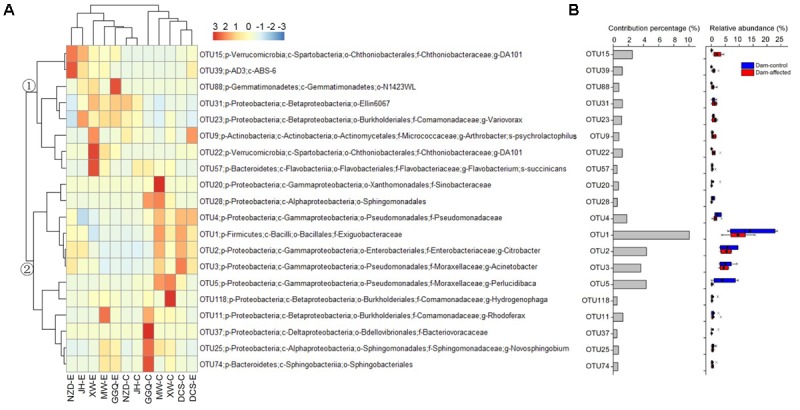
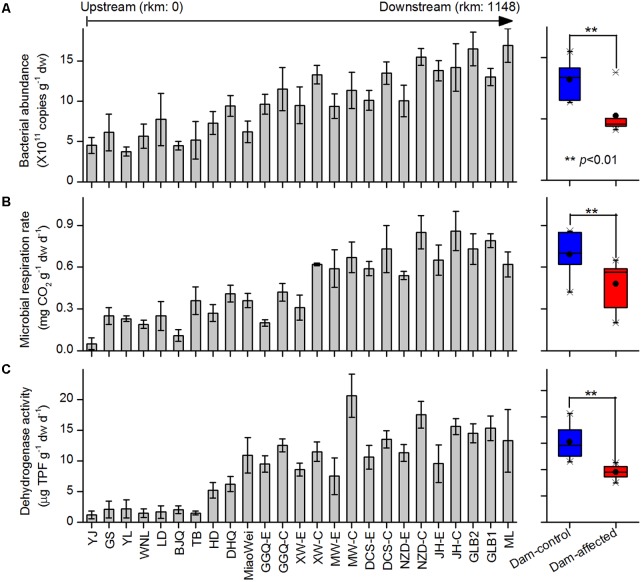
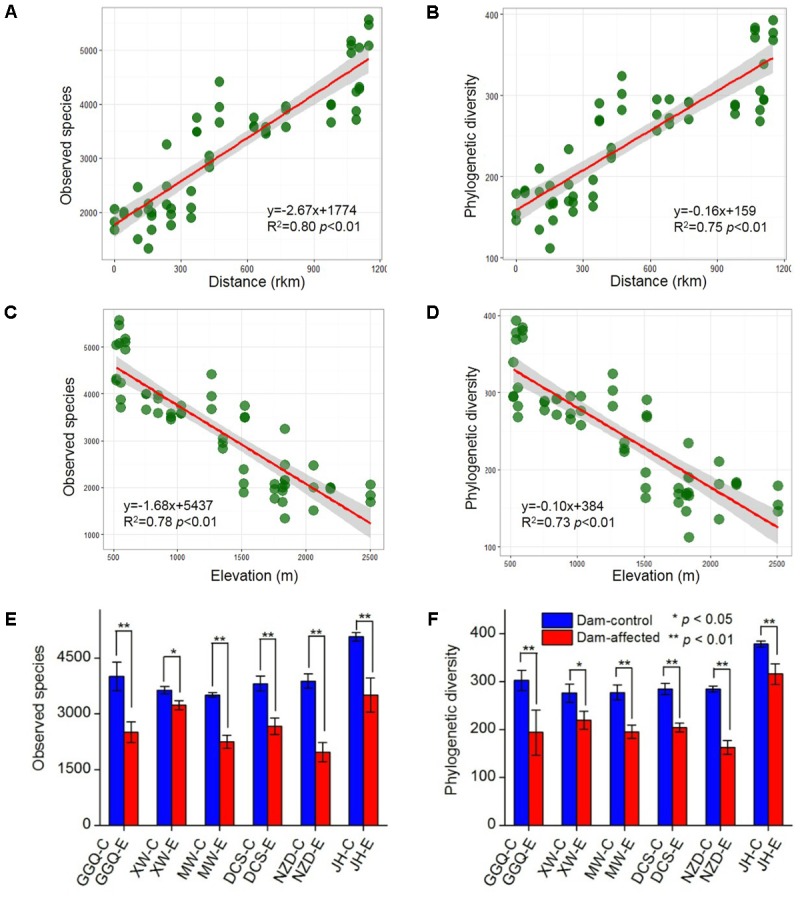
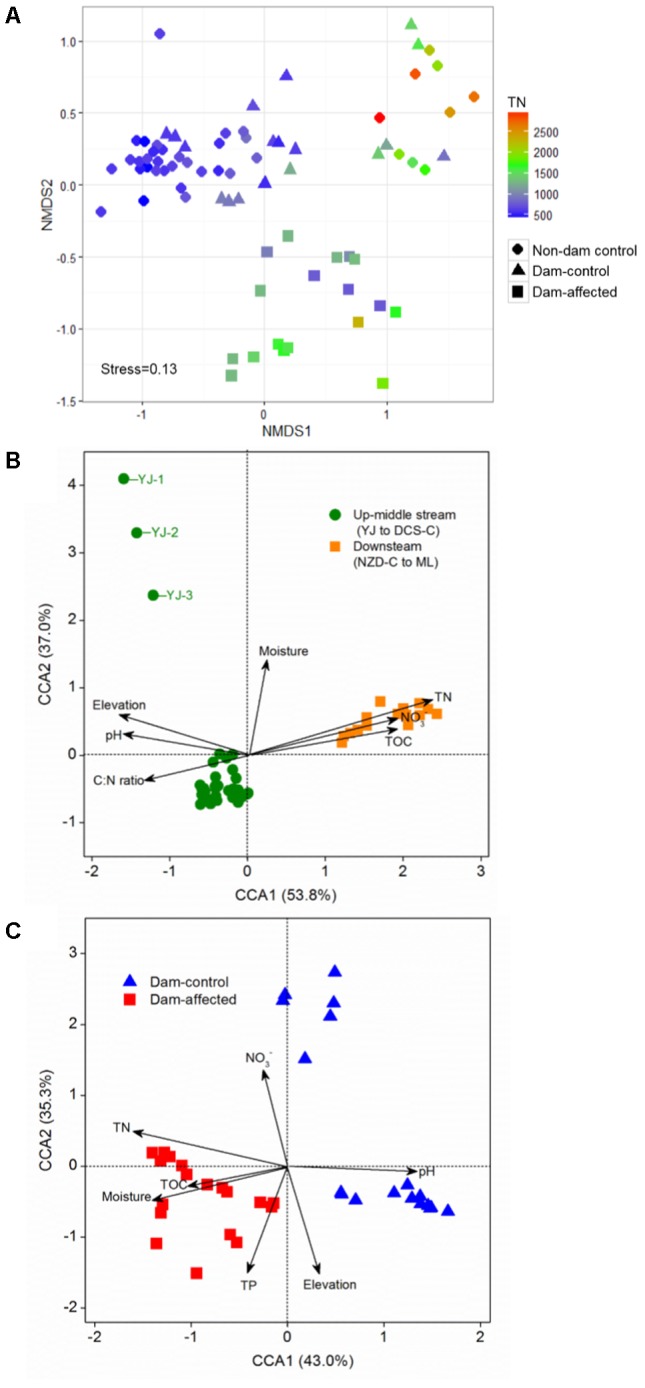
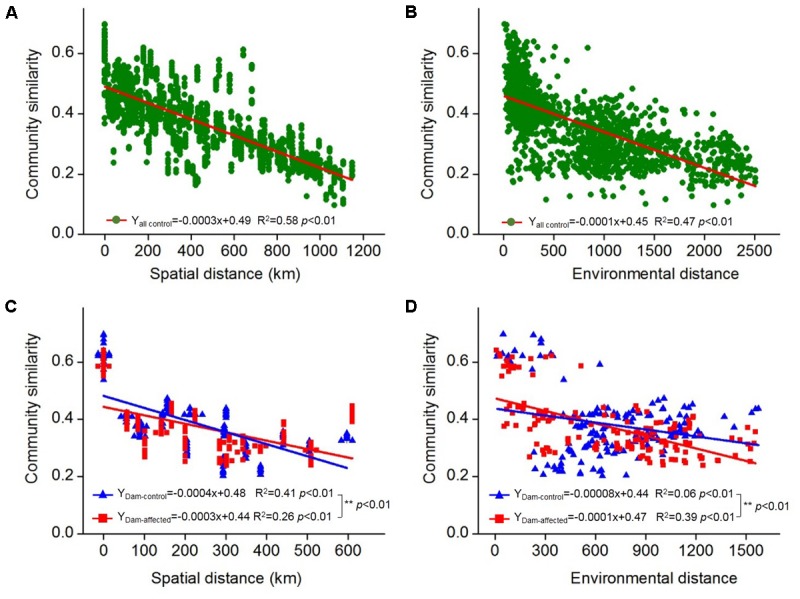
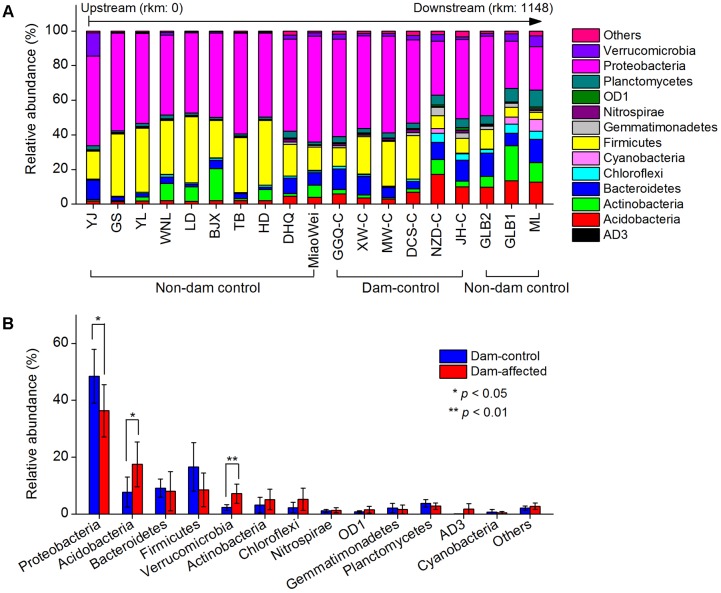
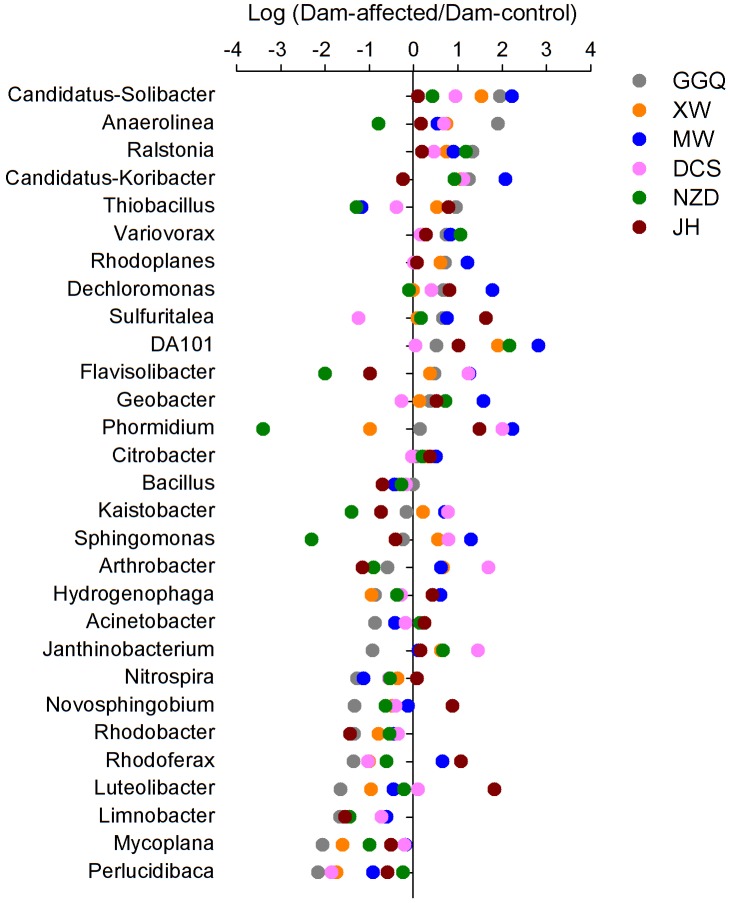
Sediment microbes play major roles in riparian ecosystems; however, little is known about their longitudinal distribution pattern and their responses to dam construction, the most severe human disturbance in river basins. Here, we investigated the variability of sediment bacterial communities along a large-scale longitudinal gradient and between dam-controlled and dam-affected sites in riparian zone of the Lancang River, China. The abundance, activity and diversity of sediment bacteria gradually increased in a downstream direction, but were significantly lower in the dam-affected sites than in the dam-controlled sites. The bacterial community compositions differed significantly between the upper-middle-reach and downstream sites at all control sites, and also between the dam-affected and dam-controlled sites. In the cascade dam area, the relative importance of spatial distance and environmental heterogeneity for bacterial distribution differed between the dam-controlled and dam-affected sites. Spatial distance was the primary cause of variations in bacterial community in dam-controlled site. By contrast, the environmental heterogeneity had more control over the bacterial communities than did the spatial distance in dam-affected site. Network analysis showed that the bacterial community in the dam-affected sites had lower connectivity and stability when compared with that in dam-controlled sites. These results suggest the distinct variations in sediment bacterial community in dam-affected sites, which could enhance our understanding of potential ecological effects caused by dam construction.
沉积物微生物在河岸生态系统中发挥着重要作用;然而,对于它们的纵向分布模式以及它们对大坝建设(流域内最严重的人为干扰)的响应,我们知之甚少。在此,我们研究了中国澜沧江河岸带沉积物细菌群落沿大规模纵向梯度以及在大坝控制区和受大坝影响区之间的变异性。沉积物细菌的丰度、活性和多样性在下游方向逐渐增加,但在受大坝影响的区域显著低于大坝控制区域。在所有对照区域,中上游和下游区域的细菌群落组成存在显著差异,受大坝影响区域和大坝控制区域之间也是如此。在梯级大坝区域,大坝控制区域和受大坝影响区域中,空间距离和环境异质性对细菌分布的相对重要性有所不同。空间距离是大坝控制区域细菌群落变化的主要原因。相比之下,在受大坝影响区域,环境异质性对细菌群落的控制作用大于空间距离。网络分析表明,与大坝控制区域相比,受大坝影响区域的细菌群落具有更低的连通性和稳定性。这些结果表明受大坝影响区域的沉积物细菌群落存在明显变化,这有助于我们更好地理解大坝建设可能造成的生态影响。