Tiedge Kira, Lohaus Gertrud
Molecular Plant Science/Plant Biochemistry, University of Wuppertal, Wuppertal, Germany.
Front Plant Sci. 2018 May 9;9:622. doi: 10.3389/fpls.2018.00622. eCollection 2018.
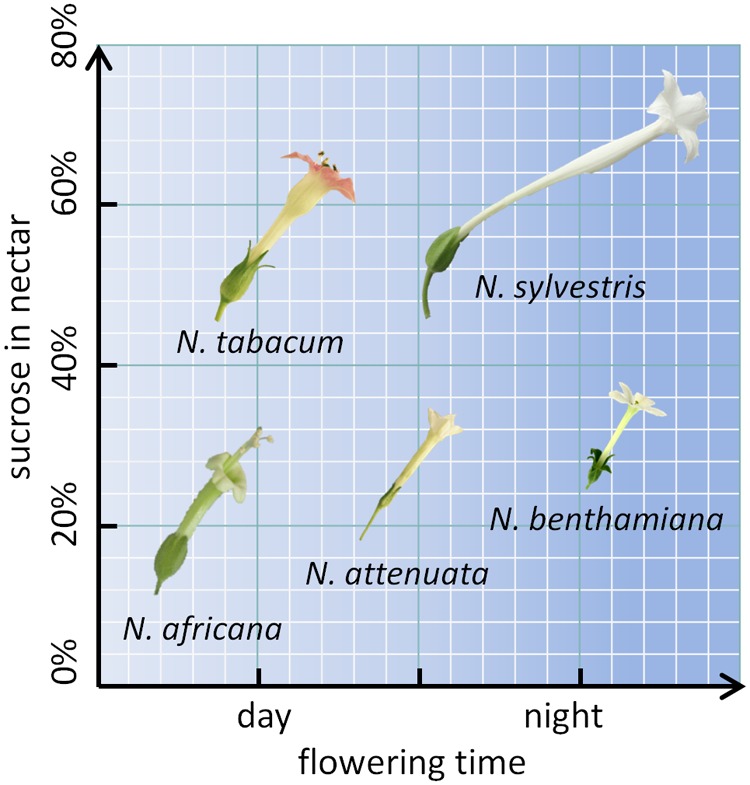
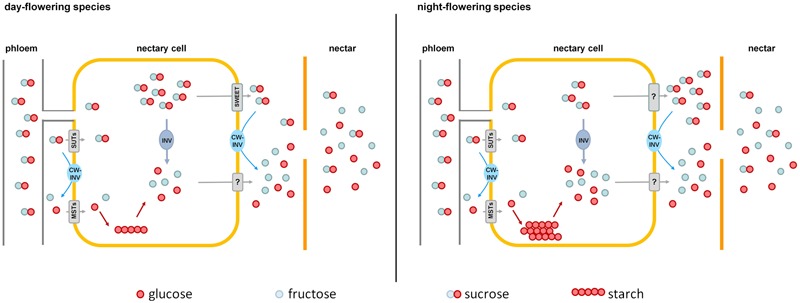
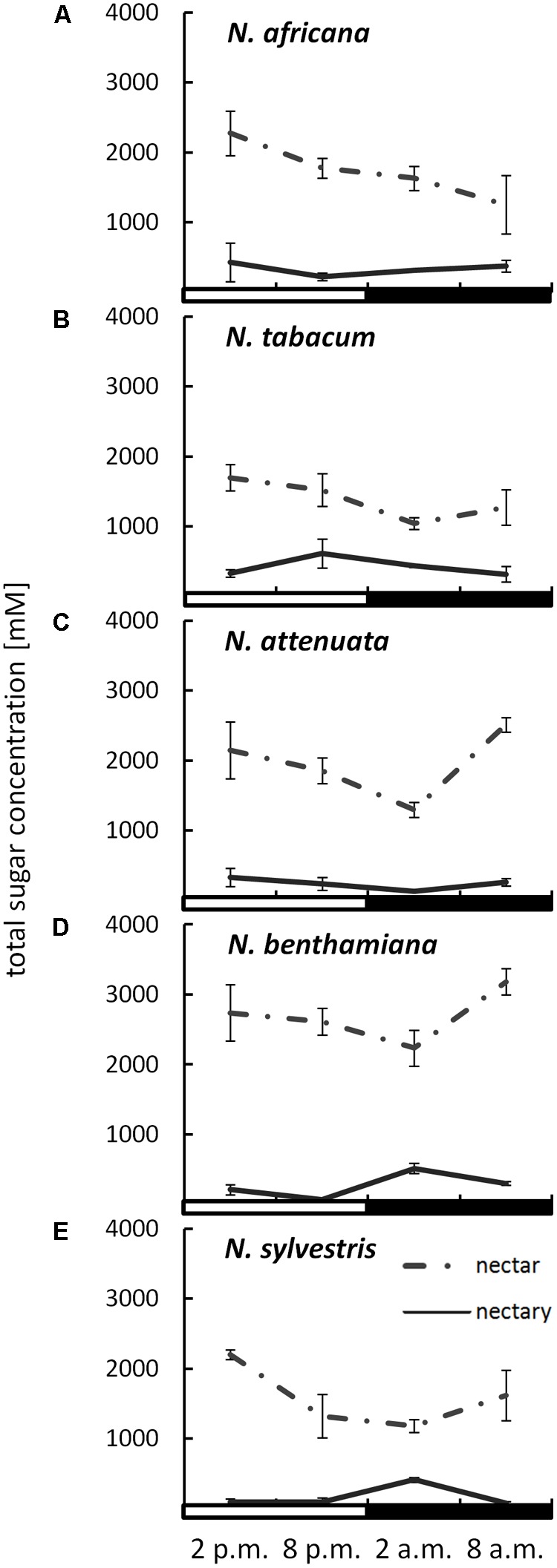
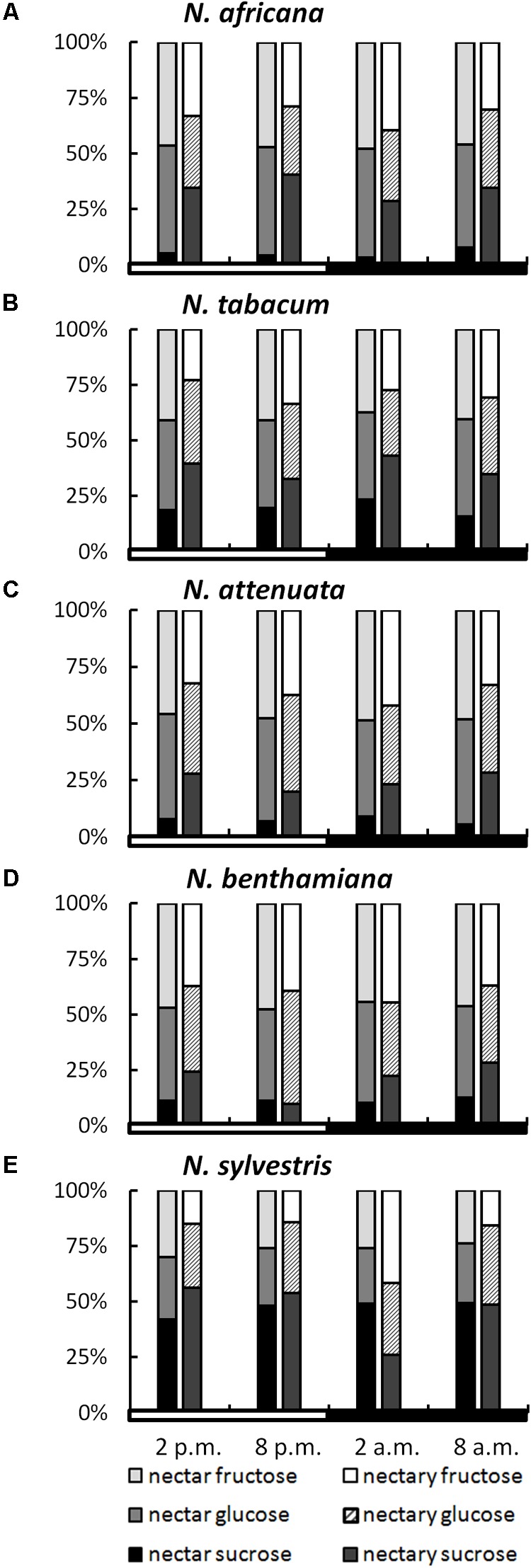
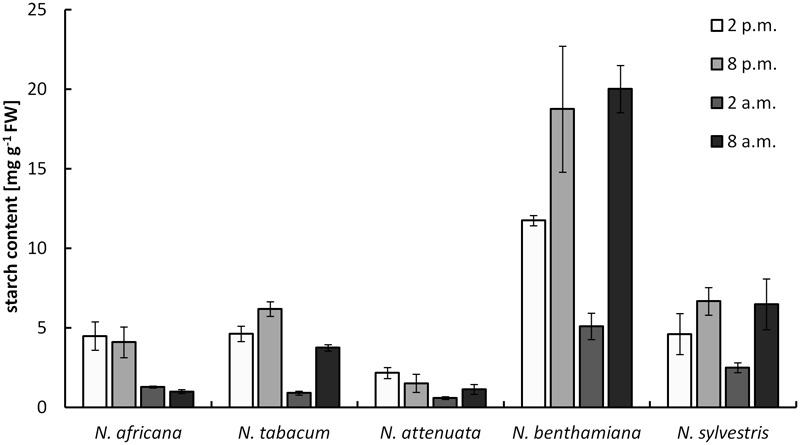
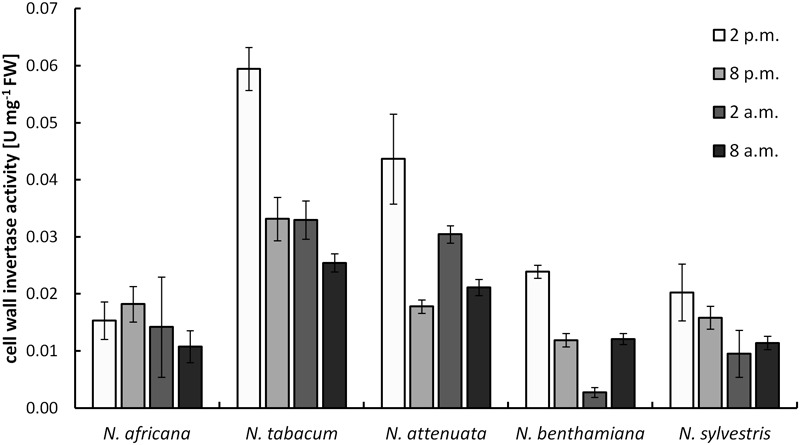
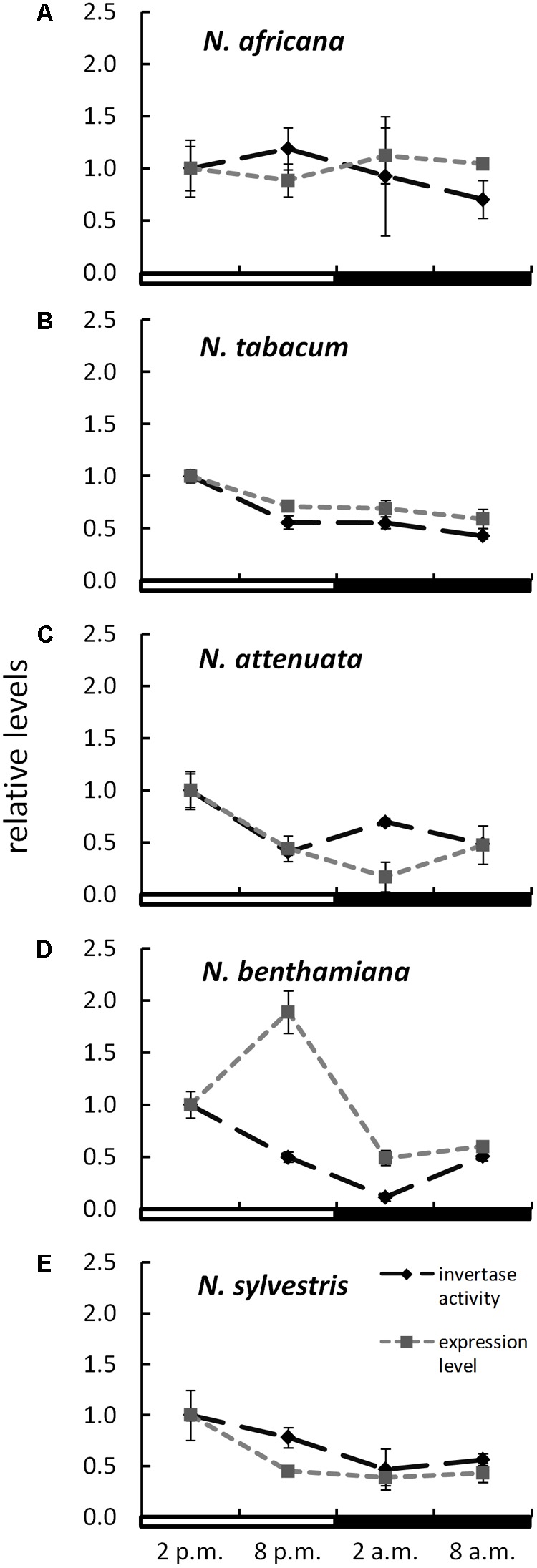
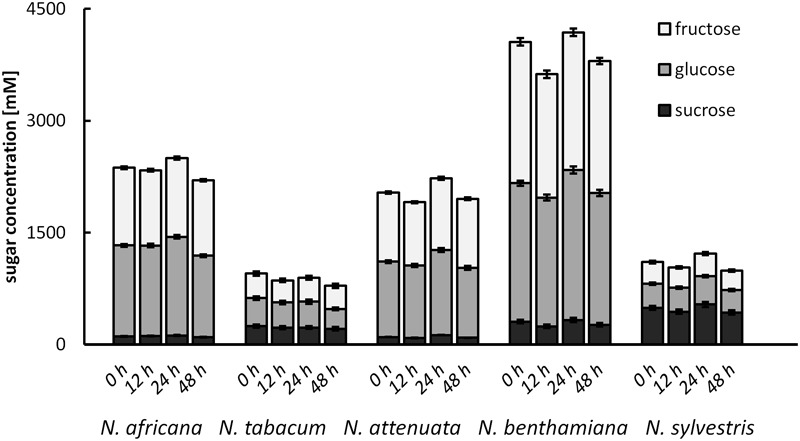
Nectar composition varies between species, depending on flowering time and pollinator type, among others. Various models of the biochemical and molecular mechanisms underlying nectar production and secretion have been proposed. To gain insights into these mechanisms, day- and night-flowering tobacco () species with high or low proportions of hexoses in the nectar were analyzed. Nectar and nectaries were simultaneously collected, throughout the day and night. Soluble sugars and starch were determined and the activity and expression level of cell wall invertase (CW-INVs) were measured in nectaries. Nectaries and nectar of the five species contained different amounts of sucrose, glucose, and fructose. CW-INV activity was detected in the nectaries of all species and is probably involved in the hydrolysis of sucrose in the nectary tissue and during nectar secretion. The larger differences in the sucrose-to-hexose-ratio between nectaries and nectar in diurnal species compared to nocturnal species can be explained by higher sucrose cleavage within the nectaries in night-flowering species, and during secretion in day-flowering species. However, cell wall invertase alone cannot be responsible for the differences in sugar concentrations. Within the nectaries of the species, a portion of the sugars is transiently stored as starch. In general, night-flowering species showed higher starch contents in the nectaries compared to day-flowering species. Moreover, in night flowering species, the starch content decreased during the first half of the dark period, when nectar production peaks. The sucrose concentrations in the cytoplasm of nectarial cells were extrapolated from nectary sucrose contents. In day-flowering species, the sucrose concentration in the nectary cytoplasm was about twice as high as in nectar, whereas in night-flowering species the situation was the opposite, which implies different secretion mechanisms. The secreted nectar sugars remained stable for the complete flower opening period, which indicates that post-secretory modification is unlikely. On the basis of these results, we present an adapted model of the mechanisms underlying the secretion of nectar sugars in day- and night-flowering .
花蜜的成分因物种而异,这取决于开花时间、传粉者类型等因素。人们已经提出了多种关于花蜜产生和分泌的生化及分子机制的模型。为了深入了解这些机制,我们分析了花蜜中己糖比例高或低的白天开花和夜间开花的烟草()物种。在白天和夜间同时采集花蜜和蜜腺。测定了可溶性糖和淀粉的含量,并测量了蜜腺中细胞壁转化酶(CW-INVs)的活性和表达水平。这五个物种的蜜腺和花蜜中蔗糖、葡萄糖和果糖的含量各不相同。在所有物种的蜜腺中都检测到了CW-INV活性,它可能参与了蜜腺组织中蔗糖的水解以及花蜜分泌过程。与夜间开花物种相比,白天开花物种的蜜腺和花蜜中蔗糖与己糖比例的差异更大,这可以解释为夜间开花物种的蜜腺中蔗糖裂解程度更高,而白天开花物种在分泌过程中蔗糖裂解程度更高。然而,仅靠细胞壁转化酶并不能解释糖浓度的差异。在这些物种的蜜腺中,一部分糖会暂时储存为淀粉。一般来说,与白天开花物种相比,夜间开花物种的蜜腺中淀粉含量更高。此外,在夜间开花物种中,淀粉含量在黑暗期的前半段会下降,而此时花蜜分泌达到峰值。从蜜腺蔗糖含量推断出蜜腺细胞细胞质中的蔗糖浓度。在白天开花物种中,蜜腺细胞质中的蔗糖浓度大约是花蜜中的两倍,而在夜间开花物种中情况则相反,这意味着分泌机制不同。在整个花朵开放期间,分泌出的花蜜糖分保持稳定,这表明分泌后不太可能发生修饰。基于这些结果,我们提出了一个适用于白天和夜间开花的烟草花蜜糖分分泌机制的模型。