Mahmooth Z, Weiss W M, Zangana G A S, Bolton P
Department of International Health, Johns Hopkins Bloomberg School of Public Health, 615 N. Wolfe Street, Baltimore, MD 21205, USA.
Heartland Alliance International, Rizgary Taza 408, Alley 32, House 08, Sulaymaniyah, Iraq.
Glob Ment Health (Camb). 2018 May 15;5:e19. doi: 10.1017/gmh.2018.11. eCollection 2018.
Common mental health problems experienced by survivors of systematic violence include trauma, depression, and anxiety. A trial of mental health interventions by community mental health workers for survivors of systematic violence in southern Iraq showed benefits from two psychotherapies on trauma, depression, anxiety, and function: Common Elements Treatment Approach (CETA) and cognitive processing therapy (CPT). This study assessed whether other non-predetermined changes reported by intervention participants were more common than in the control group.
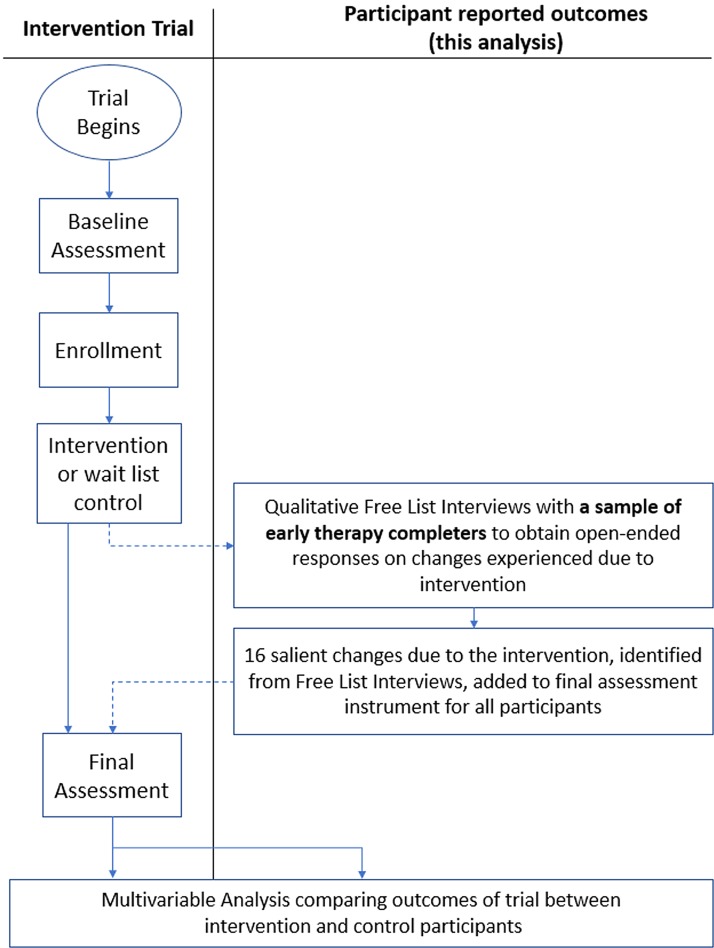
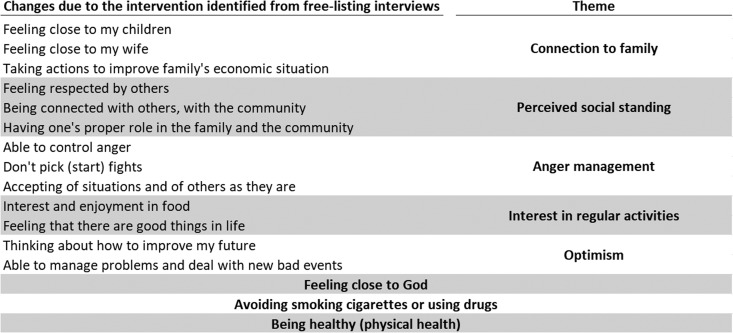
The trial involved 342 participants (CETA: 99 intervention, 50 control; CPT: 129 intervention, 64 control). Sixteen intervention-related changes since enrollment were identified from free-listing interviews of 15 early therapy completers. The changes were then added as a new quantitative module to the follow-up questionnaire. The changes were organized into eight groupings by thematic analysis - family, social standing, anger management, interest in regular activities, optimism, feeling close to God, avoiding smoking and drugs, and physical health. All participants were interviewed with this module and responses were compared between intervention and control participants.
Multi-level, multi-variate regression models showed CETA intervention subjects with significant, positive changes relative to CETA controls on most themes. CPT intervention subjects showed little to no change compared with CPT controls in most themes.
Participants receiving CETA reported more positive changes from therapy compared with controls than did participants receiving CPT. This study suggests differential effects of psychotherapy beyond the predetermined clinical outcome measures and that identification of these effects should be part of intervention evaluations.
遭受系统性暴力的幸存者常见的心理健康问题包括创伤、抑郁和焦虑。一项由社区心理健康工作者对伊拉克南部遭受系统性暴力的幸存者进行的心理健康干预试验表明,两种心理疗法对创伤、抑郁、焦虑和功能有好处:通用要素治疗法(CETA)和认知加工疗法(CPT)。本研究评估了干预参与者报告的其他非预先确定的变化是否比对照组更常见。
该试验涉及342名参与者(CETA组:99名干预组,50名对照组;CPT组:129名干预组,64名对照组)。从15名早期治疗完成者的自由列举访谈中确定了自入组以来与干预相关的16项变化。然后将这些变化作为一个新的定量模块添加到随访问卷中。通过主题分析将这些变化分为八组——家庭、社会地位、愤怒管理、对日常活动的兴趣、乐观、与上帝亲近的感觉、避免吸烟和吸毒以及身体健康。所有参与者都接受了这个模块的访谈,并对干预组和对照组参与者的回答进行了比较。
多层次多变量回归模型显示,在大多数主题上,CETA干预组受试者相对于CETA对照组有显著的积极变化。与CPT对照组相比,CPT干预组受试者在大多数主题上几乎没有变化。
与对照组相比,接受CETA治疗的参与者报告的治疗积极变化比接受CPT治疗的参与者更多。本研究表明,心理治疗的效果超出了预先确定的临床结果测量范围,识别这些效果应成为干预评估的一部分。