British Antarctic Survey, Natural Environmental Reach Council, Cambridge, Cambridgeshire, United Kingdom.
PLoS One. 2018 Jun 5;13(6):e0197767. doi: 10.1371/journal.pone.0197767. eCollection 2018.
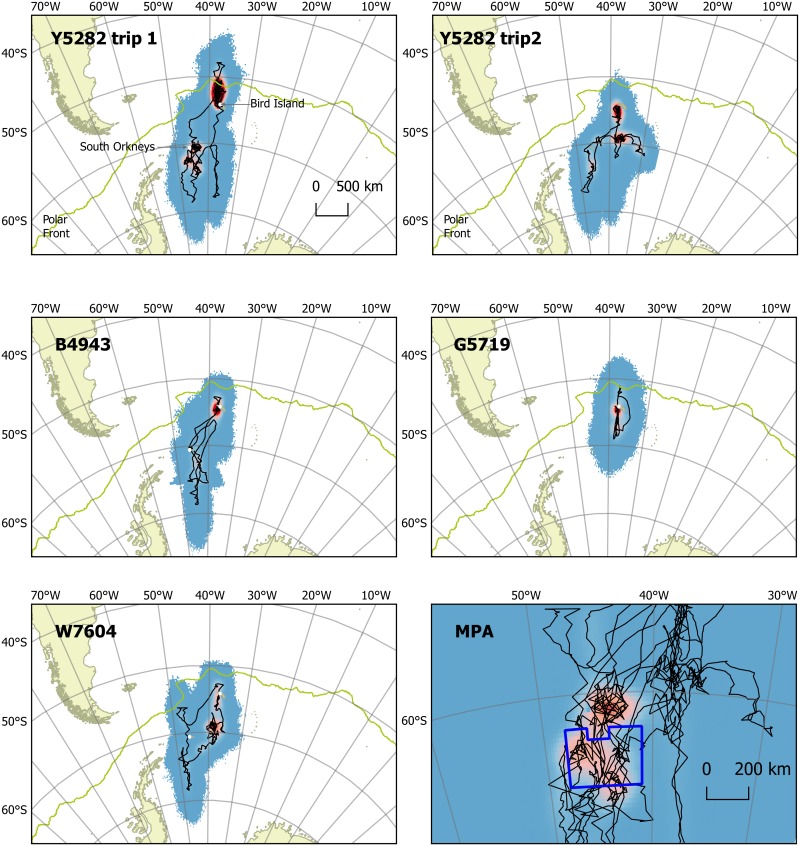
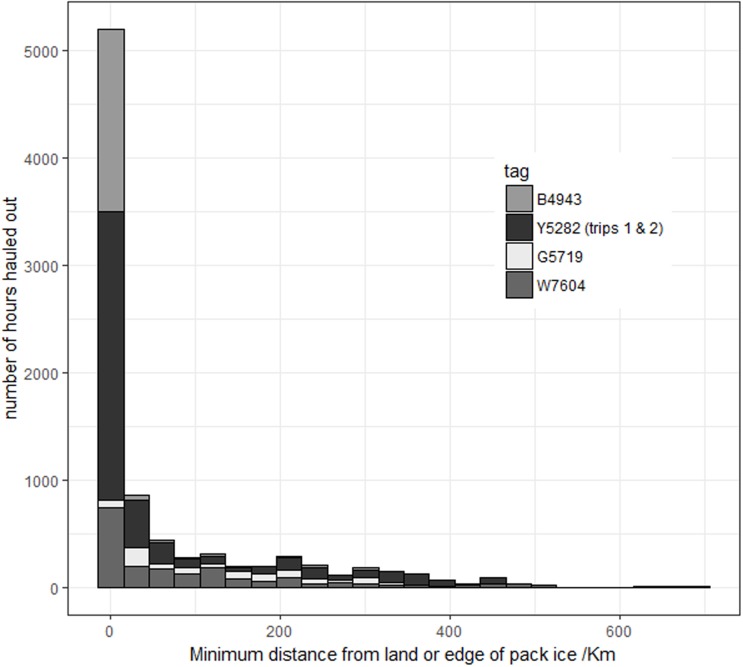
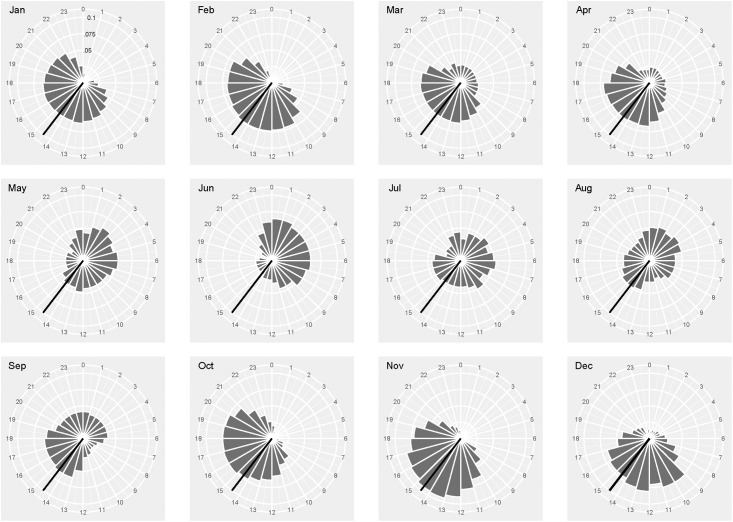
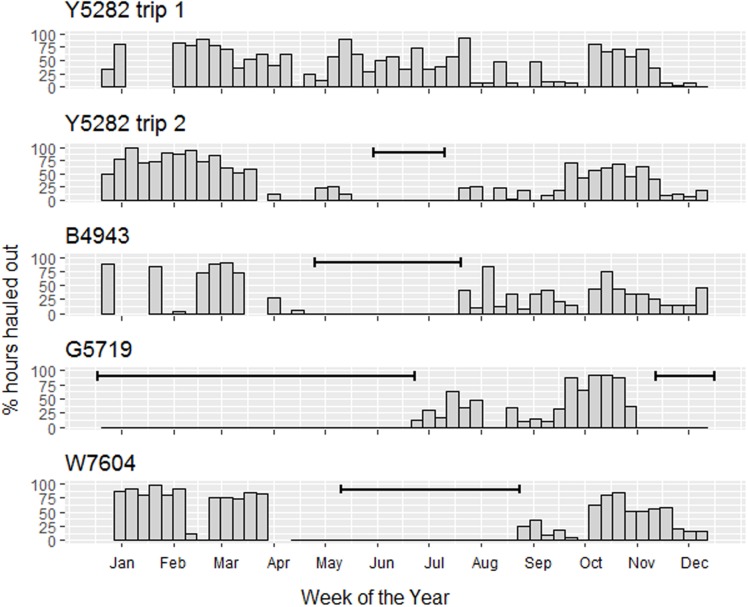
Leopard seals are an important Antarctic apex predator that can affect marine ecosystems through local predation. Here we report on the successful use of micro geolocation logging sensor tags to track the movements, and activity, of four leopard seals for trips of between 142-446 days including one individual in two separate years. Whilst the sample size is small the results represent an advance in our limited knowledge of leopard seals. We show the longest periods of tracking of leopard seals' migratory behaviour between the pack ice, close to the Antarctic continent, and the sub-Antarctic island of South Georgia. It appears that these tracked animals migrate in a directed manner towards Bird Island and, during their residency, use this as a central place for foraging trips as well as exploiting the local penguin and seal populations. Movements to the South Orkney Islands were also recorded, similar to those observed in other predators in the region including the krill fishery. Analysis of habitat associations, taking into account location errors, indicated the tracked seals had an affinity for shallow shelf water and regions of sea ice. Wet and dry sensors revealed that seals hauled out for between 22 and 31% of the time with maximum of 74 hours and a median of between 9 and 11 hours. The longest period a seal remained in the water was between 13 and 25 days. Fitting GAMMs showed that haul out rates changed throughout the year with the highest values occurring during the summer which has implications for visual surveys. Peak haul out occurred around midday for the months between October and April but was more evenly spread across the day between May and September. The seals' movements between, and behaviour within, areas important to breeding populations of birds and other seals, coupled with the dynamics of the region's fisheries, shows an understanding of leopard seal ecology is vital in the management of the Southern Ocean resources.
豹海豹是南极顶级掠食者之一,通过局部捕食能够影响海洋生态系统。本研究报告了使用微型地理定位记录传感器标签成功追踪 4 只豹海豹活动和运动情况的结果,追踪时间从 142-446 天不等,其中一只豹海豹在两年内被追踪了两次。虽然样本量较小,但结果代表了我们对豹海豹有限了解的一个进步。我们展示了豹海豹在浮冰和南极大陆之间以及南乔治亚亚南极岛屿之间的迁徙行为的最长跟踪记录。这些被跟踪的动物似乎以定向的方式迁徙到鸟岛,并且在其居住期间,将该岛作为觅食旅行的中心,并利用当地的企鹅和海豹种群。还记录了到南奥克尼群岛的迁徙,与该地区其他捕食者(包括磷虾渔业)观察到的情况相似。考虑到位置误差的栖息地关联分析表明,被跟踪的海豹与浅架水和海冰区域有亲和力。湿/干传感器显示,海豹在水中停留的时间占 22%至 31%,最长停留时间为 74 小时,中位数在 9 至 11 小时之间。海豹在水中停留的最长时间为 13 至 25 天。拟合 GAMM 表明,整个年度的登陆率都在变化,夏季的登陆率最高,这对视觉调查有影响。从 10 月到 4 月,海豹的登陆高峰期出现在中午左右,但从 5 月到 9 月,登陆时间则更为均匀地分布在一天中。海豹在重要鸟类和其他海豹繁殖区域之间的运动以及该地区渔业的动态表明,了解豹海豹的生态学对于管理南大洋资源至关重要。