Marmur Joel, Beshara Soheir, Eggertsen Gösta, Onelöv Liselotte, Albiin Nils, Danielsson Olof, Hultcrantz Rolf, Stål Per
Unit of Liver Diseases, Department of Upper GI, C1-77 Huddinge, Karolinska University Hospital, Karolinska Institutet, 141 86, Stockholm, Sweden.
Unit of Gastroenterology and Hepatology, Department of Medicine, Ersta Hospital, Karolinska Institutet, Stockholm, Sweden.
BMC Gastroenterol. 2018 Jun 5;18(1):78. doi: 10.1186/s12876-018-0804-0.
One-third of patients with non-alcoholic fatty liver disease (NAFLD) develop dysmetabolic iron overload syndrome (DIOS), the pathogenesis of which is unknown. Altered production of the iron-regulatory peptide hepcidin has been reported in NAFLD, but it is unclear if this is related to iron accumulation, lipid status or steatohepatitis.
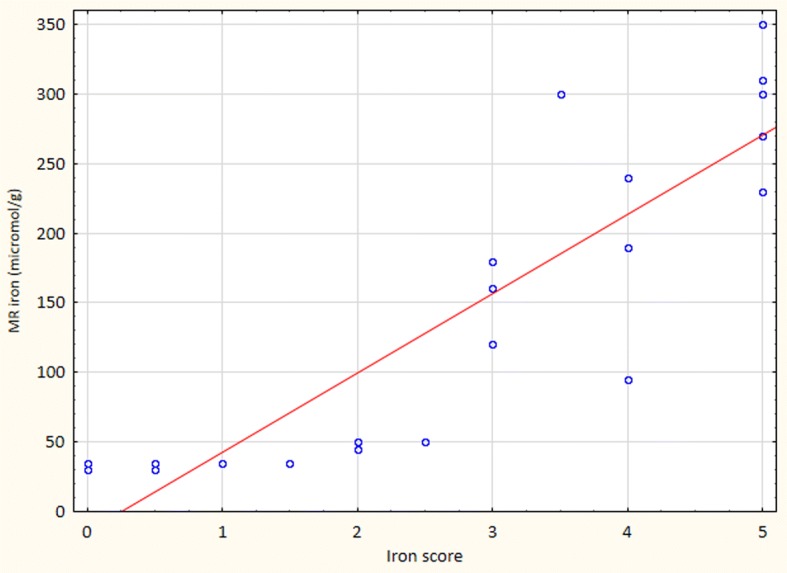
Eighty-four patients with liver disease, 54 of which had iron overload, underwent liver biopsy (n = 66) and/or magnetic resonance imaging (n = 35) for liver iron content determination. Thirty-eight of the patients had NAFLD, 29 had chronic liver disease other than NAFLD, and 17 had untreated genetic hemochromatosis. Serum hepcidin was measured with ELISA in all patients and in 34 controls. Hepcidin antimicrobial peptide (HAMP) mRNA in liver tissue was determined with real-time-quantitative PCR in 36 patients.
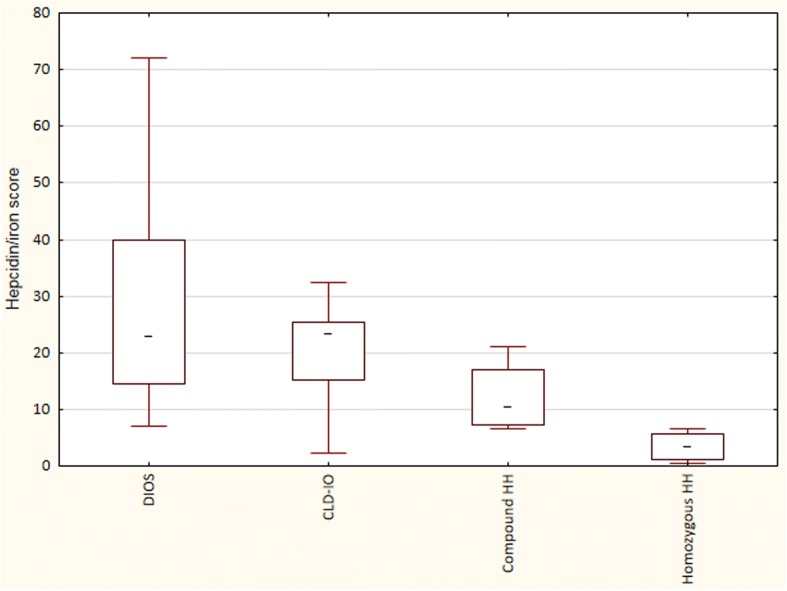
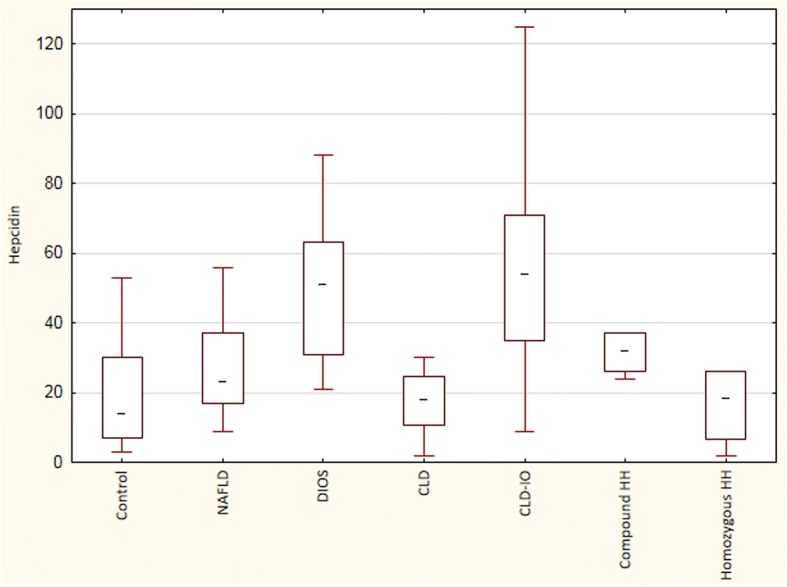
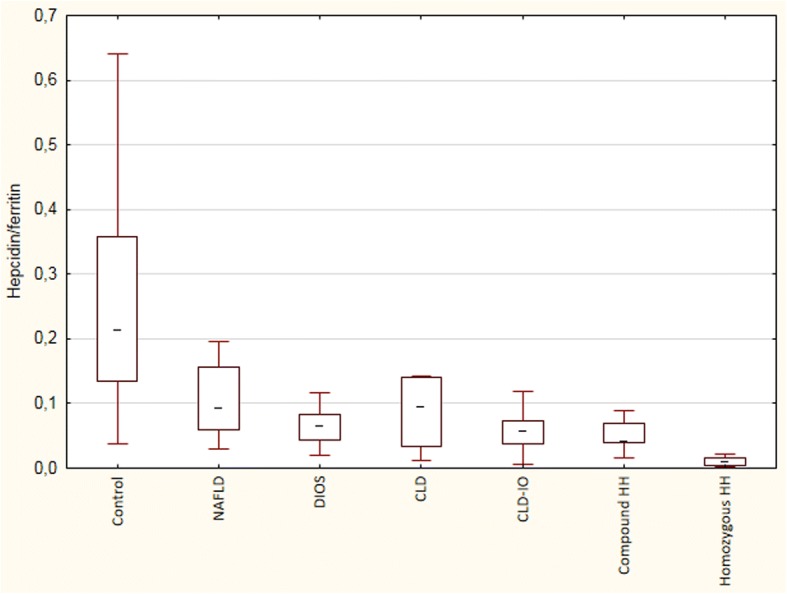
Serum hepcidin was increased similarly in NAFLD with DIOS as in the other chronic liver diseases with iron overload, except for genetic hemochromatosis. HAMP mRNA in liver tissue, and serum hepcidin, both correlated to liver iron content in NAFLD patients (r = 0.45, p < 0.05 and r = 0.27, p < 0.05 respectively) but not to body mass index, NAFLD activity score or serum lipids. There was a good correlation between HAMP mRNA in liver tissue and serum hepcidin (r = 0.39, p < 0.01).
In NAFLD with or without dysmetabolic iron overload, serum hepcidin and HAMP mRNA in liver correlate to body iron content but not to the degree of steatohepatitis or lipid status. Thus, the dysmetabolic iron overload syndrome seen in NAFLD is not caused by an altered hepcidin synthesis.
三分之一的非酒精性脂肪性肝病(NAFLD)患者会发展为代谢性铁过载综合征(DIOS),其发病机制尚不清楚。据报道,NAFLD患者中,铁调节肽铁调素的产生发生了改变,但尚不清楚这是否与铁蓄积、脂质状态或脂肪性肝炎有关。
84例肝病患者,其中54例有铁过载,接受了肝活检(n = 66)和/或磁共振成像(n = 35)以测定肝脏铁含量。38例患者患有NAFLD,29例患有NAFLD以外的慢性肝病,17例患有未经治疗的遗传性血色素沉着症。所有患者及34名对照者均采用酶联免疫吸附测定法检测血清铁调素。36例患者采用实时定量PCR法测定肝组织中铁调素抗菌肽(HAMP)mRNA。
除遗传性血色素沉着症外,合并DIOS的NAFLD患者血清铁调素升高情况与其他合并铁过载的慢性肝病相似。NAFLD患者肝组织中的HAMP mRNA和血清铁调素均与肝脏铁含量相关(r分别为0.45,p < 0.05和r为0.27,p < 0.05),但与体重指数、NAFLD活动评分或血脂无关。肝组织中HAMP mRNA与血清铁调素之间存在良好的相关性(r = 0.39,p < 0.01)。
在合并或不合并代谢性铁过载的NAFLD中,血清铁调素和肝组织中的HAMP mRNA与体内铁含量相关,但与脂肪性肝炎程度或脂质状态无关。因此,NAFLD中出现的代谢性铁过载综合征并非由铁调素合成改变所致。