Department of Pharmacology and Cancer Biology, Duke University Medical Center, Durham, NC, USA.
Department of Pharmacology and Cancer Biology, Duke University Medical Center, Durham, NC, USA
EMBO J. 2018 Jul 13;37(14). doi: 10.15252/embj.201797072. Epub 2018 Jun 6.
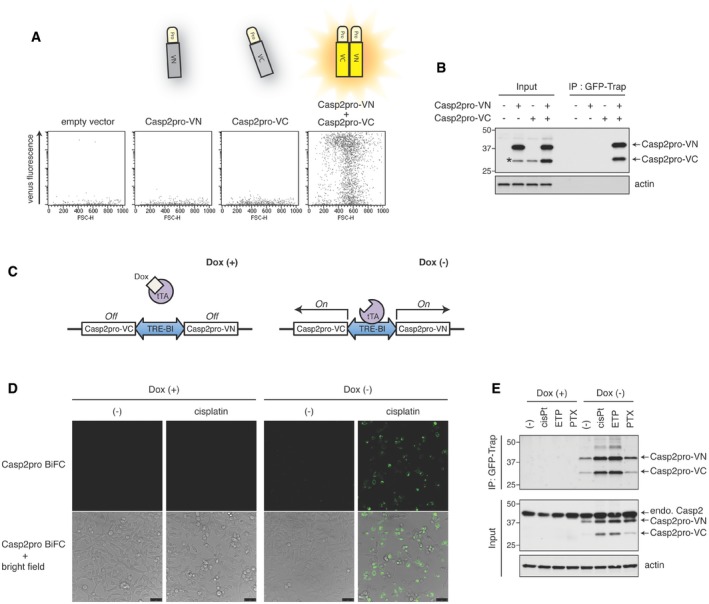
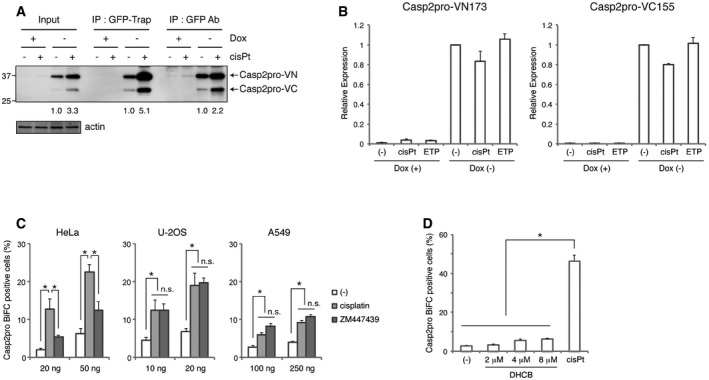
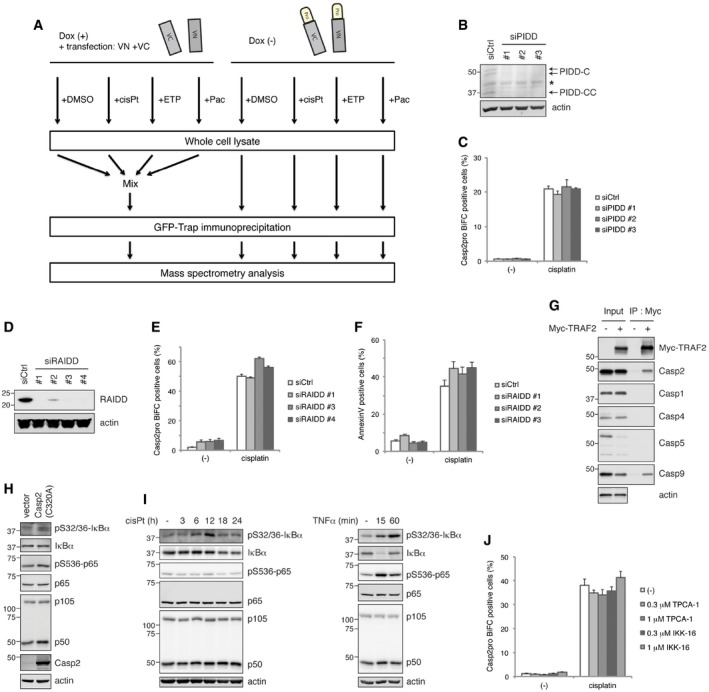
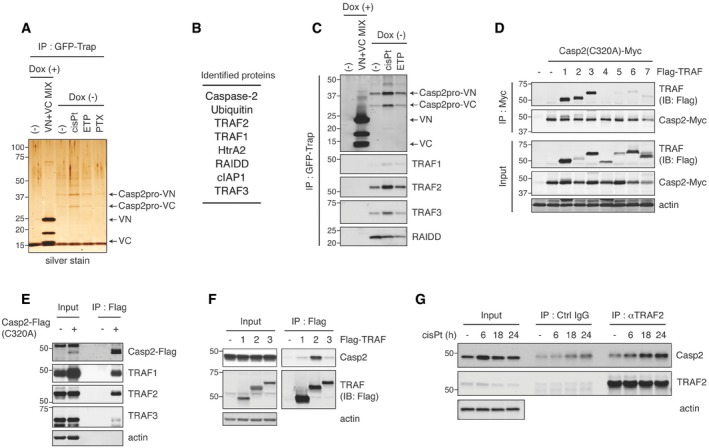
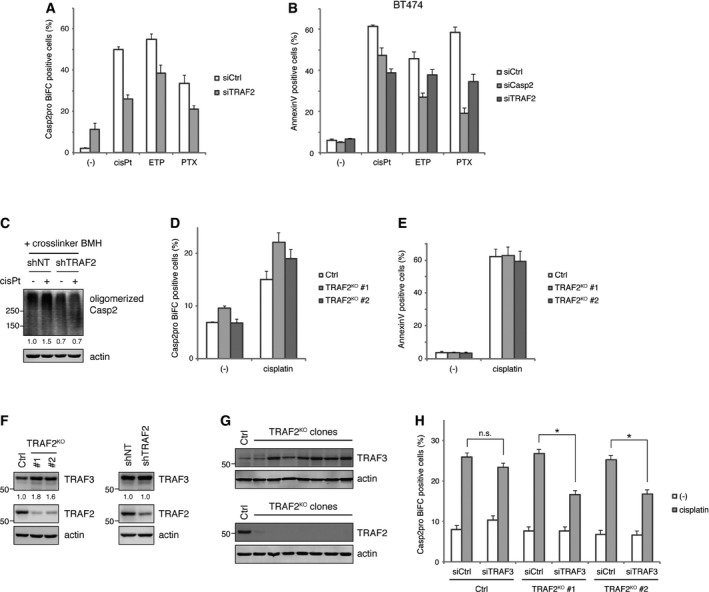
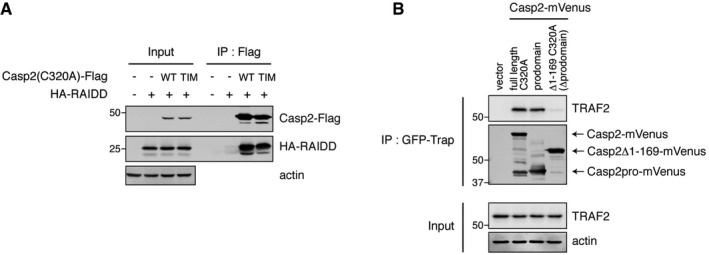
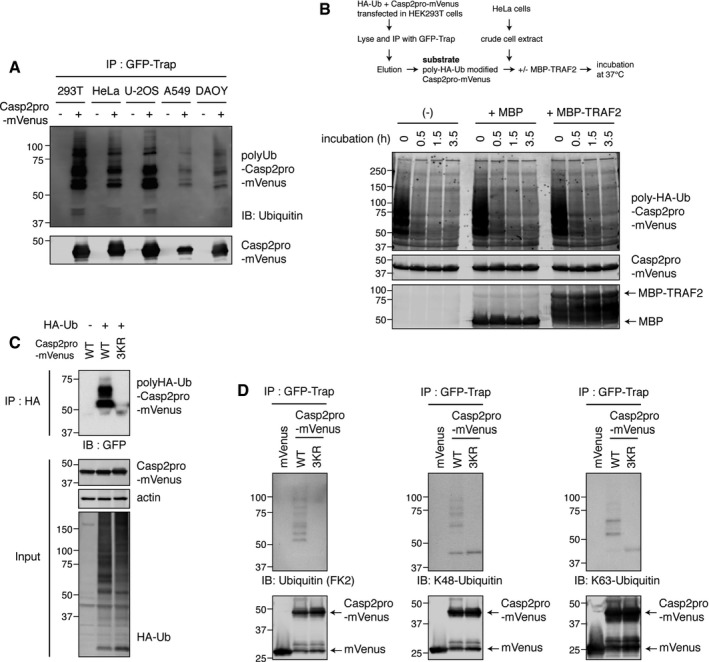
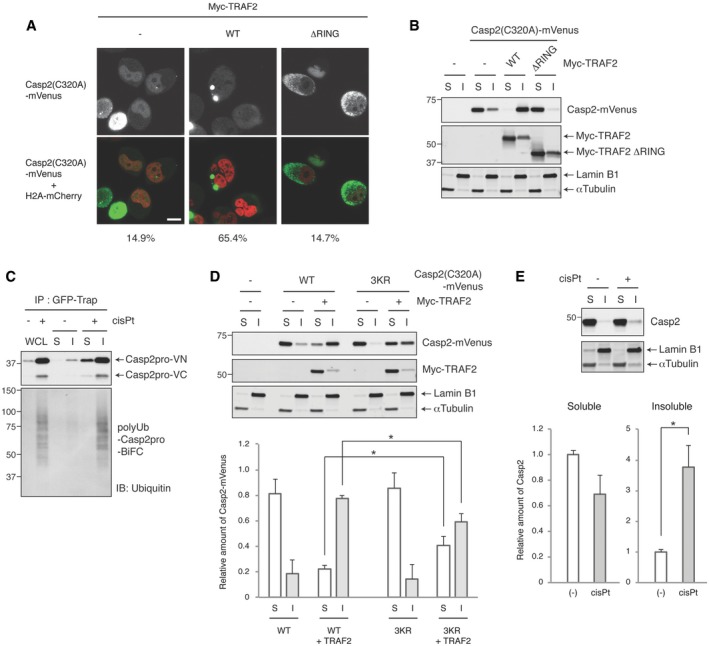
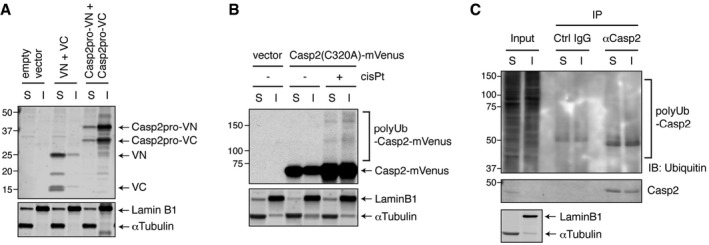
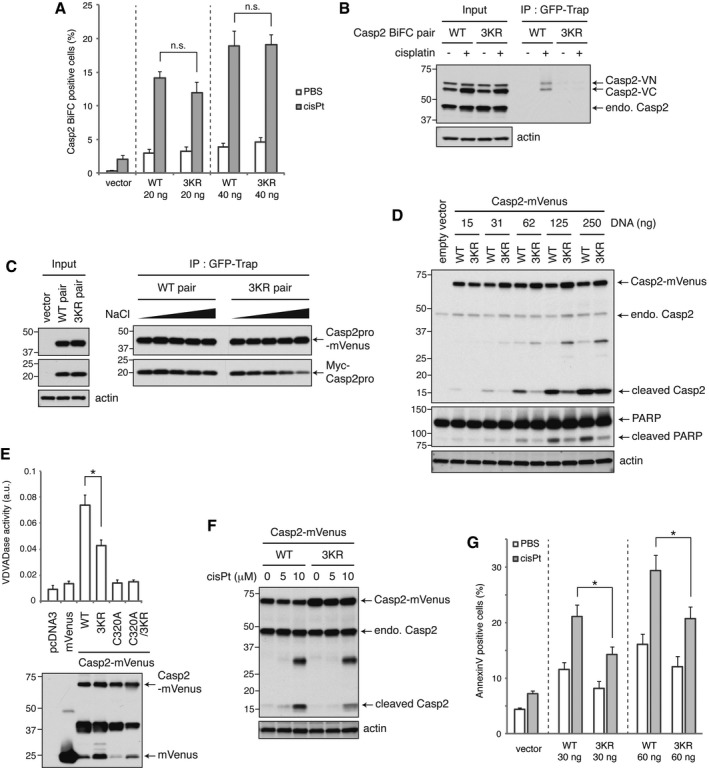
Caspase-2 has been shown to initiate apoptotic cell death in response to specific intracellular stressors such as DNA damage. However, the molecular mechanisms immediately upstream of its activation are still poorly understood. We combined a caspase-2 bimolecular fluorescence complementation (BiFC) system with fluorophore-specific immunoprecipitation to isolate and study the active caspase-2 dimer and its interactome. Using this technique, we found that tumor necrosis factor receptor-associated factor 2 (TRAF2), as well as TRAF1 and 3, directly binds to the active caspase-2 dimer. TRAF2 in particular is necessary for caspase-2 activation in response to apoptotic cell death stimuli. Furthermore, we found that dimerized caspase-2 is ubiquitylated in a TRAF2-dependent manner at K15, K152, and K153, which in turn stabilizes the active caspase-2 dimer complex, promotes its association with an insoluble cellular fraction, and enhances its activity to fully commit the cell to apoptosis. Together, these data indicate that TRAF2 positively regulates caspase-2 activation and consequent cell death by driving its activation through dimer-stabilizing ubiquitylation.
半胱天冬酶-2 已被证明可响应特定的细胞内应激物(如 DNA 损伤)启动细胞凋亡。然而,其激活的分子机制仍知之甚少。我们将 caspase-2 双分子荧光互补(BiFC)系统与荧光蛋白特异性免疫沉淀相结合,以分离和研究活性 caspase-2 二聚体及其相互作用组。使用该技术,我们发现肿瘤坏死因子受体相关因子 2(TRAF2)以及 TRAF1 和 3 直接与活性 caspase-2 二聚体结合。特别是 TRAF2 对于响应凋亡细胞死亡刺激的 caspase-2 激活是必需的。此外,我们发现二聚化的 caspase-2 以 TRAF2 依赖性方式在 K15、K152 和 K153 处发生泛素化,这反过来又稳定了活性 caspase-2 二聚体复合物,促进其与不溶性细胞部分的结合,并增强其活性,以使细胞完全走向凋亡。总之,这些数据表明 TRAF2 通过其激活的二聚体稳定泛素化来正向调节 caspase-2 的激活和随后的细胞死亡。