GlaxoSmithKline, Stevenage, Hertfordshire, SG1 2NY, UK.
DaVita Clinical Research, Minneapolis, MN, USA.
BMC Nephrol. 2018 Jun 11;19(1):135. doi: 10.1186/s12882-018-0925-2.
A combination of safety concerns and labeling changes impacted use of erythropoiesis-stimulating agents (ESAs) in renal anemia. Data regarding contemporary utilization in pre-dialysis chronic kidney disease (CKD) are lacking.
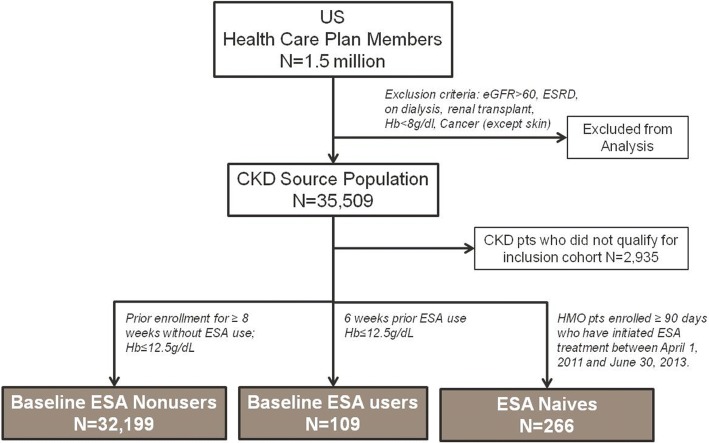
Electronic healthcare records and medical claims data of pre-dialysis CKD patients were aggregated from a large US managed care provider (2011-13). ESA use patterns, characteristics, and outcomes of ESA-treated/untreated patients were quantified.
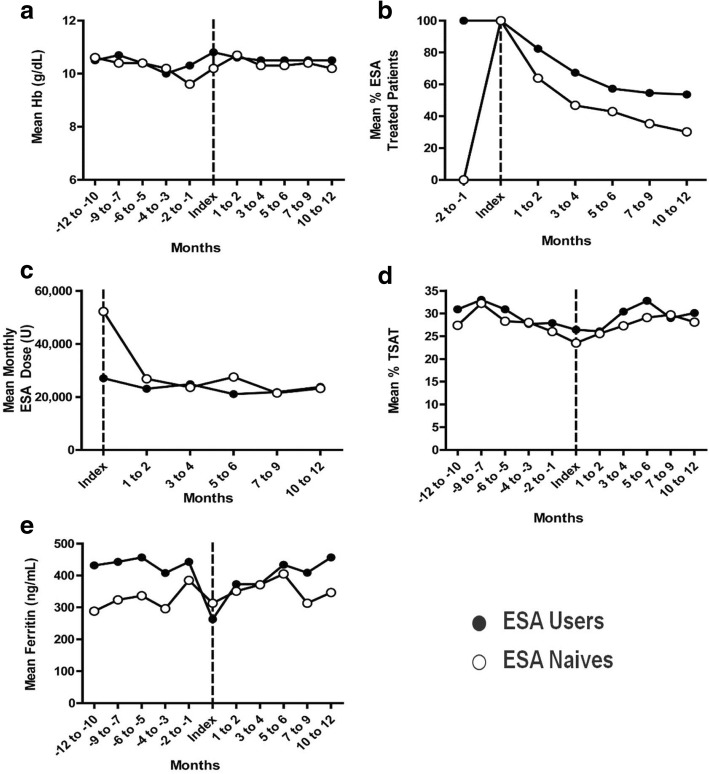
At baseline, 109/32,308 patients (0.3%) were ESA users. Treated patients were older, had more advanced CKD (58.8% vs 5.4% with stage 4/5 vs 3) and greater prevalence of comorbid diabetes, hypertension, heart failure, and peripheral vascular disease. An additional 266 patients initiated ESA: hemoglobin at initiation was 8-10 g/dL in 193 of these and >10 g/dL in the remainder; 61.7% had stage 4/5 CKD; prevalence of cardiovascular disease was high (50.8% heart failure; 25.2% prior myocardial infarction; 24.1% prior stroke). During follow-up, rates of death and cardiovascular events were higher in baseline ESA users and ESA naives versus non-users.
ESA use in pre-dialysis CKD patients was exceedingly rare and directed disproportionately to older, sicker patients; these patients had high rates of death and cardiovascular events. These data provide context for contemporary use of ESA in pre-dialysis CKD.
安全性问题和标签变化的综合影响,导致肾性贫血患者使用红细胞生成刺激剂(ESA)的情况发生变化。目前缺乏有关透析前慢性肾脏病(CKD)患者中 ESA 当代使用情况的数据。
从一家大型美国管理式医疗服务提供商(2011-13 年)汇总了透析前 CKD 患者的电子医疗记录和医疗报销数据。对 ESA 使用模式、特征以及 ESA 治疗/未治疗患者的结局进行了量化。
在基线时,有 109/32308 名患者(0.3%)为 ESA 使用者。接受治疗的患者年龄更大,CKD 分期更晚(58.8% vs 5.4%的患者为 4/5 期 vs 3 期),合并症如糖尿病、高血压、心力衰竭和外周血管疾病的患病率更高。另有 266 名患者开始使用 ESA:其中 193 名患者的起始血红蛋白为 8-10 g/dL,其余患者的血红蛋白>10 g/dL;61.7%的患者有 4/5 期 CKD;心血管疾病的患病率很高(心力衰竭 50.8%;既往心肌梗死 25.2%;既往卒中 24.1%)。在随访期间,基线时使用 ESA 的患者以及 ESA 初治患者和未使用者的死亡和心血管事件发生率更高。
透析前 CKD 患者中 ESA 的使用极为罕见,且不成比例地用于年龄较大、病情较重的患者;这些患者的死亡率和心血管事件发生率较高。这些数据为透析前 CKD 患者中 ESA 的当代使用提供了背景信息。