Department of Biochemistry , Vanderbilt University School of Medicine , Nashville , Tennessee 37232 , United States.
Synchrotron Research Center, Life Science Collaborative Access Team , Northwestern University , Argonne , Illinois 60439 , United States.
J Med Chem. 2018 Jul 12;61(13):5679-5691. doi: 10.1021/acs.jmedchem.8b00641. Epub 2018 Jun 25.
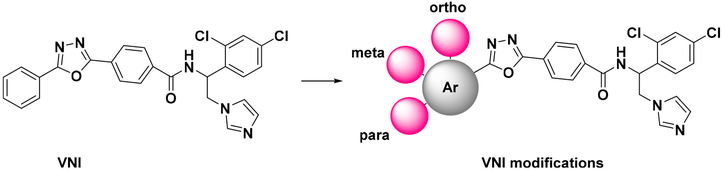
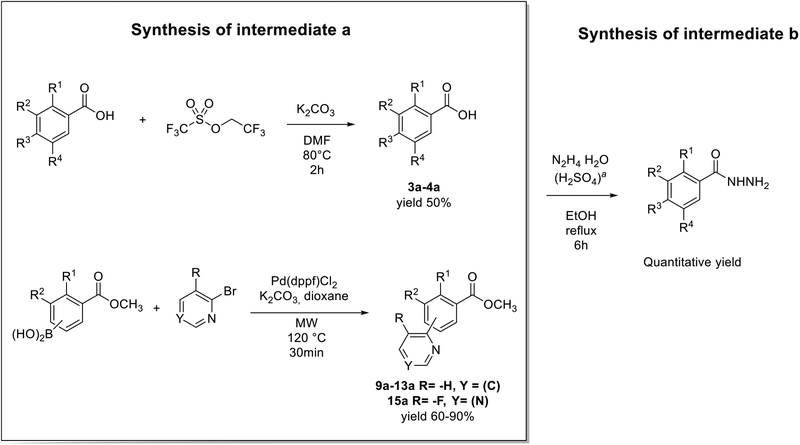
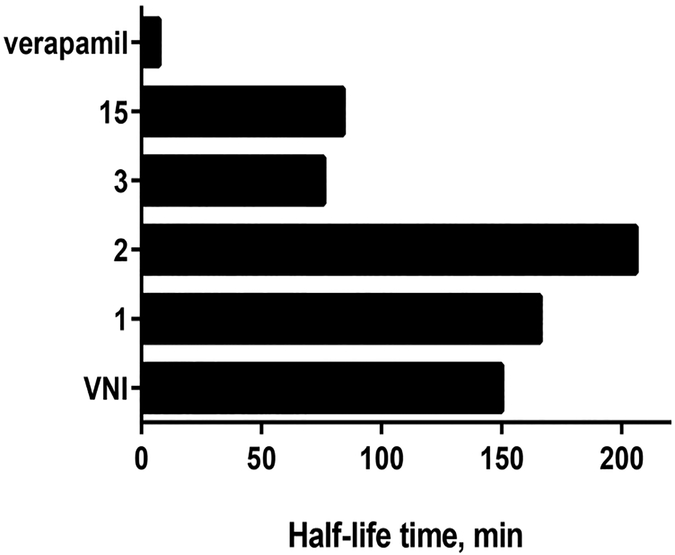
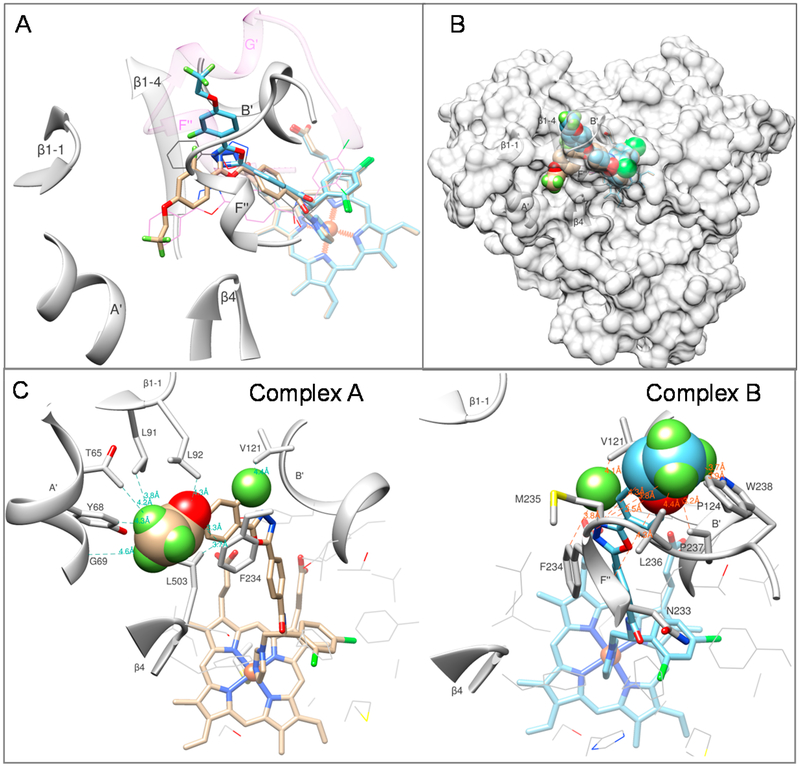
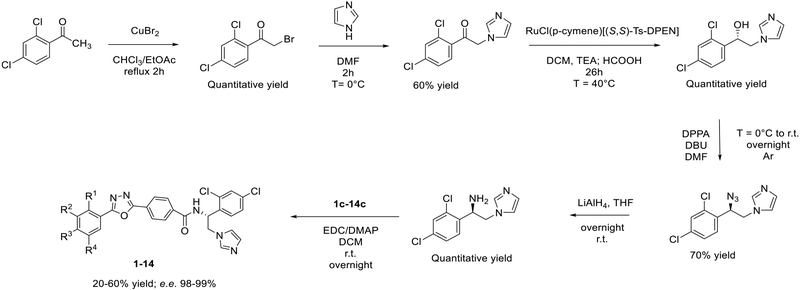
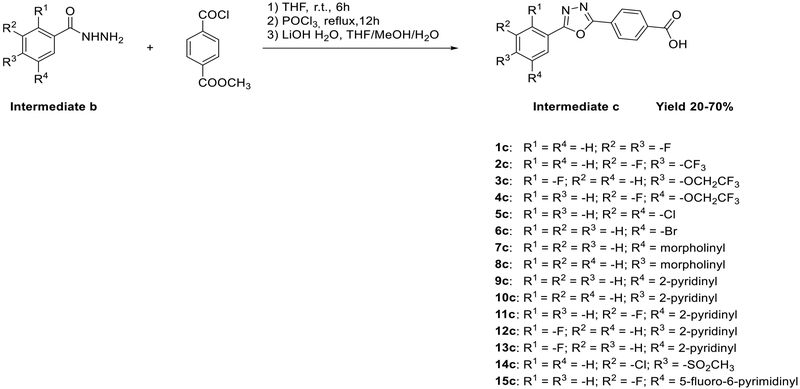
Because of the increase in the number of immunocompromised patients, the incidence of invasive fungal infections is growing, but the treatment efficiency remains unacceptably low. The most potent clinical systemic antifungals (azoles) are the derivatives of two scaffolds: ketoconazole and fluconazole. Being the safest antifungal drugs, they still have shortcomings, mainly because of pharmacokinetics and resistance. Here, we report the successful use of the target fungal enzyme, sterol 14α-demethylase (CYP51), for structure-based design of novel antifungal drug candidates by minor modifications of VNI [( R)- N-(1-(2,4-dichlorophenyl)-2-(1 H-imidazol-1-yl)ethyl)-4-(5-phenyl-1,3,4-oxadiazol-2-yl)benzamide)], an inhibitor of protozoan CYP51 that cures Chagas disease. The synthesis of fungi-oriented VNI derivatives, analysis of their potencies to inhibit CYP51s from two major fungal pathogens ( Aspergillus fumigatus and Candida albicans), microsomal stability, effects in fungal cells, and structural characterization of A. fumigatus CYP51 in complexes with the most potent compound are described, offering a new antifungal drug scaffold and outlining directions for its further optimization.
由于免疫功能低下患者数量的增加,侵袭性真菌感染的发病率正在上升,但治疗效果仍不尽如人意。最有效的临床全身性抗真菌药物(唑类)是两种支架的衍生物:酮康唑和氟康唑。作为最安全的抗真菌药物,它们仍然存在缺点,主要是由于药代动力学和耐药性。在这里,我们报告了通过对 VNI [(R)-N-(1-(2,4-二氯苯基)-2-(1H-咪唑-1-基)乙基)-4-(5-苯基-1,3,4-恶二唑-2-基)苯甲酰胺]的微小修饰,成功地利用目标真菌酶,甾醇 14α-去甲基酶(CYP51),用于基于结构的新型抗真菌药物候选物的设计,VNI 是一种原虫 CYP51 的抑制剂,可治愈恰加斯病。我们描述了真菌定向 VNI 衍生物的合成、它们对两种主要真菌病原体(烟曲霉和白色念珠菌)的 CYP51 的抑制活性分析、微粒体稳定性、在真菌细胞中的作用以及与最有效化合物结合的 A. fumigatus CYP51 的结构特征,为新型抗真菌药物提供了一个新的支架,并概述了进一步优化的方向。