Takdastan Afshin, Mirzabeygi Radfard Majid, Yousefi Mahmood, Abbasnia Abbas, Khodadadia Rouhollah, Soleimani Hamed, Mahvi Amir Hossein, Naghan Davood Jalili
Department of Environmental Health Engineering, School of Health, Ahvaz Jundishapur University of Medical Sciences, Ahvaz, Iran.
Environmental Technologies Research Center, Ahvaz Jundishapur University of Medical Science, Ahvaz, Iran.
Data Brief. 2018 Mar 13;18:255-261. doi: 10.1016/j.dib.2018.02.075. eCollection 2018 Jun.
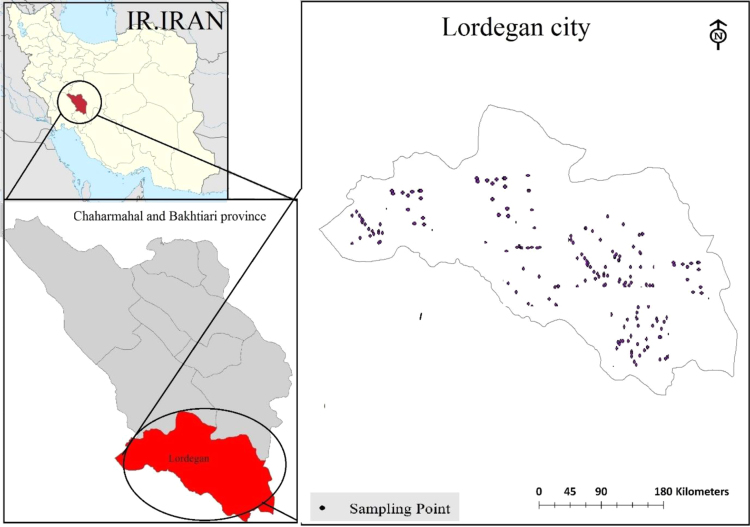
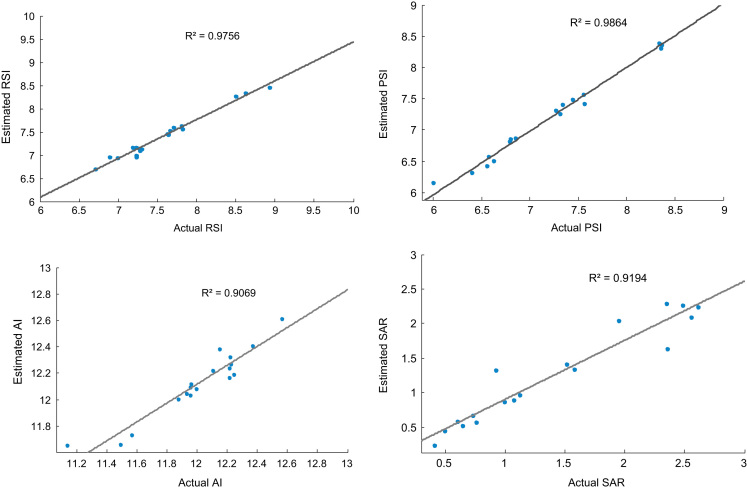
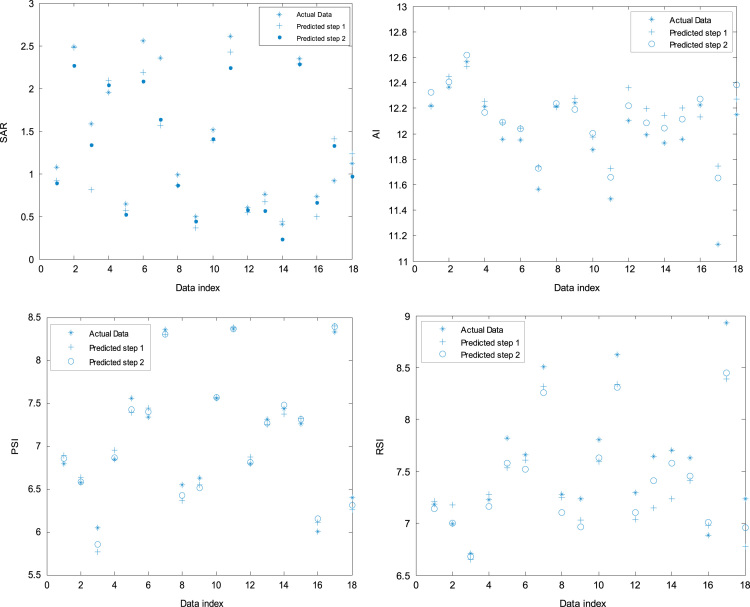
According to World Health Organization guidelines, corrosion control is an important aspect of safe drinking-water supplies. Water always includes ingredients, dissolved gases and suspended materials. Although some of these water ingredients is indispensable for human beings, these elements more than permissible limits, could be endanger human health. The aim of this study is to assess physical and chemical parameters of drinking water in the rural areas of Lordegan city, also to determine corrosion indices. This cross-sectional study has carried out with 141 taken samples during 2017 with 13 parameters, which has been analyzed based on standard method and to estimate the water quality indices from groundwater using ANFIS. Also with regard to standard conditions, results of this paper are compared with Environmental Protection Agency and Iran national standards. Five indices, Ryznar Stability Index (RSI), Langlier Saturation Index (LSI), Larson-Skold Index (LS), Puckorius Scaling Index (PSI), and Aggressive Index (AI) programmed by using Microsoft Excel software. Owing to its simplicity, the program, can easily be used by researchers and operators. Parameters included Sulfate, Sodium, Chloride, and Electrical Conductivity respectively were 13.5, 28, 10.5, and 15% more than standard level. The amount of Nitrate, in 98% of cases were in permissible limits and about 2% were more than standard level. Result of presented research indicate that water is corrosive at 10.6%,89.4%,87.2%,59.6% and 14.9% of drinking water supply reservoirs, according to LSI, RSI, PSI, LS and AI, respectively.
根据世界卫生组织的指导方针,腐蚀控制是安全饮用水供应的一个重要方面。水中总是含有各种成分、溶解气体和悬浮物质。虽然其中一些水成分对人类来说是不可或缺的,但这些元素超过允许限度可能会危害人类健康。本研究的目的是评估洛尔德根市农村地区饮用水的物理和化学参数,并确定腐蚀指数。这项横断面研究在2017年期间采集了141个样本,涉及13个参数,这些样本已根据标准方法进行分析,并使用自适应神经模糊推理系统(ANFIS)从地下水中估计水质指数。此外,根据标准条件,将本文的结果与环境保护局和伊朗国家标准进行了比较。使用微软Excel软件编程计算了五个指数,即赖兹纳稳定指数(RSI)、朗格利尔饱和指数(LSI)、拉森-斯科尔德指数(LS)、帕克奥里斯结垢指数(PSI)和侵蚀性指数(AI)。由于该程序简单,研究人员和操作人员可以轻松使用。硫酸盐、钠、氯和电导率参数分别比标准水平高出13.5%、28%、10.5%和15%。硝酸盐含量在98%的情况下处于允许限度内,约2%超过标准水平。研究结果表明,根据LSI、RSI、PSI、LS和AI,分别有10.6%、89.4%、87.2%、59.6%和14.9%的饮用水供应水库的水具有腐蚀性。