Center for Pharmacogenetics, Department of Pharmaceutical Sciences, School of Pharmacy , University of Pittsburgh , Pittsburgh , Pennsylvania 15261 , United States.
School of Phamaceutical Science , Sun Yat-sen University , 132 Waihuandong Road , University City of Guangzhou, Guangzhou 510006 , China.
Chem Res Toxicol. 2018 Jul 16;31(7):548-555. doi: 10.1021/acs.chemrestox.8b00023. Epub 2018 Jun 26.
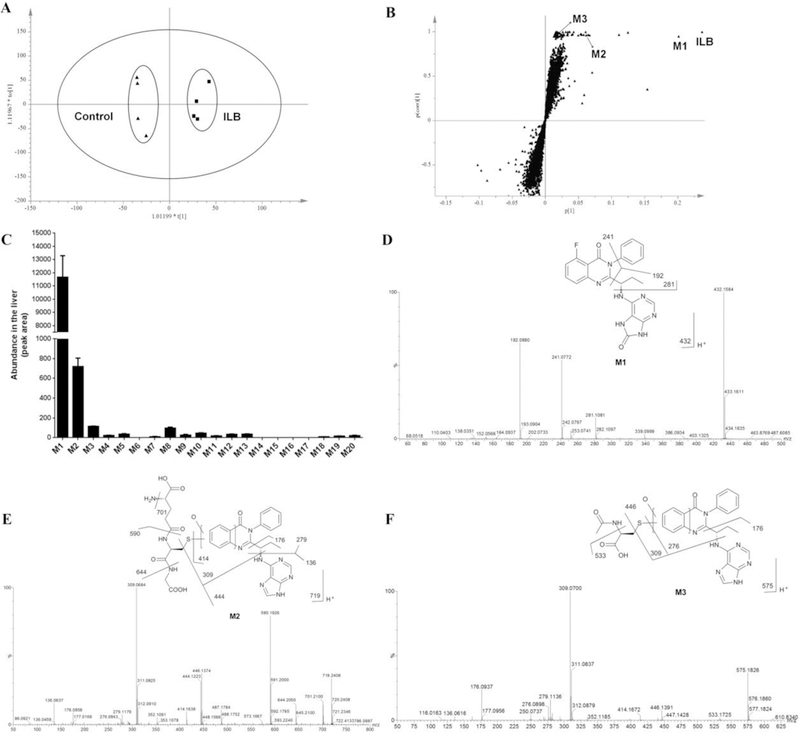
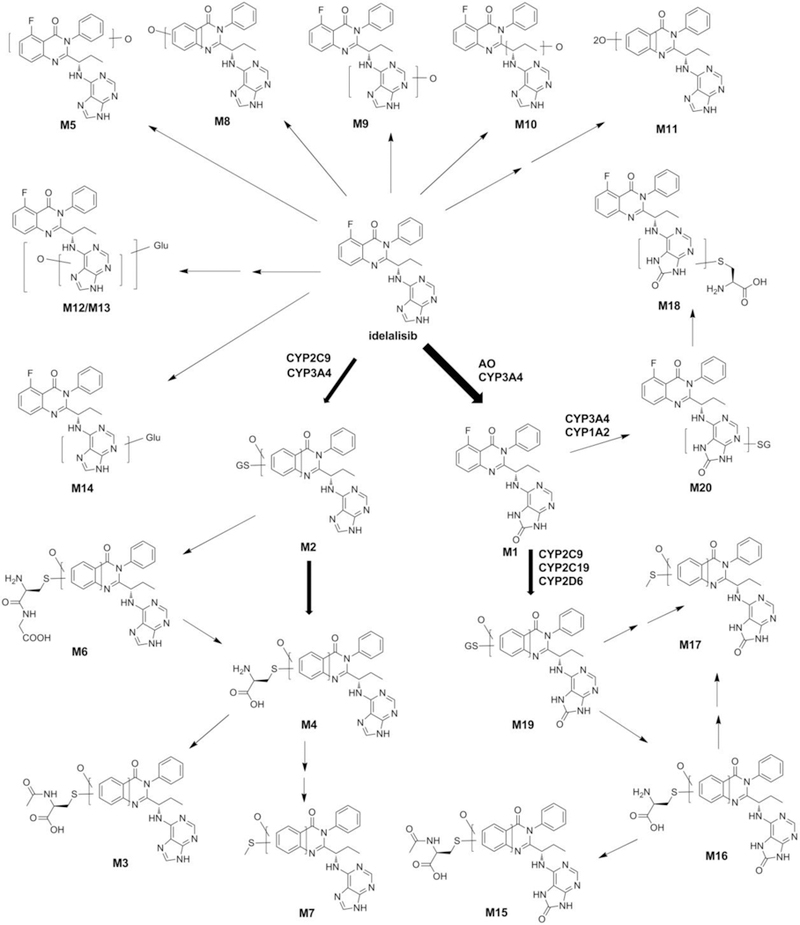
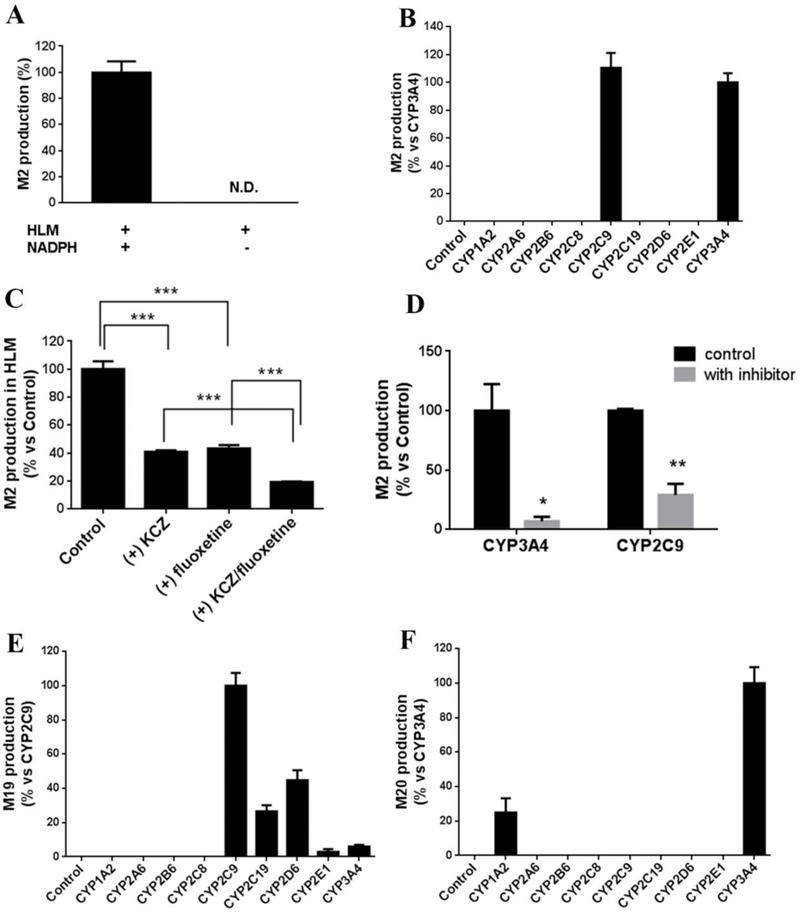
Idelalisib (ILB) is a selective phosphatidylinositol-3-kinase delta inhibitor approved for the treatment of hematological malignancies. However, ILB frequently causes hepatotoxicity, and the exact mechanism remains unclear. The current study profiled the metabolites of ILB in mouse liver, urine, and feces. The major metabolites found in the liver were oxidized metabolite GS-563117 (M1) and ILB-glutathione (GSH) adduct (M2). These metabolic pathways were confirmed by analysis of urine and feces from mice treated with ILB. Identification of ILB-GSH adduct (M2) suggests the formation of reactive metabolites of ILB. We also found that M1 can produce reactive metabolites and form M1-GSH adducts. The GSH-conjugates identified in mouse liver were also found in the incubations of ILB and M1 with human liver microsomes. Furthermore, we illustrated that CYP3A4 and 2C9 are the key enzymes contributing to the bioactivation pathway of ILB and M1. In summary, our work revealed that both ILB and its major metabolite M1 can undergo bioactivation to produce reactive metabolites in the liver. Further studies are required to determine whether these metabolic pathways contribute to ILB hepatotoxicity.
依鲁替尼(idelalisib,ILB)是一种选择性的磷脂酰肌醇-3-激酶 δ 抑制剂,已被批准用于治疗血液系统恶性肿瘤。然而,ILB 常引起肝毒性,其确切机制尚不清楚。本研究对 ILB 在小鼠肝、尿和粪便中的代谢物进行了分析。在肝中发现的主要代谢物为氧化代谢物 GS-563117(M1)和 ILB-谷胱甘肽(GSH)加合物(M2)。这些代谢途径通过对给予 ILB 的小鼠的尿和粪便进行分析得到了证实。ILB-GSH 加合物(M2)的鉴定表明 ILB 形成了反应性代谢物。我们还发现 M1 可以产生反应性代谢物并形成 M1-GSH 加合物。在小鼠肝中鉴定的 GSH 缀合物也在 ILB 和 M1 与人肝微粒体孵育物中被发现。此外,我们表明 CYP3A4 和 2C9 是参与 ILB 和 M1 生物活化途径的关键酶。总之,我们的工作表明,ILB 及其主要代谢物 M1 均可在肝脏中发生生物活化,产生反应性代谢物。需要进一步的研究来确定这些代谢途径是否导致 ILB 肝毒性。