Practice for Pediatric Allergy and Pneumology, Berlin, Germany.
Department of Pediatric Pulmonology, Immunology and Intensive Care Medicine, Charité - University Medicine Berlin, Augustenburger Platz, 1, 13353, Berlin, Germany.
Ital J Pediatr. 2018 Jun 14;44(1):68. doi: 10.1186/s13052-018-0489-6.
The impact of proper aspiration of nasal secretions during upper respiratory infection on the frequency and severity of symptoms of lower airways has never been investigated. The study was aimed at testing if cleaning the nasal cavities of children with recurrent wheezing using an automatic nasal aspirator improves the upper and lower respiratory symptoms during the cold season.
Parents of wheezing children (age 3-72 mo.) answered questionnaires and learned using a nebulizer equipped (cases) or not equipped (controls) with an automatic nasal aspirator (DuoBaby, OMRON, Japan). During a 90-days monitoring period parents filled an electronic diary (BreathMonitor, TPS, Rome, Italy) on their child's symptoms of the upper and lower airways.
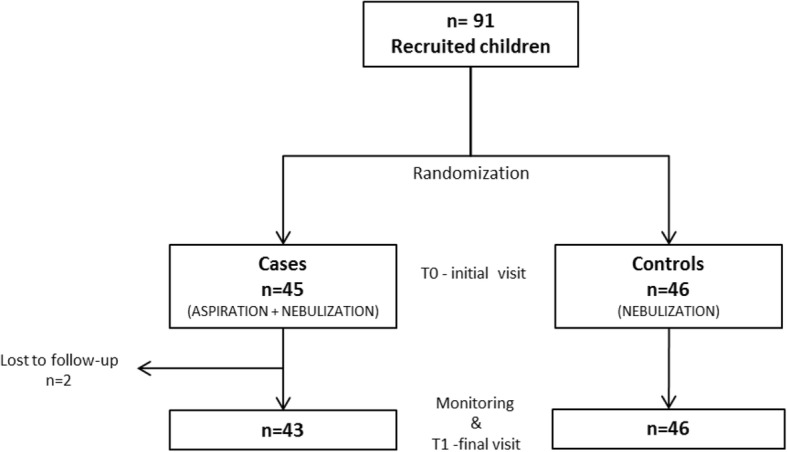
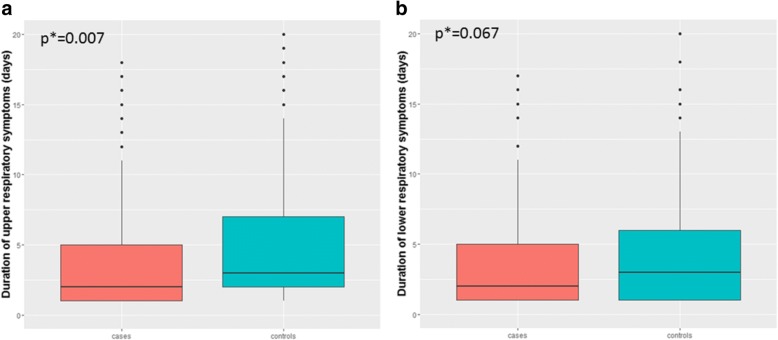
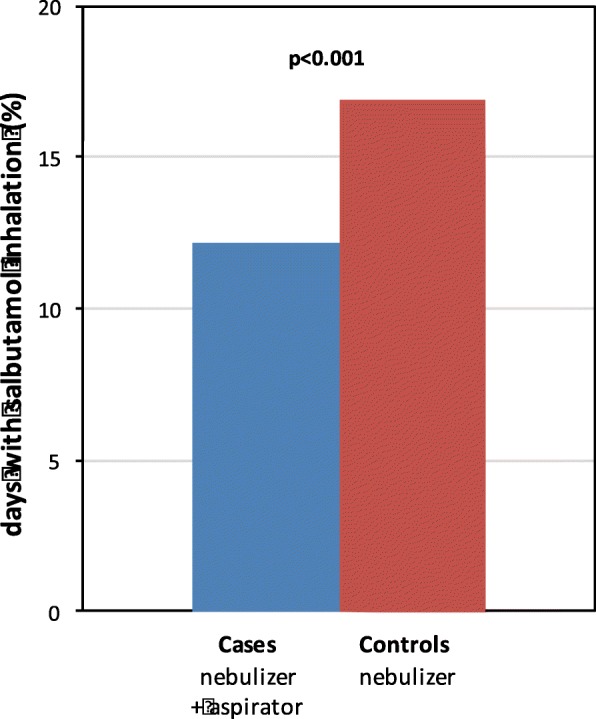
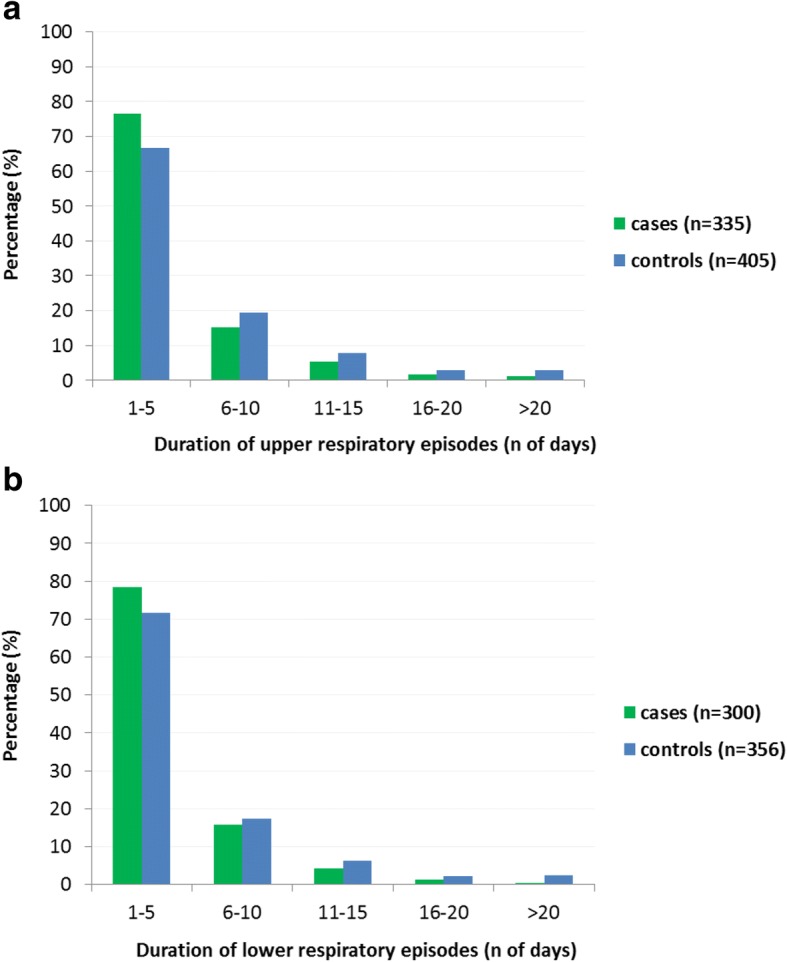
Eighty-nine/91 patients (43 cases, 46 controls) completed the study. Less days with upper (25.0% vs 46.4%, p = 0.004) or lower (21.8% vs 32.8%, p = 0.022) airways symptoms and less days with salbutamol inhalation (12.2% vs 16.9%, p < 0.001) were reported by cases than by controls. The episodes of upper respiratory symptoms were shorter [4.3 days (95%CI:3.8-4.9) vs 5.7 days (95%CI:5.0-6.4), p = 0.007] but not less frequent [2.3 (95%CI: 1.8-2.8) vs 2.6 (95%CI:2.2-3.0), p = 0.122] among cases than among controls. Similarly, the episodes of lower respiratory symptoms tended to be shorter [3.8 days, (95%CI: 3.4-4.2) vs 4.4 days, (95%CI: 4.4-6.0), p = 0.067] but not less frequent [1.9 (95%CI:1.5-2.3) vs 2.1 (95%CI:1.7-2.4), p = 0.240] among the group using the nasal aspirator.
In our pilot study, the use of an automatic nasal aspirator in children with a history of recurrent wheezing was associated with an improved respiratory health during the cold season.
在上呼吸道感染期间,适当抽吸鼻腔分泌物对下呼吸道症状的频率和严重程度的影响从未被研究过。本研究旨在测试使用自动鼻腔抽吸器清洁反复喘息的儿童的鼻腔是否能改善感冒季节上、下呼吸道的症状。
喘息儿童(3-72 月龄)的父母回答问卷,并学习使用配备(病例组)或未配备(对照组)自动鼻腔抽吸器(OMRON 公司的 DuoBaby)的雾化器。在 90 天的监测期间,父母使用电子日记(意大利罗马的 TPS 公司的 BreathMonitor)记录孩子上、下呼吸道的症状。
89/91 例患者(43 例病例组,46 例对照组)完成了研究。病例组上呼吸道(25.0% vs 46.4%,p=0.004)或下呼吸道(21.8% vs 32.8%,p=0.022)症状天数以及沙丁胺醇吸入天数(12.2% vs 16.9%,p<0.001)均少于对照组。上呼吸道症状发作时间更短[4.3 天(95%CI:3.8-4.9) vs 5.7 天(95%CI:5.0-6.4),p=0.007],但频率无差异[2.3(95%CI:1.8-2.8) vs 2.6(95%CI:2.2-3.0),p=0.122]。同样,下呼吸道症状发作时间也更短[3.8 天,(95%CI:3.4-4.2) vs 4.4 天,(95%CI:4.4-6.0),p=0.067],但频率无差异[1.9(95%CI:1.5-2.3) vs 2.1(95%CI:1.7-2.4),p=0.240]。
在我们的初步研究中,在有反复喘息史的儿童中使用自动鼻腔抽吸器与感冒季节呼吸道健康状况的改善有关。