Pediatric Allergy and Clinical Immunology Service, Hospital Sant Joan de Déu, Barcelona, Spain.
Swiss Institute of Allergy and Asthma Research (SIAF), University of Zurich, Davos, Switzerland.
Pediatr Allergy Immunol. 2020 May;31 Suppl 25(Suppl 25):1-101. doi: 10.1111/pai.13189.
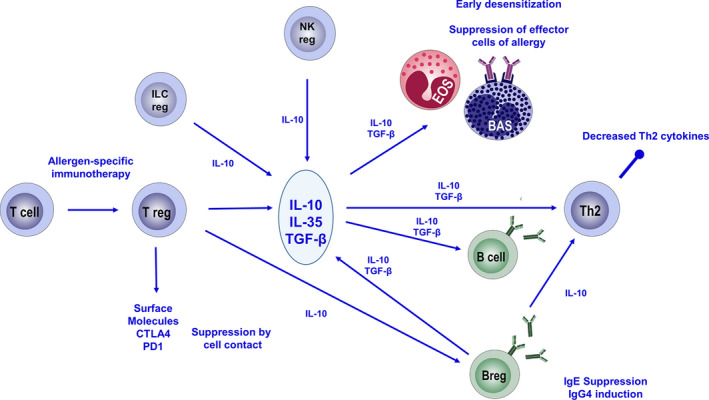
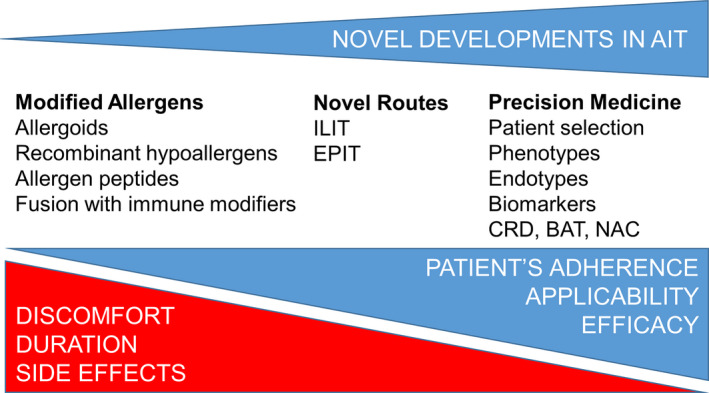
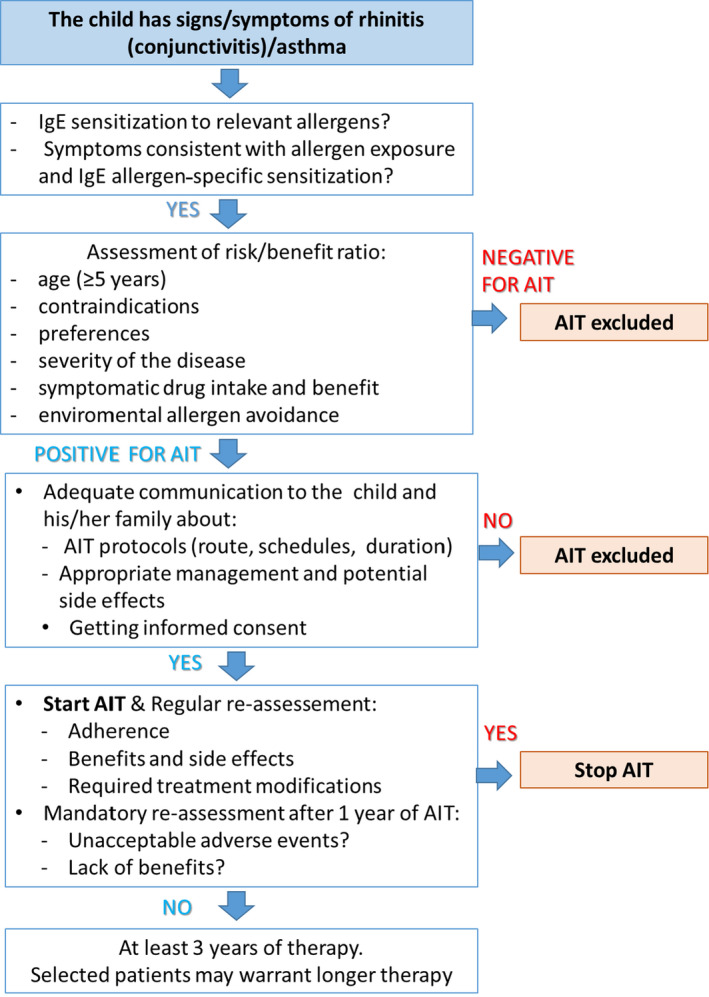
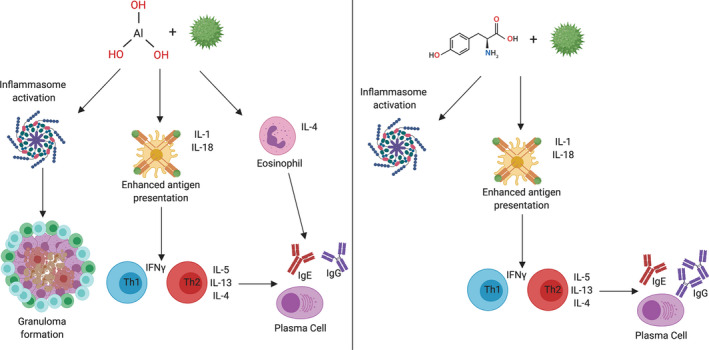
Allergen immunotherapy is a cornerstone in the treatment of allergic children. The clinical efficiency relies on a well-defined immunologic mechanism promoting regulatory T cells and downplaying the immune response induced by allergens. Clinical indications have been well documented for respiratory allergy in the presence of rhinitis and/or allergic asthma, to pollens and dust mites. Patients who have had an anaphylactic reaction to hymenoptera venom are also good candidates for allergen immunotherapy. Administration of allergen is currently mostly either by subcutaneous injections or by sublingual administration. Both methods have been extensively studied and have pros and cons. Specifically in children, the choice of the method of administration according to the patient's profile is important. Although allergen immunotherapy is widely used, there is a need for improvement. More particularly, biomarkers for prediction of the success of the treatments are needed. The strength and efficiency of the immune response may also be boosted by the use of better adjuvants. Finally, novel formulations might be more efficient and might improve the patient's adherence to the treatment. This user's guide reviews current knowledge and aims to provide clinical guidance to healthcare professionals taking care of children undergoing allergen immunotherapy.
变应原免疫疗法是治疗过敏性儿童的基石。其临床疗效依赖于明确的免疫机制,该机制可促进调节性 T 细胞,并减轻过敏原引起的免疫反应。在存在鼻炎和/或过敏性哮喘的情况下,针对花粉和尘螨,已为呼吸道变应性疾病确立了临床适应证。对蜂毒液发生过过敏反应的患者也是变应原免疫治疗的良好候选者。变应原的给药目前主要通过皮下注射或舌下给药。这两种方法都已得到广泛研究,各有优缺点。具体在儿童中,根据患者特征选择给药方法很重要。尽管变应原免疫疗法已广泛应用,但仍需改进。更具体地说,需要预测治疗成功的生物标志物。通过使用更好的佐剂,也可以增强免疫反应的强度和效率。最后,新型制剂可能更有效,并可能提高患者对治疗的依从性。本用户指南综述了当前的知识,并旨在为照顾接受变应原免疫治疗的儿童的医疗保健专业人员提供临床指导。