Department of Cell Biology and Neuroscience, Montana State University, Bozeman, MT, 59717, USA.
Honors College, Montana State University, Bozeman, MT, 59717, USA.
Sci Rep. 2018 Jun 13;8(1):9014. doi: 10.1038/s41598-018-27336-x.
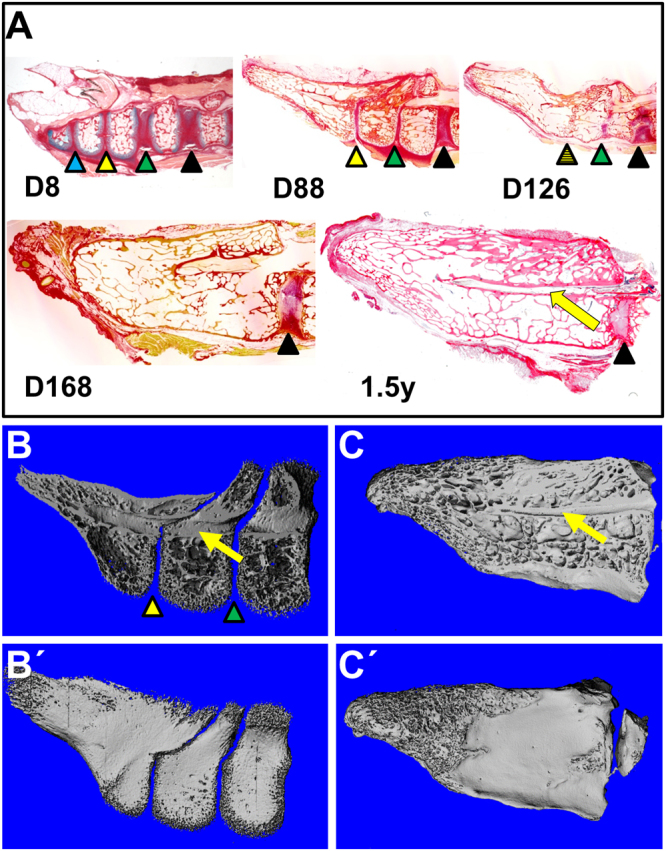
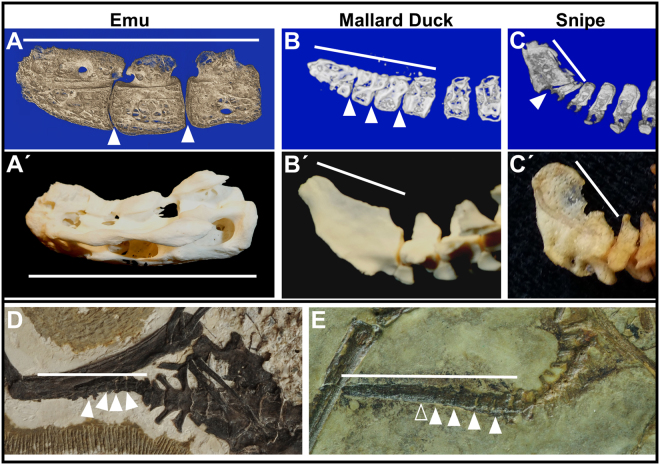
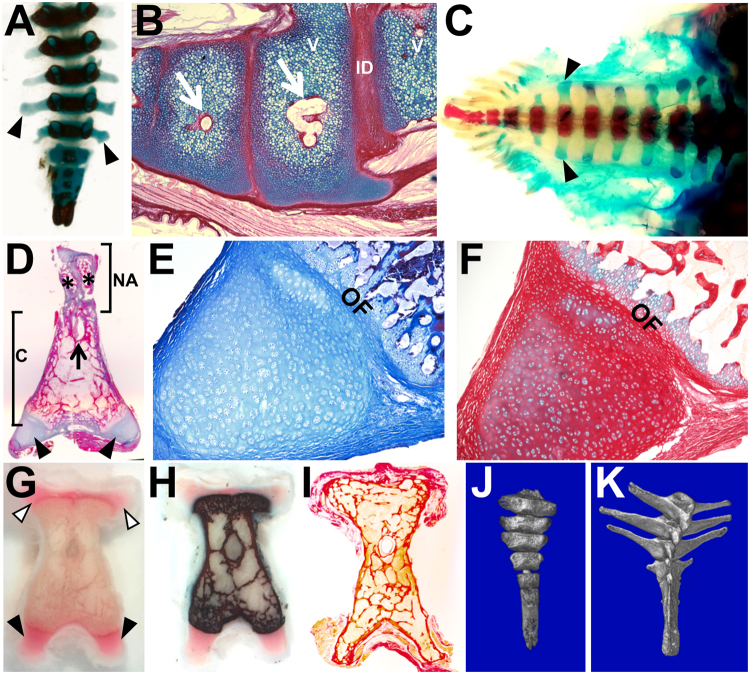
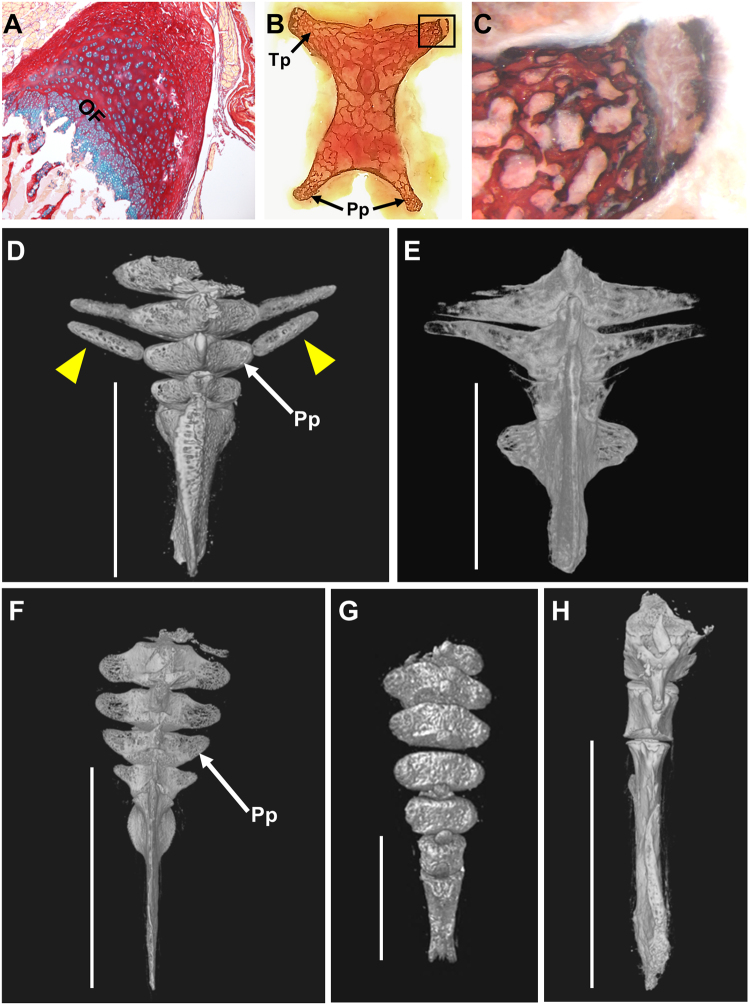
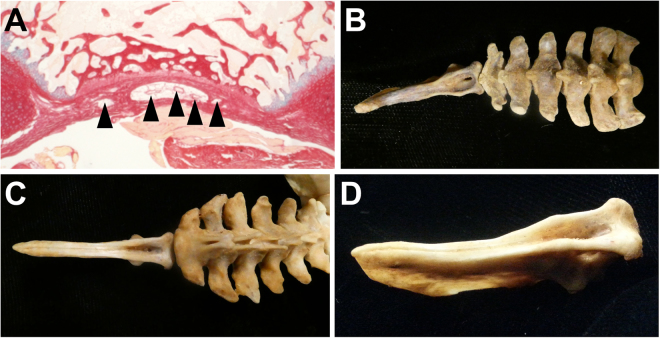
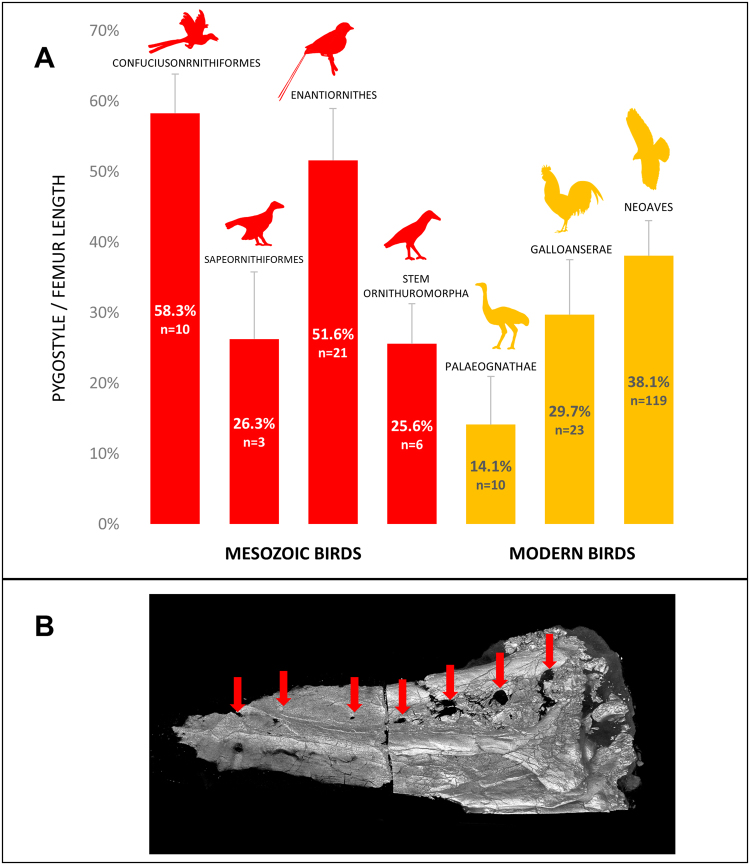
The avian tail played a critical role in the evolutionary transition from long- to short-tailed birds, yet its ontogeny in extant birds has largely been ignored. This deficit has hampered efforts to effectively identify intermediate species during the Mesozoic transition to short tails. Here we show that fusion of distal vertebrae into the pygostyle structure does not occur in extant birds until near skeletal maturity, and mineralization of vertebral processes also occurs long after hatching. Evidence for post-hatching pygostyle formation is also demonstrated in two Cretaceous specimens, a juvenile enantiornithine and a subadult basal ornithuromorph. These findings call for reinterpretations of Zhongornis haoae, a Cretaceous bird hypothesized to be an intermediate in the long- to short-tailed bird transition, and of the recently discovered coelurosaur tail embedded in amber. Zhongornis, as a juvenile, may not yet have formed a pygostyle, and the amber-embedded tail specimen is reinterpreted as possibly avian. Analyses of relative pygostyle lengths in extant and Cretaceous birds suggests the number of vertebrae incorporated into the pygostyle has varied considerably, further complicating the interpretation of potential transitional species. In addition, this analysis of avian tail development reveals the generation and loss of intervertebral discs in the pygostyle, vertebral bodies derived from different kinds of cartilage, and alternative modes of caudal vertebral process morphogenesis in birds. These findings demonstrate that avian tail ontogeny is a crucial parameter specifically for the interpretation of Mesozoic specimens, and generally for insights into vertebrae formation.
鸟类的尾巴在从长尾到短尾鸟类的进化转变中起着至关重要的作用,但现生鸟类的尾巴发育过程在很大程度上被忽视了。这一缺陷阻碍了在从中生代向短尾过渡期间有效识别中间物种的努力。在这里,我们表明,现生鸟类的远端椎骨融合到尾综骨结构中直到接近骨骼成熟时才会发生,而椎骨突起的矿化也在孵化后很久才会发生。两个白垩纪标本,即幼年的反鸟类和亚成年的基干鸟类,也提供了孵化后尾综骨形成的证据。这些发现要求对假设为长尾到短尾鸟类过渡中间物种的白垩纪鸟类 Zhongornis haoae 以及最近发现的嵌入琥珀中的兽脚亚目恐龙尾巴进行重新解释。作为幼鸟的 Zhongornis 可能尚未形成尾综骨,而嵌入琥珀中的尾巴标本被重新解释为可能是鸟类的。对现生和白垩纪鸟类的尾综骨相对长度的分析表明,纳入尾综骨的椎骨数量变化很大,这进一步增加了对潜在过渡物种的解释的复杂性。此外,对鸟类尾巴发育的分析揭示了尾综骨中椎间盘的产生和丢失、来自不同种类软骨的椎体以及鸟类尾部椎体突起形态发生的替代模式。这些发现表明,鸟类尾巴的发育是解释中生代标本的关键参数,对于理解脊椎形成也具有普遍意义。