National Hellenic Research Foundation, 11635 Athens, Greece.
Nasco AD Biotechnology Laboratory, 18536 Piraeus, Greece.
Int J Oncol. 2018 Aug;53(2):443-468. doi: 10.3892/ijo.2018.4434. Epub 2018 Jun 6.
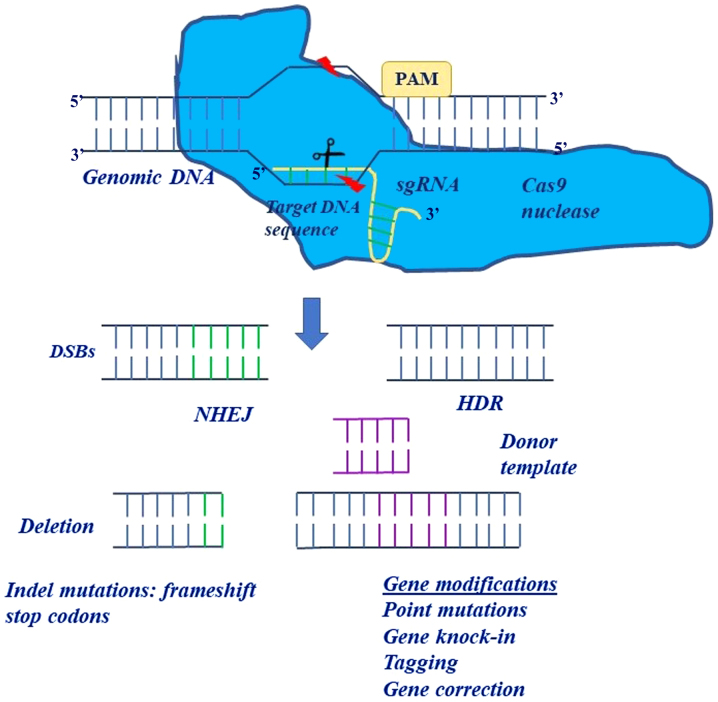
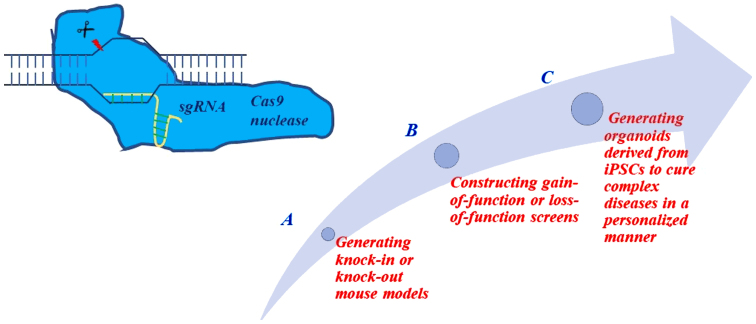
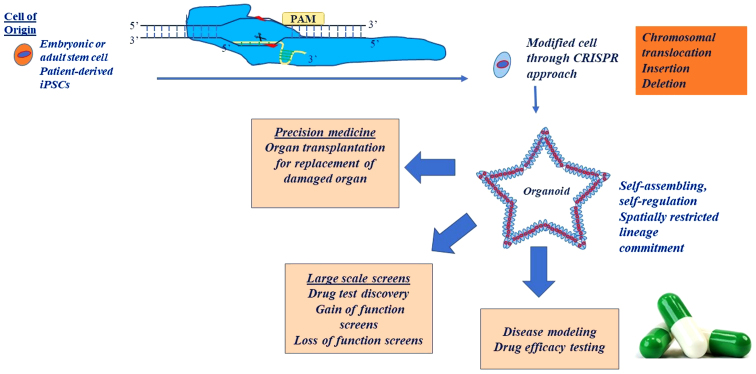
One of the fundamental discoveries in the field of biology is the ability to modulate the genome and to monitor the functional outputs derived from genomic alterations. In order to unravel new therapeutic options, scientists had initially focused on inducing genetic alterations in primary cells, in established cancer cell lines and mouse models using either RNA interference or cDNA overexpression or various programmable nucleases [zinc finger nucleases (ZNF), transcription activator-like effector nucleases (TALEN)]. Even though a huge volume of data was produced, its use was neither cheap nor accurate. Therefore, the clustered regularly interspaced short palindromic repeats (CRISPR) system was evidenced to be the next step in genome engineering tools. CRISPR-associated protein 9 (Cas9)-mediated genetic perturbation is simple, precise and highly efficient, empowering researchers to apply this method to immortalized cancerous cell lines, primary cells derived from mouse and human origins, xenografts, induced pluripotent stem cells, organoid cultures, as well as the generation of genetically engineered animal models. In this review, we assess the development of the CRISPR system and its therapeutic applications to a wide range of complex diseases (particularly distinct tumors), aiming at personalized therapy. Special emphasis is given to organoids and CRISPR screens in the design of innovative therapeutic approaches. Overall, the CRISPR system is regarded as an eminent genome engineering tool in therapeutics. We envision a new era in cancer biology during which the CRISPR-based genome engineering toolbox will serve as the fundamental conduit between the bench and the bedside; nonetheless, certain obstacles need to be addressed, such as the eradication of side-effects, maximization of efficiency, the assurance of delivery and the elimination of immunogenicity.
生物学领域的一项基本发现是能够调节基因组并监测源自基因组改变的功能输出。为了揭示新的治疗选择,科学家最初专注于使用 RNA 干扰或 cDNA 过表达或各种可编程核酸酶[锌指核酸酶 (ZNF)、转录激活因子样效应核酸酶 (TALEN)]在原代细胞、已建立的癌细胞系和小鼠模型中诱导遗传改变。尽管产生了大量数据,但它的使用既不便宜也不准确。因此,证据表明,成簇规律间隔短回文重复 (CRISPR) 系统是基因组工程工具的下一步。CRISPR 相关蛋白 9 (Cas9) 介导的遗传干扰简单、精确且高效,使研究人员能够将这种方法应用于永生化癌细胞系、源自小鼠和人类的原代细胞、异种移植物、诱导多能干细胞、类器官培养物以及遗传工程动物模型的生成。在这篇综述中,我们评估了 CRISPR 系统的发展及其在广泛的复杂疾病(特别是不同的肿瘤)中的治疗应用,旨在实现个性化治疗。特别强调了类器官和 CRISPR 筛选在创新治疗方法设计中的应用。总体而言,CRISPR 系统被认为是治疗学中一种杰出的基因组工程工具。我们设想癌症生物学的新时代即将到来,基于 CRISPR 的基因组工程工具箱将成为基础研究和临床之间的基本桥梁;然而,仍需要解决一些障碍,例如消除副作用、提高效率、保证输送和消除免疫原性。